

As an Amazon Associate we earn from qualifying purchases. If you buy through links on this page we may receive a commission at no extra cost to you. Product details come from Amazon listings and can change.
Searching for the best tool sets for a child who loves to fix, hammer and build? This guide looks at nine kids toolkits that suit pretend play, from a classic wooden take along kit to bigger boxes with a toy drill, tool belt and workbench. Every pick is a toy set for ages 3 and up, not a real tool for real repairs.
The guide is written for parents, grandparents and gift buyers who want to match a set to a child’s age, patience and play space. You will find picks for gentle wooden play, for noisy battery style drill play, and for kids who want a whole workshop. Each section explains what the listing says, who the set suits and what to check before ordering.
Prices change often, so this guide does not quote them. Use the links to open the live listing, read the current details and confirm the age marking, included pieces and battery needs before you buy. A short buying guide and ten answers to common questions follow the picks.
Key Takeaways
Best Tool Sets at a Glance
| Product | Our score | |
|---|---|---|
| 24 Wooden Pieces, Kid Friendly Tools Best Overall |
9.4 / 10 | Check Price |
| 75-Piece Tool Set / Drill Press Best Workshop |
9.4 / 10 | Check Price |
| VTech Drill and Learn Toolbox Best for Learning Play |
9.4 / 10 | Check Price |
| Toddler Tool Set with Toy Drill Best Tool Belt Set |
9.4 / 10 | Check Price |
| Electronic Toy Drill, Portable Tool Box Best Electronic Drill Set |
9.4 / 10 | Check Price |
| 48 Pcs Construction Tools Kit with Best Big Variety Box |
9.0 / 10 | Check Price |
| Construction Toys with Toy Drill, Toddler Best Set with a Vest |
9.2 / 10 | Check Price |
| Kids Tool Set 20 PCS Toddler Best Compact Kit |
9.0 / 10 | Check Price |
| Construction Toys with Toy Drill, Toddler 7S3 Best for Gift Giving |
9.4 / 10 | Check Price |
How We Chose the Best Tool Sets
This is a research based guide, not a lab comparison. We read each listing title and feature text, compared the pieces named, the ages marked and the extras such as a tool belt, vest or workbench, and looked for a balance of quiet wooden play, battery style drill play and larger workshop sets. Where a listing is thin, the text speaks in general terms and tells you what to confirm on the product page.
Safety and honesty shaped the list. Toy tool sets often include small parts, so we paid attention to the age marking and to the need for adult supervision. Each pick also carries an editorial score out of 10, built from features, specs and how well the set fits its intended use. The score is our own judgment from listing details, so treat it as a starting point for your own choice.
In-Depth Reviews
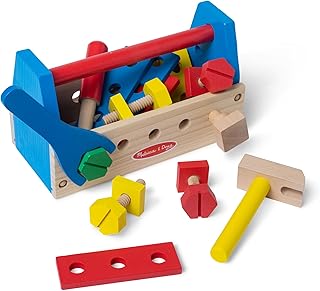
1. 24 Wooden Pieces, Kid Friendly Tools: Best Overall
Our score: 9.4/10 iOur editorial score (1 to 10), based on listing specs, features and how well each pick fits its use case. It is not an Amazon customer rating.
24 wooden pieces Ages 3+ Montessori inspired Take along kit
The Melissa & Doug Take Along Tool Kit earns the top spot because it keeps the idea of a toy toolbox simple. The listing describes 24 wooden pieces, kid friendly tools and a Montessori inspired approach to pretend play. For many families, that combination is exactly what a three year old needs: real shapes to hold, a clear job to do and no flashing lights telling the child what to think. Parents who prefer natural materials and a calmer toy shelf often start with a kit like this, and the pieces can sit beside blocks and play food without looking out of place.
Wooden tool sets like this usually come with a carry case, a handful of hand tools and chunky fasteners that can be turned or tapped into place. The listing names the set as a construction toy for pretend play, so expect a child to fix chairs, repair stuffed animals and build pretend projects around the house. Check the product page for the exact tool list before ordering. Because the tools are meant for pretend work, a child can bring the case to a real project and hand over the hammer while a parent works nearby, which makes the child feel included.
This kit suits preschoolers who like to imitate a parent with a toolbox. Pretend repair work builds fine motor control, hand and eye coordination and everyday vocabulary such as hammer, wrench and screw. Because the set has no drill motor, children invent the sounds and stories, which stretches language skills and imagination in a way that noisy toys sometimes crowd out. Teachers and caregivers often like this kind of toy for shared play too, since two children can take turns with the pieces and decide together what needs fixing next.
A few caveats apply. Wooden play tools can be heavier than plastic ones, so younger children should hold them over a soft rug rather than a tile floor. The pieces are marked for ages 3 and up, so keep them away from toddlers under three. Store everything in the case after play, because loose small pieces are easy to lose and easy to step on. If a set is going to a gift party, pack the pieces back in the case before wrapping so every tool arrives in place and the child can start playing right away.
2. 75-Piece Tool Set / Drill Press: Best Workshop

Our score: 9.4/10 iOur editorial score (1 to 10), based on listing specs, features and how well each pick fits its use case. It is not an Amazon customer rating.
75 piece set Drill press and miter saw Flashlight included Ages 3 to 5
The Black+Decker Kids Workbench is the pick for children who want a full workshop rather than a single toolbox. The listing calls it a 75 piece tool set with a drill press, miter saw and flashlight, and says it has a real Black+Decker look. It is marked for ages 3 to 5, which makes it a preschool workshop with a lot of play value built into one table. Where a toolbox sets one job at a time, this table lets a child imagine a full shop, with a station for cutting, a station for drilling and a lamp to light the work.
A workbench changes how a child plays. Instead of carrying a case from room to room, the child stands at a station, clamps pretend lumber, swings the toy saw and uses the drill press. The long piece list suggests many small items, so expect screws, bolts and accessories alongside the larger machines. Confirm exact contents on the listing before you plan where it will live. The flashlight is a small detail with large play value, because it lets a child inspect a dark corner of the closet or play a late afternoon repair game under the bed.
This set suits an active preschooler who already loves tool play and is ready for longer projects. It teaches sequencing, such as measure, cut, drill and fasten, and it gives two children a place to work side by side. The real look mentioned in the listing makes it a strong gift for kids who watch a parent or grandparent work in a garage. Because it uses a work area, it also gives a natural spot for building habits, such as laying out tools before a project and returning each one to its place at the end.
Plan for space and supervision. A workbench is larger than a toolbox, so measure a corner of the playroom first. With 75 pieces, small parts are part of the package, so it is best for children old enough not to mouth toys, and an adult should check in during play. Sort the pieces into bins afterward so nothing goes missing. Think about noise and mess too, since a workshop encourages banging and sawing motions, and a mat under the bench helps protect floors and keeps stray pieces from rolling away.
3. VTech Drill and Learn Toolbox: Best for Learning Play

Our score: 9.4/10 iOur editorial score (1 to 10), based on listing specs, features and how well each pick fits its use case. It is not an Amazon customer rating.
Drill and Learn Toolbox VTech brand Toolbox format Learning themed
The VTech Drill and Learn Toolbox stands out because the name points straight at learning through play. The listing gives little more than the title, so this entry speaks in general terms: VTech is a toy maker known for electronic learning toys, and a toolbox with a drill is a natural way to wrap early lessons around a favorite role play theme. Check the product page for the exact activities. A recognizable learning brand can ease a parent’s mind about the overall approach, although the exact lessons and sounds are best confirmed in the product description before you commit.
A toolbox format helps a child feel organized. Pieces go in, the lid closes and the box becomes a handle for carrying a project to the kitchen table. Because this is an electronic style learning toy, expect it to need batteries and to make sound, so look at the listing for battery details and a volume note before you order it as a quiet gift. The box style also suits sharing, because siblings can open it together, pick a tool each and compare what happens, which turns one toy into a small team activity.
This set is aimed at young children who enjoy being told they did a good job. Learning toys with a tool theme often practice counting, shapes, colors and simple cause and effect, which suits late toddlers and early preschoolers. Parents who like the idea of tool play with a little structure will find this a gentler step than a large workshop. Some children are drawn to toys that answer back with sounds or phrases, and a learning toolbox gives those kids a reason to keep pressing, listening and trying again.
Because the listing is short, read the age marking carefully and confirm which pieces are included. Electronic toys can be loud in a small room, so sit with your child on the first day and decide where the box lives. Keep spare batteries away from small hands, and replace them only as the manual directs. Treat it as a supervised, in the room toy at first, and let your child show you what each part does so you can judge whether the volume and difficulty fit.
4. Toddler Tool Set with Toy Drill: Best Tool Belt Set

Our score: 9.4/10 iOur editorial score (1 to 10), based on listing specs, features and how well each pick fits its use case. It is not an Amazon customer rating.
50 pieces Toy drill Portable tool box Tool belt
The KidBloom 50 piece Toddler Tool Set pairs a toy drill with a portable tool box and a tool belt, which gives it a more complete role play feel than a simple box of tools. The listing marks it for gifts for ages 3 to 8, so it spans a wide range of young builders. It earns its place for the belt, which turns a toolkit into a costume. The combination of box, drill and belt is a familiar formula, yet it works because each piece supports a different part of the game, from carrying to wearing to using.
With 50 pieces named in the listing, the box likely holds a mix of hand tools, fasteners and accessories alongside the drill. The tool belt lets a child clip a few favorites at the waist and walk around like a contractor. Check the listing for what the belt actually holds, since belt pockets are often small and fit only a few items. A tool belt also gives younger children a gentle lesson in organization, since each loop or pocket has a job and a child can see at a glance what is missing.
This set suits children who love dressing up as workers. A belt encourages hanging tools back on their loops, which is a tidy up habit in disguise, and the toy drill adds the sound and motion that many kids want. The age range in the listing is broad, so younger children will need help while older ones can run longer building games. Gift buyers will appreciate that the listing wording speaks to many ages, which makes the set easy to buy for a cousin or classmate when you only know the child is in preschool or early school.
The usual cautions apply. Fifty pieces mean many small parts, so it is not for children who still mouth toys. Ask the listing whether the drill needs batteries and which size, and keep spare batteries out of reach. Let the child pack the belt and box at the end of each session so the set stays complete. Pick a clear spot for the belt after play, such as a hook by the door, so the pieces stay together and the box does not turn into a pile of loose parts.
5. Electronic Toy Drill, Portable Tool Box: Best Electronic Drill Set

Our score: 9.4/10 iOur editorial score (1 to 10), based on listing specs, features and how well each pick fits its use case. It is not an Amazon customer rating.
Electronic toy drill 50 pieces Portable tool box Ages 3 to 8
The Electronic Toy Drill set from the KidBloom line is the choice for families who want a drill that makes the right noises. The listing names an electronic toy drill, a portable tool box and a tool belt in a 50 piece toddler set, and frames it as a pretend play construction toy for ages 3 to 8. It is aimed at children who want the buzz as much as the build. Sound and motion matter to many kids because they make a toy feel alive, and that feeling can keep a child engaged for longer play sessions than a silent tool might.
An electronic drill usually spins or sounds when a button is pressed, which gives kids a strong cue that their tool is working. The listing mentions a tool belt as well, so a child can strap on the gear and move between pretend jobs. Look for the battery type and whether batteries are included, since that detail decides whether the set works the day it arrives. Buyers should still read the product page for the drill details, since electronic toys differ in how they spin, how loud they are and how long a set of batteries lasts.
This set suits children who enjoy cause and effect toys. Pressing a trigger and seeing a result builds early confidence, and a fastener hunt in the toy box adds fine motor practice. It also works as a bridge for kids who have outgrown very simple toys but are not ready for real shop supervision, which is always an adult task. Parents can use the drill as a way to practice taking turns, setting a timer for each child so everyone gets a go without a fight over the trigger.
The main caveat is noise. A toy drill can be loud in a small room, so decide where drilling happens before the first session. Never let a child use a toy near their face or hair when the motor is running, and keep the drill away from pets. Remove batteries when the toy is stored for a long period. Store the drill where the child can reach it but away from heat, and wipe it with a dry cloth, because moisture and electronics are not good friends.
6. 48 Pcs Construction Tools Kit with: Best Big Variety Box

Our score: 9.0/10 iOur editorial score (1 to 10), based on listing specs, features and how well each pick fits its use case. It is not an Amazon customer rating.
48 pieces Toy drill Toy chainsaw Orange tool box
This 48 piece construction kit is the one to look at when a child wants lots of different jobs. The listing names an electronic toy drill, a toy chainsaw, an orange toolbox and a toddler tool set for ages 3 to 8, with a gift angle for both boys and girls. The chainsaw is the unusual extra, and it helps this box stand apart from the others. The orange color is bright enough to spot on a playroom floor, which helps with the tidy up and makes it easy to find the box during a quick cleanup before dinner.
The bright orange box is meant to read as a work site, and the mix of drill and chainsaw gives children two power tool style toys beside the hand tools. The listing does not break down every item, so check the full contents list on the page. Expect the usual toy tool mix of fasteners, a hammer, a wrench and similar small pieces. Variety is the real selling point here, because a child can switch from drilling to cutting to fastening without leaving the same box, and that keeps long sessions interesting.
It suits children who love outdoor and construction themes, such as lumberjacks, builders and repair crews. Pretend chainsaw play can start good conversations about tree work and why real chainsaws are only for trained adults wearing protective gear. That kind of talk turns a toy into a safety lesson, which makes this set a good fit for curious five and six year olds. Parents of nature loving kids may find that the chainsaw theme pairs well with a backyard game, such as pretending to clear branches or build a log cabin out of cardboard.
Parents should read the age marking in the listing and consider whether the sound features suit the home. A toy chainsaw should never be pointed at people or pets, even though it is only a toy. With forty eight pieces in the box, plan a regular tidy up so that small parts return to the case after each play session. If a chainsaw toy is not to your taste, the drill and other tools still make the set useful, and you can simply leave the saw out of the play space.
7. Construction Toys with Toy Drill, Toddler: Best Set with a Vest

Our score: 9.2/10 iOur editorial score (1 to 10), based on listing specs, features and how well each pick fits its use case. It is not an Amazon customer rating.
Toy drill Vest included Tool box Ages 3 to 9
The KidBloom construction set with a vest is a good match for kids who want a full costume. The listing names a toy drill, a vest, a tool box and pretend play tools for kids, and it gives a gift age range of 3 to 9. A vest changes the play from using tools to being a builder, which many children find more exciting than the tools alone. The vest suggests a theme of crew play, and children often enjoy handing out jobs, such as who is the foreman, who carries the tools and who inspects the work.
The package is built around a toddler tool set with a box, so everything stores in one place. The vest adds a work site identity that suits crew games, such as roleplaying a repair team with siblings. The listing does not spell out each tool, so confirm the exact pieces and the battery needs for the drill before ordering this as a gift. Toy clothes are a real help for kids who warm up slowly, since putting on a costume piece creates a shared signal that play is starting and a role is waiting.
This set suits imaginative children who build whole scenes around their toys. A vest invites costume play and storytelling, and an older child at the high end of the age range can organize younger siblings into a team. It also helps shy kids join in, since putting on a vest gives them a role to play and a script to follow. The broad age range means a younger sibling can wear the vest while an older one directs, and that kind of mixed age play often lasts longer than solo play.
Check the vest fit against your child’s size, since the listing treats it as part of a broad age range and a three year old and a nine year old are very different sizes. Keep long cords or loose straps away from small children during play. As with any set with fasteners, adult supervision helps with the smaller parts. Wash or wipe the vest as the label or listing directs, and check for loose threads or fasteners so nothing snags during active play.
8. Kids Tool Set 20 PCS Toddler: Best Compact Kit

Our score: 9.0/10 iOur editorial score (1 to 10), based on listing specs, features and how well each pick fits its use case. It is not an Amazon customer rating.
20 pieces Toy drill Ages 3 to 8 Pretend play
The Kids Tool Set with 20 pieces is the compact choice for small homes and tidy minded parents. The listing describes a toddler tool set with a toy drill for pretend play, marked for ages 3 to 8 and framed as a gift for both boys and girls. Twenty pieces means fewer parts to manage, and that can be a real advantage in a shared bedroom. Small sets also help when a family wants variety, since a few compact kits can be rotated through the week without taking over the room or the toy chest.
A smaller count often means each tool gets used more. Instead of digging through fifty items, a child can see the whole kit at a glance, pick up the drill and start a job. The listing names the drill as the main attraction, so expect it to be the centerpiece with hand tools in support. Check the page for the exact items. Fewer pieces make it easier for a young child to take charge of cleanup, which is a quiet way to teach responsibility without a lecture or a long chore chart.
This set suits first time tool players, siblings who need to share and families who travel and want a kit that fits in a bag. It still teaches the basics: matching a fastener to a tool, taking turns with the drill and putting things back in the right spot. Older kids may outgrow a compact kit sooner than they would a workshop. Grandparents and sitters can keep a compact kit at their home, so that the child has something familiar to play with during visits and overnight stays.
The caveat is simple. A smaller set offers less variety, so a child who loves long projects may want more pieces. As with every toy drill, check for battery needs and keep spare batteries out of reach. Tell children that the drill is for pretend building only and that real tools stay with adults. When the child asks for more tools, you can add a second set or a wooden kit later, and the two will mix well because each focuses on pretend building.
9. Construction Toys with Toy Drill, Toddler 7S3: Best for Gift Giving

Our score: 9.4/10 iOur editorial score (1 to 10), based on listing specs, features and how well each pick fits its use case. It is not an Amazon customer rating.
Toy drill Tool kit with box Ages 3 to 7 Pretend role play
This construction toy kit is the pick for gift buyers who want a ready to wrap box. The listing names a toy drill, a toddler tool kit with a box and a role play theme, and it is written for ages 3 to 7 with holiday and birthday gift wording. In plain terms, it is a one box answer for a busy shopper who needs a present that fits a preschooler or kindergartner. For a shopper with a short list, a kit that bundles the drill, the tools and a box saves the need to buy separate pieces and worry about whether they match.
The kit stores in its own box, which means a gift does not need extra containers or bags. The listing is brief on piece count, so look at the product page for the exact tools. A toy drill plus hand tools is the usual formula, and it gives children enough choices to start a repair game right after unwrapping. The holiday and birthday wording in the listing signals that the set is designed to be given, so the packaging and presentation are likely to feel like a present.
It suits kids who enjoy imitating adults and who like to help around the house. Giving a child a kit helps them join in when a parent fixes a shelf, since they have their own tools to use. The age range in the listing ends at seven, so this is a better pick for younger builders than for tweens looking for real projects. Because it targets younger kids, it is a thoughtful pick for a child’s first toolbox, the kind of present that starts a collection of building toys over the years.
Keep gift logistics in mind. Order early in busy seasons, check delivery windows on the listing and ask about batteries, since a drill that needs batteries should come with a spare set in your wrapping. Keep the receipt so a swap is easy if a sibling already owns a similar kit. Send a note with the gift that explains what batteries are needed and where to keep the drill, since parents will appreciate a head start on setup.
How to Choose the Best Tool Sets
What makes a good kids tool set
A good kids tool set does three things well. It gives a child tools that are easy to grip, it makes play feel like real work, and it stores neatly so that cleanup is part of the game. Look for a case or box, tools with chunky handles and a mix of items so that several kinds of jobs are possible. A strong set also leaves room for a child’s own ideas, so look for tools that can play many roles and a case that lets a child pack and unpack without help.
Features such as a toy drill, a tool belt or a vest add role play value, but they also add small parts and sometimes batteries. Think about what your child actually enjoys. A quiet fixer needs a different set than a child who wants to wear a vest and run a pretend work site. Ask yourself whether the set will still be fun after a few weeks, because kits that support open ended stories hold interest far longer than toys that do one trick.
Choosing the right age and skill fit
Every set in this guide is aimed at ages 3 and up, and some listings stretch up to 8 or 9. A three year old wants a few big pieces and simple tasks, such as turning a pretend bolt or tapping a peg. A seven year old wants more steps, more tools and a story to act out. Think of age as a range rather than a line, since a patient three year old and a rushed five year old can need very different sets even though both fall inside the marking.
Read the age marking on the listing, not only the box art. A set marked for ages 3 to 5 may feel babyish by second grade, while a set for ages 3 to 8 may include small parts that a younger child needs help with. Match the set to the youngest user in the home. If you are buying for a family with mixed ages, choose the set that suits the youngest child and add a belt or vest as a bonus for the older one.
Wooden sets versus plastic and electronic sets
Wooden sets, such as the take along kit in this guide, feel solid and make soft knocking sounds. They suit calm, imaginative play and tend to look good on a shelf. The tradeoff is weight and the lack of a motor, so the child supplies every sound and movement. Wood also tends to age well and can be passed down, while plastic sets are lighter and often easier to replace if a piece goes missing.
Plastic and electronic sets add drills, lights or sounds, which many kids love. They can also be louder and may need batteries, so check the listing. A mixed approach works well: a wooden kit for everyday calm play and a toy drill set for days when a child wants action. Whichever material you choose, look for smooth edges and stable fasteners so the tools hold together through energetic play and the occasional tumble off a table.
Small parts, supervision and safety labels
Toy tool sets often contain screws, bolts, nuts and other small parts, even when they are plastic. For children under 3, small parts are a choking hazard, and the age marking on the packaging exists for that reason. Keep sets away from toddlers and supervise preschoolers until you know they will not mouth pieces. Never rely on the box art alone, since the packaging and the listing text are the best clues for what the maker says about the set and what the age guidance means.
Look for clear age labels and any safety standard statements on the listing, such as ASTM F963 for toys sold in the United States. If a listing does not mention a standard, do not assume one. Contact the seller or check the packaging when it arrives, and discard any broken pieces with sharp edges. Talk to children about the rule that toy parts never go in mouths, noses or ears, and keep a close eye on any younger sibling who wanders into the room.
Battery powered drills and noise control
Many toy drills run on batteries, and the listing should say which size and whether they are included. A set that needs batteries but does not include them can turn a gift opening into a disappointment, so tuck spare batteries into your wrapping. Some families keep the drill in a separate place and bring it out only for planned play, which keeps battery life up and noise down at other times.
Noise is the other issue. A buzzing drill can be fun for a child and tiring for a parent. Decide on a play zone, such as a rug in the playroom, and teach a rule that the drill stays off near ears and pets. Remove batteries from stored toys so they do not leak over time. If the sound is too loud for your home, ask whether the listing mentions a volume control, or consider a wooden set where the sounds come from the child.
Size, storage and play space
A workbench set needs floor space, while a compact kit fits in a drawer. Measure before you buy, especially if the child shares a bedroom. A set with a carry case or toolbox is easier to put away than one with loose parts, and a tidy toy is a toy that gets used again. A shallow under bed bin or a lidded plastic tub can house a large kit, and labeling the lid with a picture helps a pre reader find the right container.
If the listing names a tool belt or vest, plan for where those go too. A hook at child height by the toy shelf turns putting away into a small routine. Rotating a few tools in and out of the box can also keep a large set fresh. Wall hooks, a small pegboard or a canvas organizer can show off the tools and make cleanup feel like putting things back on a real shop wall.
Budget logic for tool sets
Value comes from what is in the box and how long the child keeps playing, not only from the size of the set. A larger piece count can be good for sharing between siblings, while a smaller kit may be perfect for one child who plays with a few tools in depth. A good rule of thumb is to ask how many hours of play you expect and whether a second child will join, since sharing is the best way to stretch value from a single set.
Think about how many children will use the set and for how long. Sturdy, simple sets tend to last through several years and can be passed down. Listings change, so open the live page to compare current options and make sure the pieces named are what you want. Resale and hand me down value matter too, because a clean, complete set is easy to pass to a cousin or neighbor when your own child moves on.
Care and longevity
Wooden pieces can be wiped with a barely damp cloth and dried at once, since soaking may warp wood. Plastic pieces can usually be cleaned with a mild soap and a damp cloth. Check the manual if one is included, and never submerge a toy with electronics. A quick weekly check of screws, joints and plastic seams catches wear before it turns into a loose or broken piece.
Store sets in a dry place away from direct sun, which can fade colors. Check for loose screws, cracked plastic or splintered wood once in a while. Retire any piece that breaks, because a damaged toy can have sharp edges that were not there when it came out of the box. When a toy has an electronic part, keep the instruction leaflet in a safe place so you can look up battery type and replacement steps without hunting online.
Learning through pretend building
Pretend tool play teaches more than it seems. Children practice fine motor control by turning, tapping and fitting pieces, and they learn words such as hammer, wrench, level and bolt. Sorting and matching fasteners to tools adds early math ideas. Early builders also learn persistence, because a stubborn pretend bolt can take a few tries, and finishing a job gives a quiet boost of pride.
Social skills grow too. Siblings can take turns, play a crew with a boss and a helper, or fix a toy together. Ask open questions during play, such as what are you building or what is broken, to stretch language and planning skills without turning play into a lesson. Praise effort rather than speed, and let children explain their plan aloud, since talking through each step builds confidence and a richer vocabulary.
Common mistakes when buying tool sets
One common mistake is buying the biggest set without checking the age marking. A set with seventy five pieces can be wonderful for a five year old and frustrating for a three year old who needs help with every piece. Another is ignoring batteries and ending up with a toy that cannot work on the day it is opened. Another slip is skipping the listing details about batteries and extra parts, which can lead to missing items that are essential for play on day one.
A third mistake is assuming a toy tool is a real tool. Toy sets are for pretend play only, and children should learn that real tools belong to adults or require close supervision. Keep expectations realistic and let the set be a toy. Parents also sometimes overlook storage, so a big set arrives with no place to live, and the pieces end up spread across the house within a week.
Gift tips for birthdays and holidays
Tool sets make easy gifts because they fit many ages and interests. Pair a toolbox with a small wooden birdhouse kit or a few stickers for a theme. If you are buying for more than one child, choose a set with enough pieces to share and talk with the parents first. A final touch is to include a small note about safe play, such as handing tools to a grown up for real jobs and keeping pretend tools away from pets.
Order early in busy seasons and check the delivery window on the listing rather than assuming a date. Keep a gift receipt, mention battery needs on the card and include a few spare batteries when the set has a motor. Wrap the tool belt on top so it is the first thing a child sees. If the gift will be opened at a party, bring a couple of extras such as stickers or a toy hard hat so other children feel included and the new builder can share.
How to set up a pretend workshop at home
A pretend workshop needs only a small table, a few labeled bins and a spot to hang a belt or vest. Put the tools within easy reach of a child so there is no need to ask for help every time a new job begins, and keep batteries stored separately in a high place. Good lighting matters as well, so a lamp or a window nearby lets a child see small parts clearly during longer sessions.
Add simple props to widen the game, such as cardboard boxes to repair, a toy bird house to build or stuffed animals that need a fix. A short play script, such as open the shop, take a call, fix the problem, closes each session on a happy note. Rotating the props each week keeps the workshop feeling new without buying anything extra.
Frequently Asked Questions
What age is best for a kids tool set?
Most sets here are marked for ages 3 and up, with some listings stretching to 7, 8 or 9. Three to five year olds enjoy simple wooden or toolbox sets. Older children may prefer bigger sets with a drill, belt or workbench. Always check the age marking on the listing.
Do toy tool sets need batteries?
Sets with an electronic toy drill usually need batteries, while wooden sets typically do not. The listing should state whether batteries are included and which size. Since this varies, confirm on the product page and keep spare batteries ready for gift giving.
Are toy tool sets safe for toddlers under 3?
Most are not meant for children under 3 because of small parts. Follow the age marking on each listing and the manufacturer instructions. If a younger child shares a home with an older sibling, store sets out of reach and supervise play closely.
Is a wooden set better than a plastic one?
It depends on the child. Wooden sets feel sturdy and suit quiet imaginative play, while plastic and electronic sets add sound and motion. Many families like having one of each, starting with wood for everyday play and adding a drill set later.
How many pieces should a tool set have?
More is not always better. Twenty pieces can suit a small space and a first time builder, while fifty or seventy five pieces give more variety for older kids. Think about storage and how many children will play before choosing a count.
Can girls and boys both use these tool sets?
Yes. Tools are for any child who enjoys fixing and building. Several listings in this guide mention gifts for both boys and girls, and the best choice depends on interests such as costumes, loud drills or quiet wooden play, not on gender.
How do I clean a kids tool set?
Wipe wooden pieces with a barely damp cloth and dry them at once. Clean plastic pieces with mild soap and a damp cloth. Never submerge electronic toys or toy drills. If the listing or manual gives care steps, follow those first.
What should I look for in a toy drill?
Check the battery type, the sound level and whether the bit is a safe, blunt toy part. Look for a comfortable grip for small hands and a switch a child can press easily. Read the listing for details and supervise the first play session.
Do tool sets teach real skills?
They support fine motor control, hand and eye coordination, vocabulary and imaginative planning. They are not a substitute for real tool instruction, which should wait until a child is older and has an adult guiding every step.
What is the best way to use a tool set as a gift?
Pick a set that fits the youngest child’s age, add spare batteries if needed and wrap the tool belt or vest on top. Order early, check the delivery window on the listing and keep a gift receipt in case a swap is needed.
The Bottom Line
The Melissa & Doug Take Along Tool Kit is our top pick for most families because it keeps tool play simple, sturdy and imaginative for children who are ready for ages 3 and up. If your child wants more action, the Black+Decker workbench, the VTech toolbox and the KidBloom toy drill sets each add a different kind of fun.
Whichever set you choose, confirm the age marking, the included pieces and the battery needs on the live listing. Supervise small parts, store the set in a box with a lid and remind kids that these are toys for pretend building. A good tool set can grow with a child for years.
Updated for the 2027 buying season. Amazon listings and availability change often, so check the product page for current details.


Write Your Review
No reviews yet. Be the first to share your experience!