

As an Amazon Associate we earn from qualifying purchases. If you buy through links on this page we may receive a commission at no extra cost to you. Product details come from Amazon listings and can change.
Finding the best soccer goals for a child is mostly about matching the net to the player, the lawn and the storage closet. This guide looks at nine portable and pop up goals that families can set up in a backyard, a park or a playroom, from small 4 x 3 ft nets for toddlers to larger 6 x 4 ft frames for school age kids.
It is written for parents, grandparents and gift buyers who want a plain explanation of what each listing offers. Each pick covers what the title says about size, extras such as cones, targets and balls, and the age range the seller names, and it points out where a buyer should read the full listing for missing details.
Prices change often and vary by color, size and bundle, so we link to live listings instead of quoting numbers here. Check the current page for what is included before you order, and keep in mind that every lightweight goal needs anchoring, a clear play area and adult supervision.
Key Takeaways
Best Soccer Goals at a Glance
| Product | Our score | |
|---|---|---|
| GoSports Portable Soccer Goals for Kids Best Overall |
9.2 / 10 | Check Price |
| Kids Soccer Goals for Backyard Set Best Two Goal Backyard Set |
9.0 / 10 | Check Price |
| Franklin Sports Blackhawk Backyard Soccer Goal Best for Mixed Age Families |
8.8 / 10 | Check Price |
| 2 Pack 4’ x 3’ Size Best Indoor and Outdoor Pair |
8.8 / 10 | Check Price |
| Portable Soccer Goals, Kids Soccer Net Best for Target Practice |
9.2 / 10 | Check Price |
| Kids Soccer Goals for Backyard, 2 Best for Drills with Cones |
8.8 / 10 | Check Price |
| 4’x3’/5’x3’/7’x5′ Portable Soccer Goal, Pop Up Best Size Range |
9.0 / 10 | Check Price |
| Portable Pop Up Soccer Nets for Best for Wide Age Span |
8.8 / 10 | Check Price |
| 4x3ft Portable Soccer Goal Pop Up Best Compact Starter |
8.8 / 10 | Check Price |
How We Chose the Best Soccer Goals
This is a research based guide, not a lab comparison. We read each product title and listing details, compared the sizes, bundle extras and age ranges the sellers state, and looked for a balanced mix of small starter nets, paired sets and bigger frames. Where a title is cut off, we say so and tell you what to confirm on the live page.
Each pick also carries an editorial score out of 10 that is shown separately on the site. It comes from features, specs and how well the product fits its use case, such as toddler play, sibling games or drill practice. Safety is part of the picture: anchoring, supervision and checking the age marking on the listing matter as much as the frame size.
In-Depth Reviews
1. GoSports Portable Soccer Goals for Kids: Best Overall

Our score: 9.2/10 iOur editorial score (1 to 10), based on listing specs, features and how well each pick fits its use case. It is not an Amazon customer rating.
13 color options 4 x 3 ft or 6 x 4 ft Portable pop up style Made for kids
GoSports Portable Soccer Goals for Kids earns the top spot because its listing offers the most choice for a family buying one goal. The title promises 13 color options and a choice between a 4 x 3 ft and a 6 x 4 ft frame. That means a parent can match the goal to a child’s height, the size of the yard and even a favorite team color, which keeps a young player excited about heading outside.
The title calls it a portable soccer goal for kids, so expect the familiar lightweight frame and net that folds away when the game ends. Pop up and portable goals of this kind are built to move from a lawn to a park or a driveway, and they usually travel in a carry bag. Check the listing for what ships in the box, such as stakes or a bag, because the title does not spell that out.
This goal suits children who are learning to dribble, pass and shoot and who want a real net to aim at. The smaller size fits younger players who are still building leg strength, while the larger size gives school age kids a wider target and more room to place a shot. Either way the goal teaches accuracy, because a ball that misses the frame has to be chased and tried again.
As with any lightweight goal, the practical tip is to stake it down or weigh it so that wind and enthusiastic shots do not tip it over. Children should never hang or climb on the frame. Pick the size by the age and height of your smallest regular player, measure the storage spot at home, and confirm the exact dimensions and included parts on the live listing before you buy. Younger siblings can borrow it later, so the purchase keeps its value as the family grows.
2. Kids Soccer Goals for Backyard Set: Best Two Goal Backyard Set
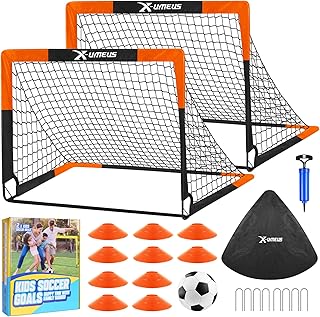
Our score: 9.0/10 iOur editorial score (1 to 10), based on listing specs, features and how well each pick fits its use case. It is not an Amazon customer rating.
Set of 2 goals 4 x 3 ft or 6 x 4 ft Backyard training Toddler friendly sizing
This listing sells kids soccer goals for backyard use as a set of two, and that pairing is the whole appeal. Two nets at opposite ends of a lawn turn solo practice into a real match, with one side to defend and one side to attack. For families with more than one child, a pair of goals also removes the arguments about whose turn it is to be the goalkeeper. Parents who host a backyard birthday will find that two nets make team games far easier to organize.
The title mentions 4 x 3 ft and 6 x 4 ft options and describes the goals as toddler soccer goal training equipment. The smaller dimension is a gentle fit for the youngest players, while the bigger one gives older children a target worth aiming at. The title is cut off after the word with, so read the full listing to see which extras, if any, come in the package. Looking at the pictures and the full description will show how the goals attach to the ground.
Two goals make this set a natural fit for small sided games such as one on one, two on two or a shooting race between siblings. Young children learn spacing, turn taking and basic rules by playing short matches, and the toddler wording suggests that the smallest players have been kept in mind. Parents can also use one goal for shooting drills and the other for passing through a gap. Short matches also teach children to celebrate a goal kindly and to shake hands afterward.
Before you order, think about where the pair will live. Two folding frames take more space than one, so look at the closet or garage shelf. Set them far enough apart for the age of the players and anchor each frame well. Supervise little ones around the nets, and remind everyone that the goals are for kicking at, not for climbing. Pack both frames in their bags after play, and count the stakes each time so none are lost in the grass.
3. Franklin Sports Blackhawk Backyard Soccer Goal: Best for Mixed Age Families

Our score: 8.8/10 iOur editorial score (1 to 10), based on listing specs, features and how well each pick fits its use case. It is not an Amazon customer rating.
Franklin Sports brand Blackhawk backyard goal Pop up folding net Youth and adult play
The Franklin Sports Blackhawk Backyard Soccer Goal comes from a brand that is well known for sporting goods, and the listing positions it as a portable pop up net for youth and adult play. That wording makes it the pick for households where a ten year old and a parent both want to take shots, instead of one small goal that only suits the smallest player. Many families already know the name from balls, gloves and other backyard sports gear.
According to the title, this is a folding pop up soccer net, so the frame collapses for storage and springs open for play. Pop up designs save time because there are no poles to thread and no tools to find. The listing text we have is cut off, so the exact dimensions, the carry bag and any stakes should be confirmed on the live page before ordering. Pop up goals of this type are meant to be unfolded in seconds, which suits impatient young players.
A goal that serves both youth and adult players helps families practice together. Children can work on finishing while a parent plays goalkeeper, and older siblings can run penalty shootouts. It also teaches that soccer is a game people keep playing for life, which is a nice message for a young athlete who is still deciding which sport to love. Playing together also gives busy parents a fun way to stay active with their children outdoors.
Because it is meant to be used by a wider range of players, shots may come in harder than they do in toddler play, so clear the area behind the net of windows, cars and garden beds. Anchor the frame with stakes or weights whenever the ground allows it. Keep children off the crossbar, and fold the goal away in dry weather to protect the net. Look at how the net attaches to the frame, and replace worn parts promptly so the goal stays dependable.
4. 2 Pack 4’ x 3’ Size: Best Indoor and Outdoor Pair

Our score: 8.8/10 iOur editorial score (1 to 10), based on listing specs, features and how well each pick fits its use case. It is not an Amazon customer rating.
2 pack 4 ft x 3 ft size Indoor and outdoor use Pop up goals
This two pack of portable kid soccer goals is the one to look at if rainy days matter as much as sunny ones. The title says the goals are for backyard, indoor and outdoor use, so the same pair can come inside to a playroom or garage when the weather turns. That flexibility is rare among sports gear, and it keeps practice going all year. Having two nets in one pack also means a spare is ready if a friend or cousin comes to visit.
Each goal is listed at 4 ft by 3 ft and described as a pop up style, which usually means a flexible frame that twists flat for storage. A pair of compact nets is easy to carry in two hands or to tuck behind a door. Check the listing for the material of the frame and whether any anchors are included, because the title does not give those details. Smaller frames like these are easy for a child to carry, which gives them a sense of ownership.
Indoor play brings its own lessons. Children learn to control a softer ball, to pass accurately and to keep shots low, which are all useful habits on a real pitch. Two goals also allow pass and score games, and the size suits kids who are still learning ball control rather than power. It fits ages that enjoy small spaces and quick games. Indoor sessions also allow short games in winter, when daylight is limited and the yard is cold.
Indoors, choose a soft or lightweight ball, move breakable items away and keep the play area clear of glass doors and furniture corners. Outdoors, stake the goals in grass and bring them inside after use so the nets stay dry. Adults should supervise very young players, and the pair should be folded carefully so the frame does not snap open. If the floor is hard, a rug or mat can protect knees and keep the goals from sliding about.
5. Portable Soccer Goals, Kids Soccer Net: Best for Target Practice

Our score: 9.2/10 iOur editorial score (1 to 10), based on listing specs, features and how well each pick fits its use case. It is not an Amazon customer rating.
Includes target Ball and cones listed Ages 3 to 12 Portable goals
Portable Soccer Goals with a target take the idea of a simple backyard net and add a challenge. The title lists a target, a ball and cones, and says the training equipment is meant for ages 3 to 12. Aiming at a marked area inside the net gives a child a clear goal beyond just kicking the ball in, which can keep practice interesting for longer. That extra purpose often keeps a child practicing long after a plain net would have lost its charm.
The listing describes kids soccer net training equipment that comes with the extras named above. The title is cut off after the word outdoor, so check the page for the number of goals, the frame size and the type of ball. Cones help mark a dribbling course, a starting line or a safe zone for waiting teammates, which is useful when more than one child plays. A parent can set cones as a slalom first and then finish the drill with a shot at the target.
The age span of 3 to 12 is wide, so parents should pick activities to match. A three year old can simply kick at the net, while a ten year old can use the target to practice placement, such as high corners or low shots. Children learn that accuracy beats power, a lesson that many coaches repeat to beginners. Keeping score in a notebook lets a child see progress from one week to the next.
Because the span reaches so low, remember that small parts like cones and stakes should be kept away from very young children when not in use. An adult should set up the goals, supervise play and put everything back in the bag afterward. Choose a flat patch of lawn, and consider removing the target for the youngest players who may find it distracting. Check the product page for how the target attaches and whether it suits the goal size you choose.
6. Kids Soccer Goals for Backyard, 2: Best for Drills with Cones

Our score: 8.8/10 iOur editorial score (1 to 10), based on listing specs, features and how well each pick fits its use case. It is not an Amazon customer rating.
Set of two 6 x 4 ft 10 soccer cones Backyard goal set Soccer net included
A pair of 6 x 4 ft goals plus ten soccer cones makes this listing feel like a small training session in a box. The title says two goals of 6 x 4 ft, and it names ten cones. That combination suits parents who like to organize games, and coaches of a young team who want something light to carry to a park for a quick practice. A bundle like this saves time, since a parent does not need to hunt for markers at a sports store.
The goals are described as a kids soccer goal set with soccer nets, and the larger 6 x 4 ft size gives children a wider target than the smaller 4 x 3 ft models in this guide. The title is cut off, so read the listing to see whether a ball, a bag or stakes are part of the package. Cones are usually plastic discs or small markers, and a set of ten can outline a field. Bright cones are also easy for children to spot on grass, which helps keep a drill clear.
With two goals and ten cones, a child can practice zig zag dribbling, cone to cone passing and finishing into either net. Cones teach footwork and spatial awareness, while the goals provide the reward at the end of a drill. It suits school age players who already know how to kick and want structured fun, and it also works for friends who want to run races. Older children can time themselves through a course, which turns practice into a friendly challenge.
Since the goals are on the larger side, give them room, and place them well away from fences and hard surfaces. Use stakes whenever you can, and gather the cones after each session so they do not end up in the mower path. Younger children should be watched around the frame, and parents should confirm the weight and fold size on the page. Check the product page for the carry bag and the weight of the folded frames before you plan a park trip.
7. 4’x3’/5’x3’/7’x5′ Portable Soccer Goal, Pop Up: Best Size Range

Our score: 9.0/10 iOur editorial score (1 to 10), based on listing specs, features and how well each pick fits its use case. It is not an Amazon customer rating.
4×3, 5×3 or 7×5 ft Pop up toddler net Ball named in title Soccer for kids
This is the listing for families who are unsure which size to buy, since the title lists three dimensions: 4 x 3 ft, 5 x 3 ft and 7 x 5 ft. A child who is just starting out and a taller player who has played for a few seasons can both find a fit in the same product line. The title also mentions a soccer ball and calls the net a toddler soccer goal. Parents who plan to keep the goal for several summers will appreciate having a larger option to grow into.
The goal is described as a pop up design, so the frame springs into shape and folds flat. The listing implies that the buyer picks a size, which is useful because a growing child can outgrow a very small net quickly. Details about the frame material, the stakes and the ball size are not in the title, so check the page before choosing and read what each option includes. Photos on the listing are useful for judging scale against a child, so look at them closely.
A child under four may only need the smallest option, while a six to ten year old will have more fun with the biggest one. Choosing the right size teaches sensible expectations, because a goal that is too large makes scoring trivial and a goal that is too small leads to frustration. The included ball lets play begin right away. A child who feels successful will want to play again, and that matters more than any feature on paper.
Measure your yard before you decide, and leave room behind the net so that missed shots do not roll into a street or a flower bed. The 7 x 5 ft size will have the largest folded footprint, so plan for storage. Anchor the frame, supervise toddlers around it, and keep everyone from climbing on the top bar. If the box includes a ball, check its size against your child’s age, and keep a pump nearby.
8. Portable Pop Up Soccer Nets for: Best for Wide Age Span

Our score: 8.8/10 iOur editorial score (1 to 10), based on listing specs, features and how well each pick fits its use case. It is not an Amazon customer rating.
Pop up soccer nets Youth and adult Ages 3 to 16 Training equipment
With a listed age range of 3 to 16, these portable pop up soccer nets cover almost every age in a family. The title describes them as nets for youth and adult players and as outdoor games and soccer training equipment. A household with a preschooler and a teenager can share one product instead of buying two different goals as the children grow. For a gift, this wider age claim helps when the buyer does not know the exact age of the child.
The listing calls them pop up nets, so expect a flexible frame that collapses for travel. Because the title is cut short after the age range, the number of goals, the dimensions and any bag or stakes are unknown from here. A careful buyer will open the product page and confirm the size, since a goal for a three year old and a goal for a sixteen year old need very different dimensions. Quick set up also suits a trip to the park, where the family wants to start playing right away.
Teens can use a pop up net for shooting practice and quick games with friends, while younger children enjoy it as a fun target. Parents can step in as goalkeeper. The wide age claim is best read as a family friendly guide, and the usefulness changes with the size you pick, so treat the label as a starting point and not a guarantee. Different ages can still share a net if the older player uses a softer touch with the ball.
Keep very young children away from hard shots made by older players, and set a house rule that small and big players use the net at different times if the age gap is large. Stake it down firmly, place it with a clear run off area and fold it away when it is wet or when wind picks up. Check the product page for stakes, and confirm the weight limit or age notes if the listing gives them.
9. 4x3ft Portable Soccer Goal Pop Up: Best Compact Starter

Our score: 8.8/10 iOur editorial score (1 to 10), based on listing specs, features and how well each pick fits its use case. It is not an Amazon customer rating.
4 x 3 ft goal Pop up net Soccer ball named Kids training gear
A single 4 x 3 ft goal is a friendly way to start. The title for this listing says portable soccer goal, pop up soccer net and kids soccer net training equipment with a soccer ball, so the basic pieces for a first game are named. It is the simplest option in this guide for a parent who wants to try the sport without committing yard space. This kind of starter goal is also useful as a trial before investing in a larger frame later.
The compact size is small enough for a patio, a short lawn or a playroom floor. The title is truncated after the ball, so look at the full listing to learn what else is in the box, such as a pump, a bag or stakes. Soccer balls shipped with kids goals are often deflated, so a hand pump may be needed, and it helps to keep one in the house. A small bag or pouch makes it easy to carry on a family trip or to a grandparent’s house.
This setup works well for children who are new to the game and need quick wins. A smaller goal near the ground makes it easier to score, which builds confidence, and the child can practice basic passing with a friend or a parent. As skills improve, a bigger goal from this guide can be added next while this one becomes a secondary net for drills. Plenty of praise for every goal helps a new player stay interested, however small the net.
Since it is lightweight, wind can move it, so peg it down when playing outside or place it against a fence. Keep the ball size in mind, because a ball that is too big or too hard is not a good match for a small child. Adults should supervise and check the frame for bends or loose netting often. If the ball arrives flat, inflate it gently and stop when it feels firm, as overinflating can damage it.
How to Choose the Best Soccer Goals
What makes a soccer goal good for a child
A good kids soccer goal is light enough to carry, quick to set up and sized for the player who will use it most. The frame should hold its shape after a shot, and the net should stay attached. Pop up designs are popular because they fold flat, but a flexible frame also means the goal needs help to stay put on a windy day. Think of the goal as a piece of equipment that grows with the child, and look at how it is stored in the closet.
Think about how often your child will play. A goal that comes out every weekend deserves a sturdier choice and good storage, while a goal for a holiday trip can be a smaller, simpler net. A match between the goal and the child is what keeps practice fun, so size and ease of setup matter more than extras. Choose a frame that feels simple to open, because a goal that is hard to set up soon stays in the garage.
Choosing goal size by age and height
Small goals around 4 x 3 ft suit toddlers and early primary school players, who need an easy target and a ball that does not have to travel far. Bigger goals such as 6 x 4 ft or the 7 x 5 ft option in one listing give older children a wider challenge. Pick the size for your youngest regular player so nobody feels left out. A quick measure of the yard will show how many feet of free space you have beyond the net.
Remember that kids grow quickly. If your child is five or six, a mid size choice may last longer than the smallest net. Listings that offer multiple sizes make this easier, but always check the exact dimensions on the product page, because the same title can cover several variants. Compare the dimensions in each listing side by side, since two products with similar names can differ in size.
Pop up frames versus rigid frames
Most goals in this guide are pop up or portable designs. They use a flexible frame that springs open and twists flat into a small circle or bag. That makes them a good fit for apartments, car trips and homes with little storage, and parents can move them without any tools at all. Many parents find that the foldable style also helps when goals are shared between neighbors or relatives.
The trade off is that a flexible frame is lighter and can shift when struck hard or hit by wind. A rigid goal with a firm frame can feel steadier, but it is bulkier to store. For a young child who plays casually, a pop up goal is usually the practical choice. If the child will play on gravel or hard soil, think about whether stakes can actually hold.
Set of two goals or one goal
A pair of goals changes the game. With two nets on a lawn, children can play one on one, set up shooting races and run mini tournaments with friends. If your family has more than one child, a pair keeps everyone busy and cuts down on turns waiting at the net. Check how many frames fit in the trunk if you plan to take them to a park or the beach.
One goal is simpler and uses less space, and it works well for solo practice or for a parent playing goalkeeper. If the goal will mostly be used for dribbling and shooting alone, a single net saves money for a ball, cones or shin guards instead. Some families buy one goal first and add a second after seeing how much the children use it.
Anchoring and safety rules for backyard goals
Lightweight goals can tip over, so anchor them every time. Use the stakes that come with the goal if the listing includes them, or add weights such as sandbags on the base. Children should never climb on the crossbar or hang from the net, and an adult should check that the goal is steady before play begins. Take a minute before every game to look at the corners, the stakes and the net for rips.
Choose a flat, clear lawn away from streets, pools, fences and hard surfaces. Keep very young players out of the way of shots from older children. Check the frame and net for wear, and put the goal away when storms or strong gusts are expected. Teach children the simple rule that the goal is only for kicking at, which protects both frame and child.
Extras that add value: balls, cones, targets and bags
Some listings bundle a ball, cones, a target or a carry bag. These can turn a plain goal into a ready to play kit and save a separate shopping trip. Titles in this guide mention a ball with some goals, ten cones with one set and a target with another, so compare what you actually need. Compare the extras against the cost of buying the same items on their own from a sporting goods store.
Extras are only helpful if they suit your child. A ball that is too large for a toddler will frustrate rather than help, and a stack of cones that nobody uses is wasted. Read the full listing for sizes of the included items, and remember that small parts should be kept away from very young children. Cones, bibs and a small pump are small helpers that make practice feel like a real session.
Indoor play and rainy day soccer
A small pop up goal can move indoors for winter or wet weather. Use a soft or lightweight ball, clear glass and fragile objects out of the way and play on a floor that is not slippery. A garage or basement gives more space than a living room. A child can practice keeping the ball on the ground, which is a habit that carries over to outdoor play.
Indoor games should favor passing and ball control over hard shots. Short sessions keep energy high without risking furniture. Fold the goal away afterward so a toddler does not trip on the frame, and keep the net dry before storing it. Put a towel or mat under the goal if the floor is hard, so that the frame does not scratch wood or tile.
Skills your child can build with a backyard goal
Even a basic net helps a child practice shooting, aiming and goalkeeping. Add cones and a few simple rules and you can run dribbling courses, passing drills and shooting contests. Short sessions with clear goals make practice feel like play and help children gain confidence before joining a team. Mix in games like keep away and goalkeeper challenges so practice never feels like homework.
Parents do not need coaching experience. Start with a few simple tasks, such as ten shots with the left foot and ten with the right, and celebrate improvement. Rotating the goalkeeper keeps everyone engaged, and friendly challenges build sportsmanship along with skill. Notice which skill your child enjoys and build the next week of games around it, whether that is dribbling, passing or saving shots.
Budget friendly buying without false savings
A sensible budget is about value across a season, not just the first purchase. A goal that is too small or too flimsy for your child may be replaced soon, which costs more in the end. A mid sized goal with a bag and anchors can offer better long term value than the smallest available option. Ask whether the goal could also serve a younger sibling or a cousin, which stretches the value further.
Prices change often, so use the live listing to compare sets. If you have several children, a two pack spreads the cost across the family. Avoid paying for extras you will not use, and keep the receipt in case the frame arrives bent or the size is not as expected. Read the return terms on the listing in case the size turns out wrong for your yard.
Care, storage and making a goal last
Dry the net before folding the goal, since damp mesh can smell and weaken over time. Follow the folding instructions on the listing, as twisting a pop up frame the wrong way can bend it. Store it in its bag, in a dry place, away from sharp objects and extreme heat. If a net tears, a repair with strong thread may be enough to keep it going for another season.
After a game, shake off grass and dirt and check for loose stitching along the net. Remove stakes and keep them with the bag so they are not lost. A little care means the goal is ready for the next season or for a younger sibling. Keep the original bag and any instruction sheet in a drawer so the fold is easy to remember.
A learning path from first kicks to team play
Start with a small net and a size appropriate ball so a child can score often and enjoy it. Once shots are steady, move to a larger goal or add a target, and introduce simple rules such as taking turns in goal. At that stage a pair of goals or a set with cones becomes more useful. Offer small rewards, such as choosing the next game, to keep young players motivated through the early weeks.
For children who join a club or school team, a larger backyard goal helps them practice the skills they learn in training. Keep sessions short, praise effort and let the child pick the games. A goal is a tool for fun first and for skill second. Invite a friend or neighbor to join, since playing with others is the quickest way to improve.
Gift tips and common mistakes
Soccer goals make a cheerful gift for birthdays and holidays, since they come ready to play and suit many ages. Pair a goal with a ball and a pump if the listing does not include them, and tuck in a gift receipt. Order early, check delivery windows on the live page and keep the box size in mind for wrapping. Add a card that explains how to fold the frame, which is the step many new owners find tricky.
Common mistakes include buying a goal that is too big for a toddler, forgetting stakes, placing the goal too close to a fence and ignoring storage space. Read each listing in full, confirm the dimensions and plan for adult setup and supervision, and the gift will be used for years. Think about who will help with assembly, since young children should not set up frames alone.
Frequently Asked Questions
What size soccer goal is best for a toddler?
A small goal around 4 x 3 ft is usually a comfortable fit for toddlers and early learners. It keeps the target close and the net low. Check the exact dimensions on the listing, and always supervise little ones around the frame and ball.
Are pop up soccer goals safe for kids?
Pop up goals are lightweight, which helps with carrying, but they can tip in wind or after strong shots. Anchor them with stakes or weights, never let children climb on them, and play on a clear, flat area. Safety is never absolute, so adult supervision matters.
Can children use these goals indoors?
Some listings, such as the 2 pack of 4 ft by 3 ft pop up goals, mention indoor and outdoor use. Indoors, use a soft ball, clear breakable items and avoid slippery floors. Hard shots are better saved for the yard.
Is a set of two goals worth it?
A pair lets children play a real match, run shooting races and share the fun with friends. If your child mostly practices alone or you have little space, one goal is simpler. Families with several kids often prefer the pair.
How do I stop a lightweight goal from tipping over?
Use the stakes in the box if the listing includes them, or add sandbags or other weights to the base. Place the goal on level ground and turn its back to the wind. Take it down when strong gusts or storms are expected.
What age is a backyard soccer goal suitable for?
Listings in this guide mention ages from 3 up to 12 or even 16, depending on the product. Pick the size by your child’s height and skill, and read the age marking on the live page before buying.
Do I need cones, a target or a ball?
Not always. Cones help with dribbling drills, a target adds aiming practice and a ball gets play started. Choose a bundle only if the included items fit your child’s age, and remember that small accessories should be kept from very young children.
How much space does a kids soccer goal need?
A 4 x 3 ft goal fits a small lawn or patio, while 6 x 4 ft and larger goals need more room, plus space behind the net for missed shots. Measure your yard and your storage spot before ordering.
How should I store a pop up soccer goal?
Dry the net, fold the frame as the instructions show and keep it in its bag in a dry spot. Avoid heat and sharp objects. Folding the wrong way can bend the frame, so follow the listing directions.
Is a soccer goal a good gift for a child?
Yes, it is a practical gift that encourages active outdoor play. Add a ball if one is not included, include a gift receipt and order early. Check the size and age range so the present fits the child.
The Bottom Line
The best soccer goals are the ones that fit your child, your yard and your routine. For most families, the GoSports Portable Soccer Goals for Kids is the top pick because of its size choices and color options, while the pair sets, cone bundles and mixed age nets cover other needs.
Read each full listing, confirm the dimensions and included parts, anchor the goal and supervise play. With the right net and a little encouragement, a simple patch of grass can become a place where a child grows in skill and confidence.
Updated for the 2027 buying season. Amazon listings and availability change often, so check the product page for current details.
Write Your Review
No reviews yet. Be the first to share your experience!