

As an Amazon Associate we earn from qualifying purchases. If you buy through links on this page we may receive a commission at no extra cost to you. Product details come from Amazon listings and can change.
Choosing the best budget markers for preschoolers is less about the lowest sticker and more about what a three, four or five year old can actually do with the box. A good value set has barrels small hands can grip, ink that comes out of skin and clothes, caps or clicks that a child can manage alone, and enough colors that two siblings are not fighting over the last red.
This guide covers seven picks drawn from live product listings, from a twelve count starter box to a huge bulk pack and a few novelty sets with stamps or click barrels. It is written for parents, grandparents, daycare staff and gift buyers who want sensible choices for ages 3 to 5. Each pick explains what the listing says, who it suits and where it is not ideal, including one scented set that needs extra care with this age group.
Prices change often, so we link to live listings instead of quoting numbers. Compare pack sizes, think about how many children will share the markers, and check the current listing before you buy.
Key Takeaways
Best Budget Markers For Preschoolers at a Glance
| Product | Our score | |
|---|---|---|
| Crayola Pip-Squeaks Markers 65 Best Overall |
9.6 / 10 | Check Price |
| Crayola Broad Line Markers 12 Best Starter Box |
9.6 / 10 | Check Price |
| Crayola Ultra Clean Washable Markers 40 Best Color Variety |
9.6 / 10 | Check Price |
| Crayola Super Tips 150 Count Best for Classrooms |
9.2 / 10 | Check Price |
| Crayola Clicks Retractable Markers Best No Cap Option |
9.4 / 10 | Check Price |
| Crayola Emoji Pip-Squeaks Stampers Best for Stamp Play |
9.4 / 10 | Check Price |
| Mr. Sketch Scented Markers 22 Best for Scent Lovers |
9.6 / 10 | Check Price |
How We Chose the Best Budget Markers For Preschoolers
This is a research based guide, not a lab comparison. We read each product listing closely, noted the pack size, tip style, washability wording and any extras such as paper or stamps, and then matched those details to what children aged 3 to 5 can reasonably handle. We also looked for a balance of options so the list covers a small starter box, a mid size pack, a bulk pack and a few novelty formats.
Safety and honesty shaped the picks. Washable wording on the listing counts for a lot with preschoolers, and we say clearly when a listing does not mention it. Every pick has an editorial score out of 10 that comes from features, specs and use case fit for this age group, and the site shows that score beside each product. Adult supervision is advised for every set, since markers are not toys to chew or taste.
In-Depth Reviews
1. Crayola Pip-Squeaks Markers 65: Best Overall

Our score: 9.6/10 iOur editorial score (1 to 10), based on listing specs, features and how well each pick fits its use case. It is not an Amazon customer rating.
25 markers 40 sheets of paper Washable ink Smaller barrels
Crayola Pip-Squeaks Markers 65 earns the top spot because it speaks directly to the age group in this guide. The listing describes 25 Pip-Squeaks washable markers together with 40 sheets of paper, and it says the smaller barrels fit little hands. For a parent shopping on a sensible budget, getting both the markers and something to draw on in one box removes a second purchase. Parents who compare several listings will notice that this one stands out for its completeness rather than flashy features.
The set is built around short, slim barrels that a preschooler can hold with a whole fist or a developing pencil grip. Washable ink is the second big draw, since a three year old is almost certain to wander off the paper at some point. The listing does not give a cap design or tip width, so treat those details as something to check before ordering. That combination of short barrels and a simple washable promise is hard to beat when a child is only beginning to enjoy mark making.
This pack suits children who are just moving from scribbles to shapes, faces and simple pictures. Short barrels encourage the finger control that later helps with pencils, and the extra paper means a child can fill sheet after sheet without a parent hunting for scrap. Two or three siblings can share a box without every color being claimed on the first day. Grandparents and babysitters will also like how little explanation the set needs, since children understand it the moment the box opens.
As with any marker, a grown up should stay close for the youngest children and teach that caps go back on after use. Washable does not always mean instant removal from every fabric or painted surface, so keep drawing to a table or a mat. Store the box somewhere a child can reach it only when an adult is nearby. A small pencil case or zip pouch keeps the box together between sessions and helps the paper stay flat and clean.
2. Crayola Broad Line Markers 12: Best Starter Box

Our score: 9.6/10 iOur editorial score (1 to 10), based on listing specs, features and how well each pick fits its use case. It is not an Amazon customer rating.
12 markers Broad line tips Washable Assorted colors
Crayola Broad Line Markers 12 is the simple answer for a first marker purchase. The listing describes twelve washable broad line markers in assorted colors, and that short description is enough to make it a dependable value pick. When a family is not sure how a child will take to markers, a small box limits the spend while still offering a full rainbow. A single dozen also makes a sensible trial before committing to larger packs or special formats later in the year.
Broad line tips lay down thick, bold color, which is exactly what young children need while their hand control is still developing. A wide tip forgives wobbly lines and covers a big area quickly, so a preschooler sees results fast and stays interested. The listing does not describe barrel size, so a smaller child may hold these a little differently than the pocket sized sets in this guide. Because the tip style is so forgiving, even a first time marker user usually ends up with a colorful page and a proud grin.
This box suits children who are discovering that marks on paper can mean something. It works for scribbling a sun, coloring a large printed shape or making a card for a grandparent. Because the count is small, it also fits neatly into a tote bag for a restaurant, a car ride or a waiting room. Daycare teachers sometimes keep one box like this per table, which stops arguments and makes cleanup count easy.
The main caveat is quantity. Twelve markers will be shared quickly among siblings, and a heavy colorer may wear out a favorite shade before the others. Teach children to press the cap on until it clicks, and always supervise young preschoolers so markers stay out of mouths. A second box later is easy if the first one is loved. If your budget allows, keep a spare box in a cupboard so a favorite color never runs out on a busy afternoon.
3. Crayola Ultra Clean Washable Markers 40: Best Color Variety

Our score: 9.6/10 iOur editorial score (1 to 10), based on listing specs, features and how well each pick fits its use case. It is not an Amazon customer rating.
40 markers Broad line tips Ultra Clean washable Assorted colors
Crayola Ultra Clean Washable Markers 40 stands out for its range. The listing describes 40 broad line washable markers in assorted colors, which gives a preschooler far more choice than a standard twelve count box. For families who like a long color list on the table at once, this is a clear value step up without jumping to a bulk classroom pack. The wide choice also helps a child learn the names of less common shades like teal, magenta or tan during everyday play.
The Ultra Clean name points to washability, though the listing gives only the headline claim and no detail on which fabrics or surfaces it covers. Treat it as a reassuring feature rather than a promise. Broad line tips mean thick strokes, so children can fill large shapes quickly and see their choices stand out on the page. Parents who want to avoid repeat purchases will appreciate that a long palette keeps children interested for much longer.
Forty markers fit well when two or more children draw together, or when a child loves sorting and matching shades. Preschoolers often enjoy lining up colors, naming them and choosing a different one for each part of a picture, and a wide palette feeds that kind of play and early color learning. A sorting game that matches each marker to a crayon or a paint dab turns the box into a quiet learning activity.
The trade off is management. A large set needs a tray or a box with a proper lid, and a few caps will go missing if nobody checks them at tidy up time. Adults should supervise, count caps and keep the set away from carpets and light furniture. Dry markers can be sorted out later and the rest kept for the next session. A shallow tray with divided sections makes this much easier to handle for both children and adults.
4. Crayola Super Tips 150 Count: Best for Classrooms
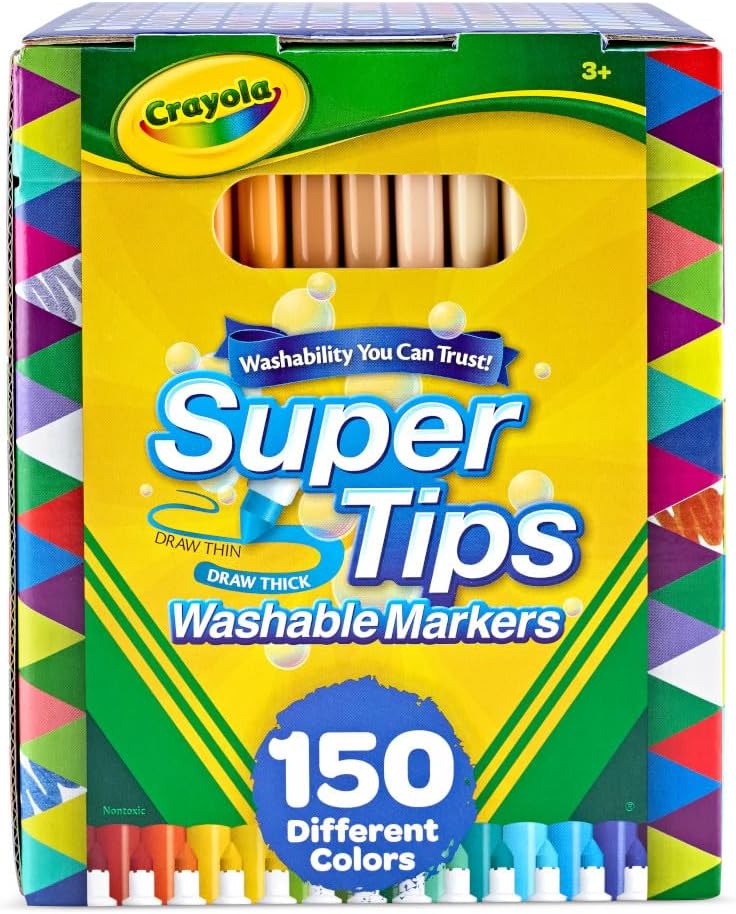
Our score: 9.2/10 iOur editorial score (1 to 10), based on listing specs, features and how well each pick fits its use case. It is not an Amazon customer rating.
150 count Super Tips Washable Bulk pack
Crayola Super Tips 150 Count is the bulk pick for adults who buy for a group. The listing describes a 150 count pack of Super Tips washable markers, and the scale makes it the best fit here for daycare rooms, preschool tables, church groups and big families. When the cost is spread across many hands, a pack this size makes strong value sense. For group buyers, the per marker value tends to improve as the headcount of artists grows, which is the heart of budget buying.
Super Tips are a thinner style than the broad line markers in this guide, and the listing does not describe barrel size or tip width in detail. For a three year old that means the marker may need a more careful grip, so it works better for fours and fives, or for mixed age tables where older children can take the finer tips. Older siblings who visit can use the finer tips too, so the pack serves a whole household rather than only one preschooler.
Teachers can hand out a small handful to each child and keep a stash in reserve, so a missing cap or a worn marker does not halt art time. Parents of large families, or of children who host playdates and parties, can also use the quantity to keep each guest supplied with a full color range. A parent helper can portion markers into small cups before art time to keep the table tidy and the choices clear.
The big caveat is storage and supervision. A pile of 150 markers is heavy, easy to spill and attractive to young explorers, so keep the main supply high and give children only what they need. Remind them to recap each marker, and place a mat under the table. Washable wording on the listing helps, but wipe spills promptly. Store the full supply in a lidded tub, and label it so every adult in the room knows where the spares live.
5. Crayola Clicks Retractable Markers: Best No Cap Option

Our score: 9.4/10 iOur editorial score (1 to 10), based on listing specs, features and how well each pick fits its use case. It is not an Amazon customer rating.
10 markers Retractable clicks Washable Assorted colors
Crayola Clicks Retractable Markers earns its spot for one practical reason: no loose caps. The listing describes ten retractable washable markers in assorted colors, and the click mechanism means a child presses a button to bring the tip out and presses again to put it away. For a household that keeps losing caps under couches, that idea alone can add real value. Parents who pack a bag for appointments will find that a no cap marker is much easier to hand over in a waiting room.
A click barrel also helps with tidiness. A tip that retracts is less likely to dry out when a child forgets to recap, and there is nothing small to chew or lose. The listing gives no detail about tip width or barrel thickness, so parents should check the listing images before ordering for a three year old with a very small grip. Fewer parts also means fewer things to count at tidy up time, which saves patience for both adults and children.
The set suits children who enjoy the click itself. Many preschoolers love a button to press, and the habit of putting the tip away teaches simple routines and cause and effect. Four and five year olds will manage it most easily, while younger threes may need a little help with firm presses. Children who like a clear start and finish to a task often enjoy the click as a signal that the drawing is done.
The main caveat is pack size. Ten markers is a modest amount for a group, and the mechanism is a small moving part that adults should keep an eye on if a child is rough with it. Supervise use, and remind children that the markers draw on paper rather than furniture. Washable wording on the listing is reassuring but not a pass for walls. Keep the box closed when it is not in use so the barrels do not get pressed open by other items in a bag.
6. Crayola Emoji Pip-Squeaks Stampers: Best for Stamp Play

Our score: 9.4/10 iOur editorial score (1 to 10), based on listing specs, features and how well each pick fits its use case. It is not an Amazon customer rating.
16 markers Emoji stamps Washable Mini stampers
Crayola Emoji Pip-Squeaks Stampers brings a playful twist to this list. The listing describes sixteen washable stamper markers with emoji stamps, and the title calls it a toddler mini stamper marker set. It is the least traditional pick here, but for a child who loves pressing shapes onto paper, it can be a delightful and low pressure alternative to drawing. It also makes a lively party favor or a surprise in a travel bag for the days when a calm activity is needed.
Each marker carries a small stamp on the end, so a child can press out a smiling face, a heart or another emoji style shape without needing to draw one. The listing does not say which emoji are included or how the tips work for line drawing, so parents should treat the set mainly as a stamp and color combination rather than a full drawing kit. Pair it with plain paper and a tray so stamps land on the page instead of on the table surface or on arms.
This box suits very young preschoolers who are not yet comfortable drawing recognizable shapes. Stamps give them an instant, satisfying result and encourage early pattern play, counting and making simple cards. Older preschoolers may enjoy using the stamps as decoration on top of their own drawings or on gift tags. Children can swap between stamping and scribbling, which keeps attention longer than a single activity might manage. Gift buyers often pick sets like this for a child’s first art box, since the stamps need no instruction at all.
The caution is that stamps are small and children may be tempted to bite or lick them. Supervise play, and keep the markers on a table rather than a couch or bed. Because stamp marks are small, the set is a fun extra rather than the only marker set in the house. Wipe tables and hands after play. Wash hands after play, since small stamp marks can end up on faces and sleeves more easily than expected.
7. Mr. Sketch Scented Markers 22: Best for Scent Lovers

Our score: 9.6/10 iOur editorial score (1 to 10), based on listing specs, features and how well each pick fits its use case. It is not an Amazon customer rating.
22 markers Scented Chisel tip Assorted colors
Mr. Sketch Scented Markers 22 is included for families who want something with sensory appeal, but it is the pick that needs the most honesty for this age group. The listing describes scented chisel tip markers in a 22 count box in assorted colors. It does not mention washability, so parents should not assume the ink will wash out of skin or clothes. Some families like the idea of a special box that comes out only for supervised quiet time at the kitchen table.
Chisel tips have a flat, angled edge that makes broad strokes and thinner lines, depending on how the marker is held. That is a skill older children enjoy, but a three year old may find the shape awkward. The scents are the main selling point, tying each color to a smell, which can make a coloring session feel like a game. Parents who are unsure should consider starting with a washable broad line set and treating this box as a second purchase.
The set suits older preschoolers, around four and five, who are ready to hold a marker with some control and enjoy sensory play. For a child under four it is probably not the best first marker set, and an adult should choose a washable broad line set first. Teachers can use it as a special treat rather than the main supply. Because the flat tip is angled, hold a demonstration so the child sees which edge makes the thick line and which makes the thin one.
The caution matters most here. Scented markers can tempt children to sniff closely or even taste, so adults should supervise every session and keep caps on when not in use. Draw on paper only, and protect clothes and surfaces because the listing gives no washability claim. If a child has allergies or scent sensitivities, skip this set. For a classroom, keep the scented box on a high shelf and hand it out to small groups rather than leaving it in open reach.
How to Choose the Best Budget Markers For Preschoolers
What budget really means for markers aimed at ages 3 to 5
A budget marker set for a preschooler is not simply the smallest box on the shelf. Value shows up in how long the markers last, how easily a child can use them alone, and how much cleanup they cause. A set that dries out in a week or stains a rug costs more in the long run than a slightly bigger box that survives a term of heavy scribbling. Spending a little time on this early often prevents the most common budget mistake, which is replacing a set that was never right for the child.
Think about the total number of children who will use the markers, the number of drawing sessions each week and how well your child puts caps back on. A twelve count box may be perfect for one child, while a classroom or a house with three small artists will stretch a larger pack much further per child. Writing the numbers down helps, even if it is only a quick note on your phone.
Washable ink and non toxic wording for young children
Washable wording is the single most useful feature on a preschool marker listing. Most children under five will color skin, tables and sleeves at some point, and washable ink makes those mistakes easier to fix. Still, washable is a goal, not a guarantee, so keep a damp cloth ready and wash hands and clothes soon after drawing time. It also helps to keep the original box or a photo of the label, so you can recheck the wording if a stain appears later.
Look for the listing to say washable, and treat missing wording as a reason to be careful. Art materials in many countries carry a non toxic label based on standards such as ASTM D4236 in the United States or EN71 in Europe, but only trust that label when the product listing or packaging shows it. No marker should be chewed, licked or swallowed. Ask the daycare or teacher which brands they accept if the markers will travel to school.
Barrel size and grip for small hands
Preschoolers are still building the muscles and coordination they need for a pencil grip. Short, slim barrels, like the smaller ones described on the Pip-Squeaks listing, let a child hold the marker with the whole hand or a loose pinch. Thicker or longer barrels can feel heavy and clumsy, which may cause a child to give up before the picture is finished. Short barrels also tend to rest more securely in a small palm, which can mean fewer drops and fewer rolling markers.
Try to match the barrel to the child. A three year old often does better with something chunky and short, while a five year old preparing for school may enjoy a slimmer marker that mimics a pencil. If a listing does not describe the barrel, look at the product photos and compare the marker to a typical hand size. Watching your child at a drawing table for a few minutes tells you a lot about what will suit them.
Broad line versus fine tips for early artists
Broad line tips lay down thick, bold color, and they suit preschoolers who are still working on control. A wide tip covers a big area in one stroke, hides wobble and rewards effort with a clear mark. For many three and four year olds, broad line sets are the natural starting point. Children often move between styles as their skills grow, so the first set rarely has to be the last one.
Finer tips such as Super Tips give more detail but ask for a steadier hand. Older preschoolers who are drawing small faces, letters or patterns will enjoy them more. A mixed approach works for many families, with a broad line box for everyday scribbling and a finer pack for special projects. Watch which tip your child reaches for, and use that to guide the next purchase.
Caps, clicks and keeping markers from drying out
Dried out markers are the hidden budget killer. A cap left off overnight can ruin a favorite color, and preschoolers rarely notice. Teach a simple rule, caps on until you hear a click, and keep a small bowl on the table so loose caps do not roll away or end up on the floor. A simple chart on the fridge with a picture of a capped marker can serve as a gentle reminder for young children.
Retractable markers such as the Clicks set take caps out of the picture altogether. The tip stays safe when the marker is closed, and there is nothing small to lose. Even so, a child needs to press the button each time, so build the habit alongside a regular tidy up routine at the end of every drawing session. Rotate older markers to the front of the box so they are used first and nothing sits unused.
Pack size and sharing across siblings or a classroom
Larger packs usually lower the cost per marker, but only if the markers are actually used. A family with one child under five rarely needs 150 markers, while a daycare room certainly does. Start with the number of children who will draw at the same time and add a few spares for lost caps. A simple trick is to count the children, multiply by three or four markers each and use that as a baseline.
Sharing is also a skill. A box of 40 lets two children choose different colors without arguing, while a box of 12 may start squabbles. Consider giving each child a small cup of markers and keeping the main box on a shelf, so choices stay manageable and the full set lasts longer. Mark the lid of the box with the family name if markers travel between homes or classrooms.
Supervision and small parts for ages 3 to 5
Preschoolers explore with their mouths, so markers need supervision even when the ink is washable. Caps, click buttons and stamp tops are small parts that can come loose, and adults should check them from time to time. Keep markers away from children under three who may share the table with a preschooler. Keep a list of emergency contacts and any allergy information near the art area, especially in group settings.
Set a simple routine. Markers are for paper, they stay on the table, and an adult is nearby. Scented markers, such as the Mr. Sketch set, need extra caution because the smell can invite sniffing or tasting. If a child tends to put things in the mouth, a plainer broad line set is a safer choice. A calm, predictable routine helps children learn what is allowed and keeps drawing time pleasant for everyone.
Paper, mats and drawing surfaces that stretch your budget
Markers are only half the budget. Paper adds up quickly, and a child may fill ten sheets in one afternoon. Rolls of plain paper, the blank back of used printouts and inexpensive pads all make good surfaces. The Pip-Squeaks listing includes 40 sheets, which is a handy bonus for families starting from nothing. Newsprint, wrapping paper offcuts and the backs of old calendars are free sources that make the budget go further.
Protect the table with a wipeable mat or newspaper, and tape the paper down so it does not slide. A firm surface also helps washable ink stay on the page instead of soaking through. For very young artists, a large sheet taped to the floor gives room to move and keeps marks away from furniture. A cardboard box lid makes a handy lap tray for drawing on a sofa or in the car.
Mess control, cleanup and stain care
Even washable ink behaves differently on different materials. Skin and many fabrics clean up well with soap and water, while painted walls, wood furniture and some carpets can hold stains. Keep drawing to a protected area, and blot spills quickly instead of rubbing them into the surface. Washable markers are more forgiving than permanent ones, but quick action always gives the best results.
Dress children in clothes you do not mind washing, or use an old shirt as a smock. Keep wipes and a damp cloth nearby, and wash hands when the session ends. If a stain does appear, check the label on the garment and wash it promptly, since fresh marks are far easier to remove. A small basket with wipes, a cloth and a spare shirt makes a handy cleanup kit near the art table.
Teaching early drawing skills with simple marker games
Markers are a quick path to early literacy and fine motor skills. Try drawing circles, lines and zigzags together, then ask the child to copy them. Name colors aloud, count markers as you hand them over and ask what the picture shows. These small conversations build vocabulary and confidence while the child plays. Songs and rhymes about colors can add another layer of learning to marker play and make time pass easily.
Stamp markers, like the Emoji Pip-Squeaks set, can turn patterns into a game: stamp, stamp, draw, repeat. Retractable markers invite practice with pressing and releasing. Keep sessions short, ten to fifteen minutes is plenty for a three year old, and praise effort and ideas rather than neatness. Display finished pictures on the fridge or a string line to show the child that the effort matters.
Storage, travel and care for a longer marker life
Store markers flat or tip down in a labeled box so the ink stays near the tip. Keep them in a cool, dry place away from sunlight, since heat can dry out ink and cause cracked barrels. A small plastic box or a pencil case with a zip is a handy home for a travel set. Tidy storage also makes it easy for a child to help, which is a valuable habit for ages 3 to 5.
For trips, pack a small set, a pad of paper and a clipboard so the child has a hard surface in the car. Check caps before you go and count the markers on the way home. A tidy storage habit protects your budget by keeping every marker working until the last drop. A mesh bag or a sturdy envelope can protect markers if you carry them loose in a handbag.
Gift tips and common mistakes when buying budget markers
A marker set makes a friendly gift for birthdays, daycare goodbyes and stocking stuffers. Pair the box with a pad of paper or a coloring book so it is ready to use. Check that the markers are washable and that the age fit matches the child, and avoid bulk packs unless you know the family will use them. Handwritten notes about favorite colors and a small pad of paper make the gift feel more personal and complete.
Common mistakes include buying fine tip sets for toddlers, ignoring washable wording and forgetting paper. Another trap is choosing scented markers for a child who still mouths objects. Read the listing carefully, think about storage and supervision, and choose a set that matches the child’s current skills rather than where you hope they will be. Always keep the receipt or the order details in case the set arrives damaged or with dried out markers.
Frequently Asked Questions
What are the best budget markers for preschoolers?
A washable broad line set with small barrels is usually the best value. In this guide, Crayola Pip-Squeaks Markers 65 leads because the listing includes paper and smaller barrels, while Crayola Broad Line Markers 12 is a simple starter box.
Are markers safe for three year olds?
Markers can suit three year olds with close adult supervision. Choose washable sets, keep caps and click parts out of mouths and never let children chew or taste ink. Check the packaging for non toxic labels and keep markers away from children under three.
What does washable mean on a marker listing?
Washable means the ink is designed to come out of skin and many fabrics with soap and water. It is not a guarantee for every surface, so protect furniture, wash promptly and check the listing and packaging for exact wording.
Should a preschooler use broad line or fine tip markers?
Most preschoolers do better with broad line tips because thick strokes hide wobble and cover space quickly. Fine tips suit older fours and fives who want detail. A family can buy a broad set first and add finer tips later.
Is a bulk pack worth it for one child?
Usually not. A 150 count pack suits classrooms, daycares and large families. For one child, a twelve or forty count box offers enough choice, and you can add paper or a second box later if the first one is loved.
Are scented markers a good idea for preschoolers?
Scented markers can be fun, but they invite sniffing and tasting. They suit older preschoolers under close supervision, not toddlers. The Mr. Sketch listing does not mention washability, so protect clothes and surfaces and skip them for children with scent sensitivities.
Are retractable markers better for young children?
Retractable markers remove loose caps and help tips resist drying out, which can save money. They need a little finger strength, so they suit most four and five year olds best. Younger children may need help with the button.
How can I stop markers from drying out?
Teach a caps on until it clicks rule, store markers flat or tip down and keep them away from heat and sunlight. Retractable markers close themselves. Check the set after each session and set aside any dry ones.
How many markers does a preschooler need?
Twelve markers cover the main colors for one child, and 25 to 40 suit siblings or small groups. Think about how many children draw at once and add a few spares for lost caps rather than buying a huge pack.
How do I get marker stains out of clothes?
Rinse the stain under cool water as soon as possible, then wash with regular detergent following the garment label. Washable ink usually responds well when treated fast. Avoid harsh scrubbing on delicate fabrics and check the care label first and ask a professional cleaner about special items.
The Bottom Line
If you want one set to start with, Crayola Pip-Squeaks Markers 65 is our top pick for ages 3 to 5. It pairs washable markers in smaller barrels with paper, which gives a child everything needed for a first long drawing session on a sensible budget.
Families who want a smaller box can choose Crayola Broad Line Markers 12, and classrooms can look at Crayola Super Tips 150 Count. Whatever you choose, supervise young children, check washable wording on the live listing and keep markers for paper only.
Updated for the 2027 buying season. Amazon listings and availability change often, so check the product page for current details.
Write Your Review
No reviews yet. Be the first to share your experience!