

As an Amazon Associate we earn from qualifying purchases. If you buy through links on this page we may receive a commission at no extra cost to you. Product details come from Amazon listings and can change.
Finding the best affordable card games for kids is mostly about getting more play from every deck. A small box of cards can turn a rainy afternoon, a car ride, or a waiting room into something fun, and it asks for no screen, no batteries, and almost no setup. This guide gathers nine budget friendly picks that suit children aged 6 to 12 and the grown ups who sit down with them.
The list mixes multi game sets full of classics like Go Fish and Old Maid with famous favorites such as UNO, plus a few quick reaction and strategy games for older kids. For each pick we explain the player count, the age fit as the listing states it, and what the game teaches. Where a game leans younger or older than this age range, we say so plainly.
Prices change often and vary by seller, so we do not quote them. Instead, every pick links to its live listing, where you can see the current offer before you buy. Value here means replay, variety, and sturdy packaging, not just a low number on a tag.
Key Takeaways
Best Affordable Card Games For Kids at a Glance
| Product | Our score | |
|---|---|---|
| Regal Games Card Games for Kids Best Overall Value |
9.6 / 10 | Check Price |
| Upgraded Kids Card Games Pack, 6 Best Upgraded Deck Set |
9.4 / 10 | Check Price |
| LotFancy Card Games for Kids, 6 Best Individually Boxed Decks |
9.4 / 10 | Check Price |
| Card Games Go Fish,Old Maid,Slap Jack Best Themed Decks |
9.6 / 10 | Check Price |
| Mattel Games UNO Card Game, Ages Best Classic Race Game |
9.6 / 10 | Check Price |
| Asmodee Spot It! Classic Card Game Best Visual Match Game |
9.6 / 10 | Check Price |
| Taco Cat Goat Cheese Pizza Card Best Fast Reaction Game |
9.6 / 10 | Check Price |
| Flip 7 Card Game, The Ultimate Best Press Your Luck Game |
9.7 / 10 | Check Price |
| Mattel Games UNO Junior Card Game Best for Youngest Players |
9.6 / 10 | Check Price |
How We Chose the Best Affordable Card Games For Kids
This is a research based guide, not a lab comparison. We read each product listing closely, noting the games included, the player count, the age range the listing states, and any packaging or card details. We also weighed general knowledge about how these classic games play, so the notes on rules, skills, and pacing reflect how card games of this kind usually work for school age children.
We aimed for balance: multi game sets for variety, famous titles for group play, and a few newer games for children who want more strategy. Every pick receives an editorial score out of 10 based on its features, specs, and how well its use case fits families shopping on a budget. Wherever the listing was silent on a detail such as card thickness, we say so instead of guessing.
In-Depth Reviews
1. Regal Games Card Games for Kids: Best Overall Value

Our score: 9.6/10 iOur editorial score (1 to 10), based on listing specs, features and how well each pick fits its use case. It is not an Amazon customer rating.
Six games in one set 2 to 6 players Go Fish and Old Maid Memory Match included
Regal Games Card Games for Kids earns the top spot because one purchase covers a whole shelf of classics. The listing says the set holds six different games: Old Maid, Go Fish, Slap Jack, Crazy 8’s, War, and a Silly Monster Memory Match. For a family watching its budget, that variety is the whole point, since a child who tires of one game can simply move to the next without anyone going back to the store. That mix makes it a sensible first card purchase for a new reader.
The listing describes the set as designed for 2 to 6 players, which suits a pair of siblings, a small birthday gathering, or a classroom reading corner. Each game has its own deck, so the rules stay clean and nobody has to remember which cards to pull out of a shared stack. Matching, sequencing, and quick reaction rounds all appear in the mix, which gives the set a nice range of pace from calm to noisy. Quiet games sit beside noisy ones, so the box fits both calm and lively moods.
This set is aimed at children who are just starting to read numbers and who enjoy simple rules. Go Fish and Old Maid teach turn taking and asking politely, while Memory Match builds attention and recall. Slap Jack and War add speed and basic number comparison. Because the games are so familiar, grandparents and babysitters can usually pick up the rules in minutes and teach them to a child. Teachers and parents alike can pair it with a story or a snack break.
A few practical points are worth knowing before buying. Six decks mean six small piles, so a rubber band or a zip bag helps keep each game together between sessions. Slap Jack rounds can get loud and enthusiastic, so younger players may need a reminder about gentle hands. The listing does not state the card stock, so check the product page if durability matters for rough classroom use. Treat it as a starter library and expand later if one game becomes a favorite.
2. Upgraded Kids Card Games Pack, 6: Best Upgraded Deck Set

Our score: 9.4/10 iOur editorial score (1 to 10), based on listing specs, features and how well each pick fits its use case. It is not an Amazon customer rating.
Six decks 54 cards per deck Poker size cards Senior versions included
The Upgraded Kids Card Games Pack stands out for how it handles growing children. The listing says each deck was raised to 54 cards, and that every game comes with its own senior version that adds function cards for extra strategy. That means a six year old and a ten year old can sit at the same table and both find the game worth playing, which stretches the value of the purchase across several birthdays. It is a smart pick when siblings span several school years.
The pack bundles six decks: Go Fish, Old Maid, Crazy Eights, Memory Match, Slap Jack, and War. The listing describes standard poker size cards, which are easy to shuffle for older hands, though small fingers may find them a bit wide at first. The function cards are the clever part, since they twist familiar rules in a way that keeps seasoned players from getting bored with the basic version. Mixing the two rule styles also lets a child choose a challenge level each time.
Families with a mix of ages will get the most from this set. Younger children can stick to the plain rules and learn matching and turn taking, while older siblings can switch to the senior variants and plan a few moves ahead. It also works well for a classroom teacher who wants one box that can serve both a first grade table and a fourth grade table. Parents can introduce the senior rules gradually, one game at a time.
Some cautions apply. More cards per deck means a little more shuffling effort and a higher chance of a lost card, so keep each deck in its own sleeve or bag. The senior rules take a few minutes to read together before the first game. The title mentions basket and stocking gifting, which is a fair use, but the cards themselves are a year round game and not a seasonal item. Choose it when long term value matters more than a quick one off game.
3. LotFancy Card Games for Kids, 6: Best Individually Boxed Decks

Our score: 9.4/10 iOur editorial score (1 to 10), based on listing specs, features and how well each pick fits its use case. It is not an Amazon customer rating.
Six decks Each deck boxed Instructions included Animal themed cards
LotFancy Card Games for Kids is a strong pick for families who like order. The listing says each deck is individually boxed, and that instructions are included for every game. That small packaging detail matters more than it sounds, because loose decks are the number one reason card sets end up with missing pieces. A boxed deck can be slid into a backpack or a car door pocket without spilling. That makes a tidy box ideal for grandparents who host visits.
The set contains Go Fish, Old Maid, Crazy Eights, Memory Match, Slap Jack, and an animal themed deck of playing cards that can be used for War. The listing frames it as a six in one fun pack. The animal pictures give younger children something to look at and talk about, and they make the matching games feel friendly rather than like a school drill. Pictures of animals also help a nervous player relax.
This set suits the early elementary crowd, roughly the ages when children are learning to follow written rules and to lose gracefully. Printed instructions are helpful for a parent who has not played Old Maid since childhood. Because each game stands alone in its own box, a child can choose a game, set it up, and put it away without help, which builds a small sense of independence. Setting a child in charge of the boxes is a small but real confidence boost.
There are things to keep in mind. The animal deck for War is a general playing deck, so it will feel less specialized than the single purpose decks. Boxes can bend if a bag is stuffed, so give them a firm spot at the bottom. The listing does not describe card thickness or coating, so families wanting wipe clean cards for sticky snack time should look at the product page first. Treat the packaging as part of the value and keep the boxes in good shape.
4. Card Games Go Fish,Old Maid,Slap Jack: Best Themed Decks

Our score: 9.6/10 iOur editorial score (1 to 10), based on listing specs, features and how well each pick fits its use case. It is not an Amazon customer rating.
Four decks Ocean, profession, food, animals Go Fish and Old Maid Slap Jack and Memory Match
The four deck pack from this unnamed brand is a smaller, more focused option for budget minded shoppers. The listing says it holds Go Fish, Old Maid, Memory Match, and Slap Jack, and that the four games match four themes: ocean, profession, food, and animals. Because each game has its own theme, children can tell the decks apart at a glance, which cuts down on mix ups at the table. That clarity helps especially when several children share the pile.
The listing calls the games easy to learn and says they suit kids, teens, and adults. The profession theme is a nice conversation starter, since players can talk about what a firefighter or a chef does while they hunt for pairs. The food and ocean artwork gives picky or reluctant players something fun to name, which turns a simple matching round into a small vocabulary lesson. Parents can use the pictures to start small chats about jobs and foods.
This pack fits younger school age children and families who do not need six games. Four decks cover the core of the genre: asking for cards, avoiding the odd one out, matching pairs from memory, and a fast slapping round. It also makes a tidy gift for a classmate or a cousin, because the contents are easy to explain to a parent who has never seen the set before. It is an easy gift to hand to a busy parent without a long explanation.
The trade off is that War and Crazy Eights are not listed, so families wanting number focused play will need a standard deck on the side. The themes are fun, but they also mean the pictures matter more than the numbers, which is less helpful for math practice. Check the product page for card size and finish, since the listing text here is brief on materials. Pairing it with a plain deck solves most of these gaps.
5. Mattel Games UNO Card Game, Ages: Best Classic Race Game

Our score: 9.6/10 iOur editorial score (1 to 10), based on listing specs, features and how well each pick fits its use case. It is not an Amazon customer rating.
Ages 7 and up 2 to 10 players Action and Wild Cards Reverse Card included
Mattel Games UNO is the one title on this list that almost every parent already recognizes. The listing says players match colors or numbers in a race to get rid of all their cards, with Action Cards and Wild Cards adding surprise. For a budget guide, its value is its staying power, since a single deck can fuel family game nights for years without needing a new edition. It is a dependable choice when guests of many ages arrive at once.
The rules are short enough to explain in two minutes. A player puts down a card that matches the color or number on top of the discard pile, and special cards change the flow. The listing highlights the Reverse Card, which switches the direction of play, and that one card alone creates plenty of groans and laughs. Games are quick, so a round can fit before dinner. Each round resets quickly, so a poor start never feels permanent.
The listing names ages 7 and up and 2 to 10 players, which makes this the largest group game in the guide. It works for a whole class, a cousin reunion, or a car ride when seating allows. It teaches color and number matching, planning ahead, and the useful skill of handling a mean card without a meltdown. Older kids and adults can play alongside younger ones without much handicap. It makes a fine anchor game for a collection that grows slowly.
Keep a few things in mind. Luck drives a lot of the outcome, so a skilled child will not always win, and a sensitive player may need a reminder that it is just a game. Shuffling a full deck can be tricky for small hands, so an adult may need to deal at first. Players who want a deeper challenge may find the plain rules a little light after many rounds. Even so, it remains a smart anchor for a budget collection.
6. Asmodee Spot It! Classic Card Game: Best Visual Match Game

Our score: 9.6/10 iOur editorial score (1 to 10), based on listing specs, features and how well each pick fits its use case. It is not an Amazon customer rating.
Ages 6 and up 2 to 8 players Five games in one Eco blister edition
Asmodee Spot It! Classic is the sharpest looking pick for children who like fast, visual play. The listing calls it a lightning fast matching game where players race to spot the only matching symbol between any two cards. It also describes this 2024 refresh as an eco blister edition, which means the packaging is a compact blister pack instead of a bulky box. That small footprint suits tight budgets and tight shelves alike. It also gives the whole family a tidy gift idea that is easy to wrap.
The listing says five games are built into the set, so the same deck of round cards can be used for several different rounds, from a quick pair match to a hot potato style variation. Every pair of cards shares exactly one symbol, which is the neat trick behind the game. Because the cards are round and picture based, there is no reading or math required to take part. Over time the same deck can feel fresh through the built in variations.
The listing names ages 6 and up and 2 to 8 players. It rewards observation, quick recall of names for objects, and a calm head under pressure, which makes it a good fit for visual learners and for children who prefer pictures to numbers. It is also a fair leveler, because an eight year old can beat a parent on a lucky glance. That is a welcome change from games that adults win automatically. Used well, it becomes a quiet favorite for long trips and waiting rooms.
Some practical notes help. Rounds can turn competitive and loud, so set a rule about grabbing before the game starts. Younger players may shout a symbol that is not quite right, which a patient adult can turn into a teaching moment. The blister pack is compact but may not be reusable for storage, so a small pouch or tin keeps the deck together once the packaging is opened. Store the cards in a pouch to keep them clean for the next player.
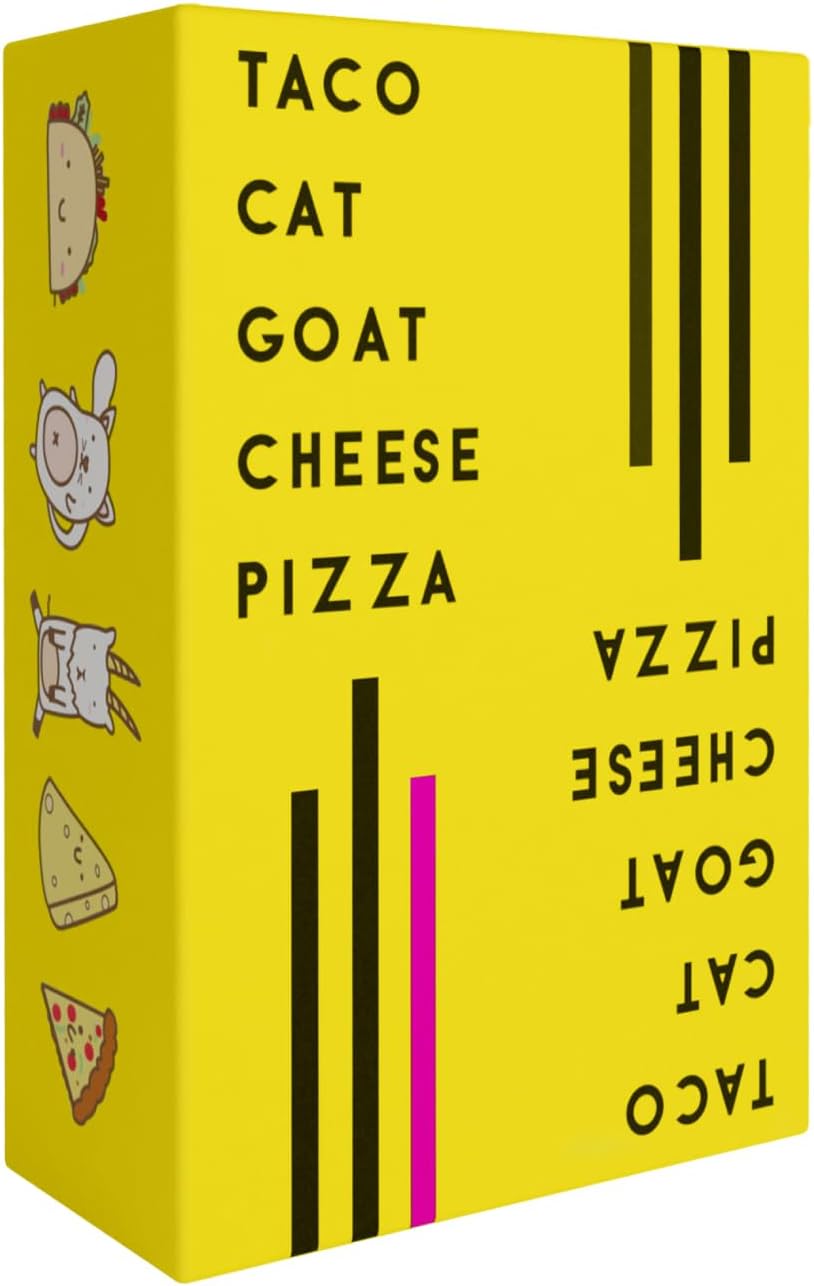
7. Taco Cat Goat Cheese Pizza Card: Best Fast Reaction Game
Our score: 9.6/10 iOur editorial score (1 to 10), based on listing specs, features and how well each pick fits its use case. It is not an Amazon customer rating.
Ages 7 and up 2 to 8 players 10 to 15 minute rounds Spoken word matching
Taco Cat Goat Cheese Pizza is the silliest game in this guide, and that is a real selling point. The listing describes a lively game where players race to match cards with spoken words: Taco, Cat, Goat, Cheese, and Pizza. Everyone chants the words in order as cards are laid down, and when a card matches the word being said, the hands slam the pile. The laughter usually starts within the first minute. Younger players tend to catch on within a single round.
The listing names ages 7 and up and 2 to 8 players, and says each round lasts 10 to 15 minutes. That short play time makes it a good choice for a break between homework and dinner, or a quick warm up at a birthday party. Setup is nearly nonexistent, since players simply deal out the deck and begin chanting. The box is small enough to slip into a coat pocket or a bag. Parents can join in without any special skill, which keeps the mood light.
This game suits children who have energy to burn and who enjoy rules that are easy to remember. It builds attention, listening, and reaction speed, along with the social skill of waiting for a turn to chant. It is a good fit for families with a mix of ages, since a seven year old can compete with older siblings, and the whole table ends up giggling over the silly words. It also helps shy children warm up to a group before a larger activity.
There are a few caveats. Slapping the pile gets rough if players are overexcited, so remind everyone to use flat, gentle hands. The chant and the slap make it a loud choice for quiet apartments or late evenings. The game relies on a group, so two player rounds feel less exciting than a table of five or six. It is not a quiet, thinking game, and that is by design. Use it as a lively opener and switch to a calmer game afterward.
8. Flip 7 Card Game, The Ultimate: Best Press Your Luck Game

Our score: 9.7/10 iOur editorial score (1 to 10), based on listing specs, features and how well each pick fits its use case. It is not an Amazon customer rating.
Press your luck play First to 200 points Avoid repeat numbers Strategy and risk
Flip 7 is the strategy minded option in this guide, and it is a good pick for older kids who have outgrown Go Fish. The listing describes it as a blend of press your luck and strategy, where players are dealt cards and must avoid revealing the same number twice. The first player to reach 200 points wins. Every turn comes down to one question: stop and bank the points, or flip another card and risk losing them. The longer sitting also gives older children a chance to show patience.
The listing frames the central choice as playing it safe or risking it all. The odds shift as more cards appear, so players who pay attention to which numbers are already out can make smarter bets. Because rounds build tension quickly, the game rewards a bit of nerve and a bit of mental math. The listing does not state an age range or player count in the text used here, so check the product page before buying. It pairs well with a classic set that handles the simpler moods.
This game is aimed at the upper end of the audience in this guide, particularly tweens who like to out think siblings and friends. It teaches risk and reward, probability in a casual way, and the skill of knowing when to stop. Parents who enjoy card games may find it just as engaging as their children do, which makes it a strong candidate for a regular family game night. Siblings often enjoy comparing how bold each person played afterward.
A word of honesty about fit. This game is not the best starting point for a preschooler or an early reader, since the push your luck decisions can frustrate children who are still learning to handle a loss. Reaching 200 points takes several rounds, so plan for a longer sitting than a Go Fish match. It is a strong second purchase after a simple classic set has been enjoyed for a while. Add it once your child has mastered the basic matching games.
9. Mattel Games UNO Junior Card Game: Best for Youngest Players

Our score: 9.6/10 iOur editorial score (1 to 10), based on listing specs, features and how well each pick fits its use case. It is not an Amazon customer rating.
Ages 3 and up 2 to 4 players Animal pictures on numbers Simplified UNO play
Mattel Games UNO Junior is the right pick when a younger sibling wants to join the table. The listing says it is the UNO game everyone loves, simplified so children age 3 and older can play. That is younger than the 6 to 12 range this guide centers on, so think of it as a family add on that lets a preschooler sit alongside older kids instead of watching from the couch. It stays a gentle introduction rather than a long term favorite for older kids.
The listing explains that each number card has a matching animal illustration, so children who do not know their numbers yet can still play. That design choice is thoughtful, because it turns a numbers game into a picture matching game for pre readers. It is meant for 2 to 4 players, so it fits a small family better than a classroom, and its rules are lighter than the classic edition. Adults can shuffle and deal while the little one picks the cards to play.
For children in the target age range of this guide, this game works best as a bridge. A kindergartner can start here, learn color matching and turn taking, and move up to the standard version by first or second grade. It also helps older siblings practice patience and gentle teaching, which many parents find a nice side benefit. The listing does not specify the card material or size. A short play session of a few rounds is usually plenty for this age.
Be honest about the limits. An eight or nine year old may find the rules too light and lose interest quickly, so do not buy this as the only game for a school age child. Preschoolers should still play with adult supervision, since young children sometimes chew or crumple cards. Keep the deck in a small box or bag, and count the cards occasionally so a missing one does not spoil the game. Treat it as a stepping stone and keep expectations realistic.
How to Choose the Best Affordable Card Games For Kids
What budget really means for a card game
A budget friendly card game is not simply the one with the smallest tag. The real measure is how many hours of play each deck delivers before a child asks for something new. A single game with a short rule list can be played hundreds of times, while a multi game set spreads that value across several different experiences. Think of it as stretching one purchase across many afternoons of play.
Think in terms of cost per game night. A set that includes six games lets a family rotate through them and keep the novelty alive, and a game with built in variations does a similar job. Both approaches stretch the same purchase, which is exactly what careful shoppers are looking for. Shoppers who plan this way rarely feel the need to replace a game right away.
Matching the game to a child’s age
Age labels on the box are a useful starting point, but children vary widely. A six year old who loves puzzles may handle Spot It! easily, while a seven year old who dislikes losing may struggle with a luck heavy game. Read the age range on each listing, then think about how your own child handles waiting, reading, and disappointment. Watching a child play for a few minutes shows more than any label can.
For the 6 to 12 range, simple matching games work best at the younger end, and strategy games such as Flip 7 belong at the older end. Games with a senior mode, like the upgraded six deck pack, bridge the gap. If a younger sibling is in the house, a game with a junior edition lets everyone play together. Keep the box so you can revisit the rules when a new age stage arrives.
Multi game sets versus single titles
Multi game sets, such as the ones from Regal Games and LotFancy, pack several classics into one purchase. They suit families who want variety and who do not yet know which style their child prefers. They also work well as classroom or waiting room supplies, since one box covers many moods. Sharing a set between households, such as cousins, can lower the cost even further.
Single titles like UNO, Taco Cat Goat Cheese Pizza, and Flip 7 go deeper on one idea. They tend to have richer rules and more replay value for older children. A common budget plan is to buy one multi game set first, then add a single title once you see what your child enjoys. Decide based on how often your family sits down together.
Reading the listing for card quality
Card quality is hard to judge from a photo, so lean on the details in the listing. Look for mentions of poker size cards, individually boxed decks, or included instructions, since these affect how easy the set is to use and store. When the listing does not describe card stock, treat that as a question to answer before buying, especially for classrooms. Reading the product page closely before ordering avoids most surprises.
Rounded corners, a smooth finish, and a snug box all help a deck last longer, but they are not always stated. If a set will be used by young children, expect some bending over time. Decks you can replace easily are less worrying than one special deck with unusual art. A sturdy box also tends to survive many trips in backpacks.
Player counts and table size
Check the player count before anything else. A game made for 2 to 6 players works for a typical family, while a game that handles up to 10 players, like the listing for UNO, suits a party or a classroom group. A game that needs five or more players will be awkward when only two people are home. Counting heads at a typical weekend gathering gives a quick answer.
If most of your play happens one on one, look for sets with many two player games, such as Go Fish, War, and Memory Match. If you often host cousins or friends, a larger table game like Taco Cat Goat Cheese Pizza or Spot It! becomes much more attractive. Parties are where larger games earn their place on the shelf.
Quick rounds, long rounds, and attention spans
Short rounds keep young players engaged. The listing for Taco Cat Goat Cheese Pizza describes rounds of 10 to 15 minutes, which is ideal for a break between activities. Memory Match and Slap Jack also wrap up fast, and a lost round hurts less when a new one starts in a minute. Setting a timer in advance can calm a restless group before play begins. Mixing a fast game with a slower one in the same evening gives children a pleasant change of pace.
Longer games reward patience and planning. Flip 7 needs several rounds to reach 200 points, and UNO can stretch with many players. Before a long game, choose a good time, such as a weekend afternoon, and agree on when to stop so nobody feels trapped. Rotating games keeps both short and long moods covered. Ending on a quick favorite leaves everyone in a good mood at bedtime.
Teaching skills through play
Card games quietly teach a lot. Go Fish builds polite asking and basic number or picture recognition. Memory Match strengthens recall, and War gives early practice comparing numbers. UNO adds color and number matching, and Flip 7 introduces risk, odds, and decision making. Over several months, you may notice a child counting faster and sitting still longer. Games with pictures also strengthen vocabulary, especially for children learning new words.
Parents do not need to turn this into a lesson. A few gentle questions, such as which cards are still out or what the safest move might be, can deepen the thinking. Taking turns and shuffling also build patience and hand coordination, which are helpful skills for school. Card play makes a pleasant way to practice without worksheets. Counting out a deal teaches one to one matching without any worksheet.
Handling competition and big feelings
Some children melt down when they lose, and card games are a safe place to practice. Start with games that rely on luck so the result does not feel like a verdict on ability. Talk about good sportsmanship before the first hand, and let a child see an adult lose cheerfully. Praising effort and clever choices instead of only wins sets a positive tone.
Cooperative rules are not common in these titles, so try house rules instead. Play a round for fun without keeping score, or award points for spotting a clever move. A short break is perfectly acceptable when feelings run high, and the cards will still be there later. Over time, children learn that the fun of playing outlasts any single hand.
Storage and keeping decks complete
Nothing ruins a card game faster than a missing card. Keep each deck in its own box, bag, or rubber band, and consider a small pouch that holds all the decks together. Count the cards after a long session, especially with younger players who may drop cards under furniture. A labeled drawer or basket makes cleanup quick even for young children.
A short note taped inside each box listing the card count makes it easy to check. If a card is lost, a spare from a standard deck can sometimes stand in, but this works only for simple games. Keeping games in one spot also encourages children to choose them over screens. Tidy habits protect every deck for the next family game night.
Safety, supervision, and sharing the table
Playing cards are low risk, but a few points need an adult. Younger siblings may chew or crumple cards, and tiny scraps can become a choking hazard for toddlers, so keep decks out of reach of children under 3. Boxes that crush can also leave sharp edges, so replace damaged packaging. Everyone should know that a game pauses when a player feels hurt or upset. Teach older players to keep decks away from pets, which may chew cards.
Fast games with slapping, such as Slap Jack and Taco Cat Goat Cheese Pizza, call for gentle hands and clear table rules. Sit players at a comfortable distance and remove sharp jewelry before play. A little structure keeps these loud games fun for everyone. Common sense and clear table rules handle most of the risk. A quick glance at the box each week keeps small problems from growing.
Gift ideas and smart bundling
Card games make easy gifts because they are light, flat, and simple to wrap. A multi game set suits a birthday party favor or a classmate present, while a favorite like UNO is a safe choice when you are unsure what a child already owns. Add a small notebook for keeping score to make the gift feel complete. A handwritten note with the rules you like best adds a personal touch.
Order a little ahead, and check the delivery window on the listing, since shipping times can change. Tuck a gift receipt in the package in case the family already owns a copy. Siblings can share most of these games, so one set can serve a whole household. Wrap the box in a plain paper and let the child add drawings.
Frequently Asked Questions
What are the best affordable card games for kids ages 6 to 12?
A multi game set such as Regal Games Card Games for Kids is a strong start, with UNO and Spot It! as popular add ons. Older children may enjoy Flip 7. Choose based on player count and the kind of play your child enjoys most.
Are multi game card sets worth it?
They usually are, because one purchase brings several classics, like Go Fish, Old Maid, and Memory Match. Families can rotate games to keep things fresh. If your child quickly prefers one style, you can then add a single title.
What age is UNO suitable for?
The listing for Mattel Games UNO names ages 7 and up and 2 to 10 players. Many younger children can join with help, and UNO Junior, listed for ages 3 and up, offers a simpler path for preschoolers.
Can kids play these games without reading?
Some can. Spot It! relies on pictures, and UNO Junior uses animal illustrations on the number cards, so pre readers can play. Most classic sets work with light reading, but parents can read rules aloud for the first rounds.
How do I keep playing cards from getting lost?
Store each deck in its own box or bag, count cards after play, and keep games in one place. A rubber band or small zip pouch helps. Lost cards are a bigger problem in games where every card matters.
Which game is best for large groups?
The listing for UNO says it supports 2 to 10 players, and Taco Cat Goat Cheese Pizza handles 2 to 8. Both work for parties or classrooms. Spot It! also lists 2 to 8 players, and is easy to explain.
Are card games safe for young siblings?
Cards themselves are low risk, but loose cards can be chewed or crumpled by toddlers. Keep decks out of reach of children under 3, and supervise play with preschoolers. Check boxes for damage over time.
How long does a typical round take?
It depends on the game. The listing for Taco Cat Goat Cheese Pizza says 10 to 15 minutes per round. Go Fish and Slap Jack can be shorter, while Flip 7 needs several rounds to reach 200 points.
What if my child gets upset when losing?
Start with luck based games, set a calm tone, and remind everyone that it is a game. Try playing for fun without scores. Short rounds also help, because a new game starts quickly and the mood can reset.
Do prices on these games change?
Yes, prices move by seller and season, so this guide quotes none. Follow the links to the live listings to see current offers, delivery windows, and what is included in each set before you decide.
The Bottom Line
For most families, Regal Games Card Games for Kids is the smartest place to begin, since six classic games in one set give a wide range of play from a single purchase. Pair it with a favorite such as UNO or a quick reaction game like Spot It! once you know your child’s taste.
Whatever you choose, think about player count, age fit, and how the game handles winning and losing. Check the live listings for current offers, keep each deck tidy, and enjoy the simple pleasure of a table full of cards and a few good laughs.
Updated for the 2027 buying season. Amazon listings and availability change often, so check the product page for current details.

Write Your Review
No reviews yet. Be the first to share your experience!