

As an Amazon Associate we earn from qualifying purchases. If you buy through links on this page we may receive a commission at no extra cost to you. Product details come from Amazon listings and can change.
Looking for the best jigsaw puzzles for a child who is just starting out, or for one who is ready for a bigger scene? This guide covers nine picks, from a wooden four in one vehicle set for ages 3 and up to 100 piece puzzles with extra large pieces for ages 6 and up. Every pick comes from a real listing, and we describe each one by what its title says.
The guide is written for parents, grandparents and gift buyers shopping for children roughly 3 to 8 years old. Piece counts in this list climb in steps: 12 to 24, then 49 and 60, then 100. That makes it easy to match a puzzle to a child’s current skill and to plan the next one. You will also find buying advice on sorting, storage, safety and how to make puzzle time enjoyable.
Prices change often, so this article does not quote any. Instead, each product links to its live listing, where you can see the current price, the age marking and the exact contents before you decide.
Key Takeaways
Best Jigsaw Puzzles at a Glance
| Product | Our score | |
|---|---|---|
| 48 Pieces, Four 12-Piece Vehicle Puzzles Best Overall |
9.2 / 10 | Check Price |
| Ravensburger – Disney Princess Heartsong Best Princess Theme |
9.6 / 10 | Check Price |
| Kids Puzzles Ages 5-8, Jigsaw Puzzle Best Ocean Scene |
9.4 / 10 | Check Price |
| 100 Piece Dinosaur Learning Educational Jigsaw Best Dinosaur Theme |
9.4 / 10 | Check Price |
| 12,16,20 & 24 Pieces, Bluey, Learning Best for Toddler Skill Building |
8.8 / 10 | Check Price |
| Ravensburger – Disney Cars: Worldwide Racing Best Three Pack |
9.4 / 10 | Check Price |
| Ravensburger – Glitter Unicorn – 100 Best Sparkle Scene |
9.4 / 10 | Check Price |
| Ravensburger – Monster Minecraft – 100 Best XXL Pieces |
9.6 / 10 | Check Price |
| Ravensburger Super Mario – 100 Piece Best for Game Fans |
9.6 / 10 | Check Price |
How We Chose the Best Jigsaw Puzzles
This is a research based guide, not a lab comparison. We read each product listing closely, noting the piece counts, the age markings, the theme and the features the title names, such as larger pieces, XXL pieces or a wooden storage box. We also considered general puzzle knowledge, including how piece size and piece count affect difficulty for young children, and how age labels help families avoid small parts problems.
We aimed for a balanced list that covers a real range of skill levels: first puzzles with 12 to 24 pieces, mid level options with 49 and 60 pieces, and 100 piece puzzles for confident builders. Each pick has an editorial score out of 10 based on its features, specs and how well it fits its intended use. Where a listing leaves out details such as finished size or material, we say so and suggest checking the product page.
In-Depth Reviews
1. 48 Pieces, Four 12-Piece Vehicle Puzzles: Best Overall

Our score: 9.2/10 iOur editorial score (1 to 10), based on listing specs, features and how well each pick fits its use case. It is not an Amazon customer rating.
48 pieces total Four 12 piece puzzles Wooden storage box Ages 3+
The Melissa & Doug 4-in-1 Wooden Vehicle Jigsaw Puzzle set earns the top spot because it fits the widest range of beginners in this guide. Instead of one big picture, the listing describes four separate 12 piece vehicle puzzles, 48 pieces in all, packed in a wooden storage box. That structure lets a young child win quickly on a small puzzle, then step up to doing several in a row. It is aimed at ages 3 and up, which makes it a sensible first jigsaw purchase for many families.
Each of the four puzzles is a compact 12 piece scene built around vehicles, and the box doubles as the place where finished puzzles and loose pieces live. The listing calls out skill building and matching play, which fits how a first puzzle works: a child studies a shape, compares it with the picture, and tries it in a spot. Because the set is wooden according to the title, the pieces are usually chunkier than cardboard ones, though buyers should still read the listing for exact piece size.
This set suits preschoolers who like cars, trucks and anything that moves, and it gives parents a gentle way to practice patience. A child can begin by choosing one puzzle with an adult nearby, then graduate to mixing two sets of pieces for a bigger challenge once the pictures feel familiar. Siblings can each take a puzzle and work side by side, which cuts down on squabbles. The skills involved are visual matching, hand control, and the habit of finishing what you started.
A few practical points are worth knowing before buying. Twelve pieces per puzzle is a small number, so a confident six year old may finish all four in one sitting and want something bigger. Keep the four puzzles separate until a child is ready, because mixed up pieces can frustrate a beginner. Wooden pieces can be dropped under furniture, so a tray or mat helps. Children under 3 should only use puzzle sets with adult supervision and the age label on the listing in mind.
2. Ravensburger – Disney Princess Heartsong: Best Princess Theme

Our score: 9.6/10 iOur editorial score (1 to 10), based on listing specs, features and how well each pick fits its use case. It is not an Amazon customer rating.
60 piece puzzle Larger pieces Children age 4+ Disney Princess scene
Ravensburger’s Disney Princess Heartsong puzzle brings a 60 piece scene to the list and is the pick for children who light up at princess characters. The title names Cinderella, Belle, Ariel and more, shown in bright colors, with larger pieces and an age marking of 4 and up. Sixty pieces sits in a sweet spot for a child who has outgrown 12 or 24 piece puzzles but is not ready for the dense 100 piece scenes. This listing also describes the puzzle as screen free fun.
What you get is a single 60 piece jigsaw rather than a multi pack, so the whole picture comes together as one image on the table. The listing says the pieces are larger, which helps small hands pick them up and turn them. A busy colorful scene gives lots of visual clues, such as dress colors and backgrounds, to sort pieces by. Parents can ask a child to find all pieces with a certain color first, which is a friendly way to begin.
This puzzle suits four and five year olds who already know how a jigsaw works and want a bigger picture. It teaches patience, color matching and shape recognition, and it works well as a quiet activity before bed or during a rainy afternoon. Because the characters are familiar, a child often stays motivated even when a tricky piece takes a few tries. It also makes a tidy gift, and the title itself describes it as an ideal gift.
Some caveats apply. Sixty pieces is plenty for a four year old to finish without help, but some children will still need an adult to start the border. The listing does not state the finished size, so check the product page if table space matters. Store the pieces in the original box and keep a flat tray handy so no piece wanders off. A character puzzle also depends on the child liking the theme, so ask first before buying.
3. Kids Puzzles Ages 5-8, Jigsaw Puzzle: Best Ocean Scene

Our score: 9.4/10 iOur editorial score (1 to 10), based on listing specs, features and how well each pick fits its use case. It is not an Amazon customer rating.
100 piece puzzle Underwater World Ages 4 to 8 range Educational learning theme
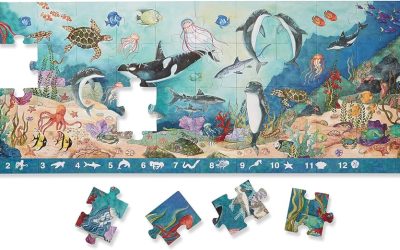
The Underwater World puzzle is a 100 piece kids jigsaw whose listing is keyword heavy, mentioning ages 5 to 8, 4 to 6 and 6 to 8, plus birthday gifts for boys and girls. It makes this guide because an ocean scene gives children plenty to look at and talk about, from fish to coral. A 100 piece count is the classic step up from preschool puzzles, so this one is aimed at early elementary kids who are ready for a longer sitting.
The title names the theme as underwater world and calls it a learning and educational toy, but it does not list a brand, a finished size or a piece material, so buyers should read the product page carefully. One thing the listing does make clear is the piece count and the age bands. Since specific details are thin, treat this as a solid general purpose 100 piece puzzle and confirm the extras you care about before ordering.
An ocean picture is useful for conversation. While a child works, a parent can ask which sea creatures they recognize, which colors appear in the water, and where the edges of the picture are. This blends puzzle practice with vocabulary and gentle science talk. It suits kids around 5 to 8 who like animals, and it can be a calm shared activity for a parent and child on a weekend afternoon.
A few honest notes. The title also says jigsaw puzzle for adults, which is just search wording, so do not expect an adult level challenge. A 100 piece puzzle can still overwhelm a child who has only done 24 piece versions, so sort the edge pieces first and work in sections. Many ocean scenes have large blue areas, which are harder to sort than busy pictures, so be ready to offer hints. Please also keep an eye on small pieces around younger siblings.
4. 100 Piece Dinosaur Learning Educational Jigsaw: Best Dinosaur Theme

Our score: 9.4/10 iOur editorial score (1 to 10), based on listing specs, features and how well each pick fits its use case. It is not an Amazon customer rating.
100 piece puzzle Dinosaur theme Every piece is unique Ages 5 to 10 range
This 100 piece dinosaur jigsaw is the pick for children who would rather meet a T. rex than a princess. The listing describes a dinosaur learning educational puzzle, says every piece is unique, and gives age bands from 4 to 6 up to 8 to 10. It sits next to the ocean puzzle in difficulty but offers a very different picture, which is why both are on the list. Dinosaur fans tend to stay with a puzzle longer when the subject is their favorite.
At 100 pieces, the puzzle is a medium challenge for a school age child. The title highlights that every piece is unique, which in plain terms points to varied piece shapes so that pieces are less likely to fit in the wrong place by accident. That matters for kids still building confidence, because a wrong fit that looks right can feel discouraging. The listing does not give finished dimensions, so confirm those before you pick a table or tray.
The puzzle suits kids from about 5 to 9 who love prehistoric animals, and it pairs naturally with a dinosaur book from the library. A child can name each dinosaur they find, practice sorting by color and pattern, and talk about what they know. Parents of reluctant puzzlers sometimes find that a favorite subject changes the mood completely, turning a chore into a game with a clear and exciting finish line.
Keep a few things in mind. Educational is a marketing word here, and the title does not say that the puzzle includes fact cards or a poster, so check the listing for extras. A child new to 100 pieces may need help with the border at first. As with any puzzle, small pieces can be a hazard for toddlers who share the room, so work at a table out of their reach and store the pieces in a closed box.
5. 12,16,20 & 24 Pieces, Bluey, Learning: Best for Toddler Skill Building

Our score: 8.8/10 iOur editorial score (1 to 10), based on listing specs, features and how well each pick fits its use case. It is not an Amazon customer rating.
12, 16, 20 and 24 pieces Bluey theme Shape and motor skills Gift and family fun
Four graduated puzzles make the Bluey set the best choice for the youngest builders in this guide. The title lists 12, 16, 20 and 24 piece puzzles and describes the set as a learning toy for shape and motor skill development. That ladder of sizes lets a child begin with an easy win and move upward as skills grow. Because the numbers are small, it is a gentler entry point than the 60 and 100 piece options elsewhere on this page.
The listing names the theme as Bluey and says it is meant for children, gifts and family fun, without giving a material, box type or finished size. So what is certain is the four puzzle structure and the piece counts. Buyers should check the product page for the age marking and for details such as whether pieces are cardboard or another material. That confirmation matters most for families with children under 3.
The set suits toddlers and young preschoolers who recognize the show characters and enjoy repeating a favorite activity. Fine motor control grows when a child picks up a piece, turns it, and presses it into place, and shape matching grows when the child compares edges. Parents can lay out the 12 piece puzzle first, then bring in the next one on another day. That slow progression builds confidence rather than pressure.
Practical advice follows from this. Always supervise play when small pieces are around, and follow the age grade on the listing. Keep each puzzle in its own bag or envelope, because four puzzles with similar art can get mixed up, and a mixed pile is hard for a small child to fix. A character set is only as engaging as the child’s interest in the show, so it is worth asking whether your child already likes it.
6. Ravensburger – Disney Cars: Worldwide Racing: Best Three Pack

Our score: 9.4/10 iOur editorial score (1 to 10), based on listing specs, features and how well each pick fits its use case. It is not an Amazon customer rating.
49 pieces each 3 pack set Larger pieces Children age 5+
Ravensburger’s Disney Cars Worldwide Racing Fun is the best three pack here. The title describes a 49 piece jigsaw puzzle 3 pack set featuring Lightning McQueen and more, with larger pieces and an age marking of 5 and up. Three puzzles in one box means one purchase can cover several sessions, a sibling swap, or a small party activity. For children who love the racing movies, it turns one gift into a mini collection. Parents who plan ahead will like that three scenes arrive together.
Each of the three puzzles has 49 pieces according to the listing, which is a friendly size for a five or six year old. The pieces are described as larger, which suits smaller hands and makes edges easier to spot. The title also says premium quality and screen free fun. Since the finished picture size is not stated, check the product page before planning where to build the puzzles. Check the listing for the exact finished size of each puzzle.
This set suits children who like to repeat. After finishing the first scene, many kids want another, and the three pack makes that easy without buying a new puzzle every time. Racing scenes are busy and colorful, so color sorting works well, and a parent can set a small challenge such as finding every red piece. It teaches patience, picture matching and the satisfaction of a finished image, three times over.
Some cautions apply. Three puzzles means three sets of pieces, so open one at a time and keep each in a separate bag to avoid mixing them up. If the scenes share similar colors, a child may need help telling the pieces apart. For a very confident reader of pictures, 49 pieces might finish fast, so consider a 100 piece option from this guide as the next step. Small pieces should stay away from toddlers.
7. Ravensburger – Glitter Unicorn – 100: Best Sparkle Scene

Our score: 9.4/10 iOur editorial score (1 to 10), based on listing specs, features and how well each pick fits its use case. It is not an Amazon customer rating.
100 piece puzzle Glitter Unicorn Birds and more Children age 6+
Glitter Unicorn is the pick for kids who want a magical picture to finish. The title describes a 100 piece jigsaw with an exciting, colorful scene of a glittery unicorn, birds and more, marked for children age 6 and up. A fantasy subject often pulls in children who do not normally sit for puzzles, and 100 pieces gives them a real project without feeling endless. It is the sparkle themed choice among the Ravensburger puzzles in this guide.
The listing uses the word glitter in the puzzle name and calls the scene colorful and magical. It does not explain how any glitter effect is made or whether the pieces themselves have a special finish, so check the product page for that detail. What is clear is the 100 piece count and the premium quality claim. The picture also includes birds and other elements, which gives a child more things to hunt for than a single character would.
This puzzle suits six and seven year olds who enjoy imaginative stories, and it makes a good gift for a birthday or a quiet holiday. The skills are the usual ones: sorting, pattern recognition and patience. A parent can help by starting with the edge pieces, then letting the child choose which part of the unicorn to build next. Working in small zones, such as the mane or the birds, makes the puzzle feel like a series of small wins.
One caution is that colorful fantasy art can have gradient skies and soft backgrounds, which are harder to sort than sharp patterns. Be ready to offer hints in those areas. The listing does not state the finished dimensions, so confirm if you want to frame it. Because pieces are small compared with the preschool sets, keep this puzzle away from toddlers and follow the age label on the listing. A small tray helps keep edge pieces together while the child builds the middle.
8. Ravensburger – Monster Minecraft – 100: Best XXL Pieces

Our score: 9.6/10 iOur editorial score (1 to 10), based on listing specs, features and how well each pick fits its use case. It is not an Amazon customer rating.
100 piece puzzle XXL pieces Minecraft villain imagery Children age 6+
Monster Minecraft takes the title of best XXL pieces because the listing leads with extra large pieces for easy assembly. It is a 100 piece Ravensburger jigsaw with Minecraft villain imagery, marked for children age 6 and up. The combination of a 100 piece count and oversized pieces is useful for kids who want a bigger challenge in terms of picture but still prefer pieces that are simple to grab. Game fans will notice the theme right away.
The title says XXL pieces for easy assembly and describes the scene as exciting, with Minecraft villain imagery. That means the artwork centers on game monsters rather than gentle scenery, so parents may want to look at the picture on the listing first. The product is also described as premium quality and screen free fun, a nice tradeoff for children who spend a lot of time with video games and could use a hands free break.
This puzzle suits six to ten year olds who already know the game and enjoy its blocky look. The blocky art helps, since squared shapes and bold color patches give clear clues for sorting. Skills include visual scanning, planning and persistence, and the larger pieces make it approachable for children whose fine motor skills are still developing. It is also a natural gift for a child who talks about the game all the time.
Honest cautions follow. The villain artwork might not suit very sensitive kids, so look at the image before buying. The title does not give the finished size, so check the product page. Large pieces are easier to handle but also take up more table room per piece, so plan a flat space. Brand names here only describe what the title says, and the listing does not claim any special endorsement. Keep pieces away from toddlers.
9. Ravensburger Super Mario – 100 Piece: Best for Game Fans

Our score: 9.6/10 iOur editorial score (1 to 10), based on listing specs, features and how well each pick fits its use case. It is not an Amazon customer rating.
100 piece puzzle Extra large pieces Super Mario theme Kids age 6 years up
Ravensburger’s Super Mario 100 piece puzzle rounds out the list as the best choice for children who love video game worlds. The title is short and clear: a 100 piece jigsaw for kids age 6 years up with extra large pieces. It does not describe the scene beyond the Super Mario name, so buyers should view the picture on the listing. As with the other large piece puzzle in this guide, it works well for kids who want to move beyond the preschool sizes.
What you can rely on from the title is the 100 piece count, the extra large pieces, and the age marking. Large pieces mean less fumbling and make the puzzle suitable for a child who is still gaining finger control. The title mentions no extras such as a poster or storage bag, so plan to keep the pieces in the box. A game themed puzzle also makes a nice change from animals and princesses.
This puzzle suits kids aged 6 and over who like playing platform games and enjoy seeing familiar characters out of the screen. It builds the same core skills as other jigsaws, including matching colors, spotting edges and thinking in small steps. For a family, it can be a shared activity where a parent and a child each take one corner. Older siblings can join in, which makes it a friendly bridge between screen time and table time.
A few reminders are in order. The listing does not give the finished size, so check the product page if you want to display the result. Character puzzles can have large areas of similar color, so offer help with sky or background sections. Keep the box lid on when not in use, as extra large pieces are still pieces that can get lost. As always, follow the age marking on the listing and supervise any young children nearby.
How to Choose the Best Jigsaw Puzzles
How to choose the right piece count for your child
Piece count is the simplest way to match a puzzle to a child. In this guide, the 12 to 24 piece sets suit toddlers and young preschoolers, the 49 and 60 piece puzzles suit ages 4 to 6, and the 100 piece puzzles suit children around 6 and up. These are rough guides rather than strict rules, because children vary a great deal in patience and experience.
A good check is whether a child can finish most of the puzzle with a little help. If they finish in a few minutes and look bored, move up one step. If they push pieces away after ten minutes, step back or work together on the border. The goal is a puzzle that takes real effort but ends in success.
Reading age labels and small parts warnings
Every listing in this guide gives some age information, such as ages 3 and up, 4 and up, 5 and up or 6 and up. Treat that marking as the minimum and read it before buying. Jigsaw pieces are small objects by nature, and children under 3 can put them in their mouths, so puzzles for that age should be used only with an adult close by.
If a household includes a baby or a toddler, set up the puzzle on a table, not the floor, and put pieces away in a closed box afterward. Count the pieces at the end of each session if you can. A missing piece is more than an annoyance, because it may turn up where a younger child can find it.
Large pieces versus standard pieces
Several puzzles here highlight larger pieces or XXL pieces, and that detail matters more than many buyers expect. Bigger pieces are easier to grip, easier to turn, and easier to see, which helps children whose fine motor control is still developing. They also make it simpler for an adult to point out a piece without hovering. Parents of children aged 3 to 5 will usually find that oversized pieces keep the mood positive.
The tradeoff is table space. A 100 piece puzzle with oversized pieces takes up more room than a standard 100 piece puzzle, so clear a good surface or use a board. For very young children, larger pieces are almost always the better choice, even at a lower piece count. If your child already builds 100 piece puzzles with ease, standard sized pieces offer a fresh challenge later on.
Wooden puzzles versus cardboard puzzles
The Melissa & Doug set in this guide is described as wooden, while the Ravensburger puzzles are sold as jigsaw puzzles without a material stated in their titles. In general, wooden pieces are thicker and can feel sturdier in small hands, whereas cardboard pieces lie flatter and often come with larger, more detailed images. Wooden pieces also tend to survive repeated use by small hands, which matters in a busy household.
Neither type is better for everyone. Wooden sets can be a good fit for the very first puzzles and for repeated use, while cardboard puzzles offer more picture variety and bigger piece counts. Always check the listing for material details, because titles do not always spell them out. Cardboard puzzles can be a wonderful next step once a child knows how to handle and align pieces gently.
Choosing a theme your child will stay with
A theme does a lot of the motivating. Children who love vehicles, princesses, dinosaurs, ocean life or video games will often persist through a tricky patch because they want to see the finished picture. Choosing a subject they already enjoy is often more effective than choosing a higher piece count. Ask the child what they love right now, whether that is cars, dinosaurs, unicorns or game worlds, and let that guide the shortlist.
Pay attention to the mood of the artwork too. The Minecraft puzzle, for example, shows villain imagery, so parents of sensitive children may want to see the picture first. Calm scenes, like the underwater world, can suit children who like quiet, steady activities. A child who dislikes the subject may lose interest quickly, even if the piece count is perfect, so a quick chat before ordering saves a lot of disappointment.
Sorting strategies that make puzzles easier
Teach children a simple routine. First turn every piece face up, then pull out the edge pieces with a flat side, then group the rest by color or pattern. This three step habit turns an overwhelming pile into small, manageable groups. A shallow tray or a baking sheet works well for each group. Egg cartons, muffin tins and small bowls also make cheerful sorting stations for little hands.
Another trick is to work in zones. Pick a character, an animal or a corner of the picture, build that zone, and then connect it to the border. Zones give children a series of small wins, which keeps the energy up better than hunting for random pieces. Praise the process, such as finding a tricky edge, rather than only the finished picture, so a child learns that effort counts.
Where to build, store and protect a puzzle
A flat, stable spot is the most important thing. A kitchen table, a lap tray or a folding board can all work, and a dedicated board lets you slide a half finished puzzle out of the way. Floors are fine for big pieces if the family has no crawling babies or pets who chew. A tray with a raised rim keeps pieces from rolling away if the puzzle needs to move to another room.
For storage, keep each puzzle in its own box or bag, and use the lid to carry pieces to the table. The wooden box in the Melissa & Doug set is a nice built in answer. For multi pack sets such as the Disney Cars three pack, a small zip bag for each puzzle avoids mixed piles. Label bags with the puzzle name, because a loose bag of unlabeled pieces is the quickest way to lose a favorite for good.
Value without overspending
Good value in a puzzle comes from how often it will be used and by how many children. A multi pack, a set that grows with a child, or a puzzle that siblings can share often goes further than a single picture that is finished once and forgotten. Because prices change, always compare current listings before choosing. Taking a minute to compare listings for piece count, age marking and extras helps you judge value fairly.
It also helps to think about the next step. If a child will outgrow 12 piece puzzles within a month, a set with a ladder of sizes, like the Bluey one, may make more sense than a single puzzle. If you plan to hand puzzles down to a younger sibling, durable materials and a good storage box become more valuable. Many families also swap puzzles with friends or cousins, which stretches the value of every set even further without any extra spending.
A learning path from first puzzle to confident builder
A simple path might begin with a 12 piece puzzle at age 3, move to 24 pieces within a few months, then to 49 or 60 pieces around ages 4 and 5. At 6 or so, many children are ready for 100 pieces. Let the child set the pace, and repeat easier puzzles whenever they want to, because repeating builds speed and pride. Keep a few puzzles on a shelf where the child can reach them, since independent choice builds confidence.
Along the way, mix up the themes. A vehicle set, then a dinosaur picture, then an ocean scene each demand a slightly different kind of looking. Variety keeps puzzles fresh and prevents children from relying on one type of clue, such as a single color. Once a child masters 100 pieces, larger counts become possible, but there is no rush, and many children enjoy returning to old favorites.
Common puzzle mistakes to avoid
The most common mistake is buying a puzzle that is too hard. A child who fails repeatedly may decide puzzles are not for them. Another is mixing several sets of pieces, which makes every puzzle harder. Starting a puzzle at the end of a long day, when a child is tired, can also lead to tears. Leaving puzzles on the floor where a toddler or pet can reach them is another risk worth avoiding.
Adults sometimes step in too early and take over. A better approach is to ask questions, such as which piece has a straight edge or which color is missing, and let the child find the answer. Keeping the picture box visible gives the child a guide without anyone having to point. Finally, do not forget to take breaks, because a short walk or snack often helps a stuck child return with fresh eyes.
Puzzle gift tips for birthdays and holidays
Puzzles make easy gifts because they are flat, light and easy to wrap. Check the age marking, ask yourself whether the child has built a puzzle before, and choose the piece count accordingly. When in doubt, choose a slightly easier puzzle so that the child gets a quick win on gift day. Think about whether the child already owns a similar picture, as a new theme tends to feel more exciting.
A multi pack or a set of several puzzles can be a good choice for families with more than one child. If you are ordering online, look at the listing delivery information and order early, since shipping windows can change. A small tray or a puzzle board makes a thoughtful add on. Finally, include a gift receipt where possible, so the family can exchange for a different piece count if the first guess turns out too easy or too hard.
Making puzzle time a family or classroom habit
Puzzles work best when they become a routine. A short session after dinner, a quiet half hour on a rainy weekend, or a calm start to a classroom morning all give children something to look forward to. Leaving a puzzle on a tray in a shared space invites family members to add a few pieces whenever they pass by. Even ten minutes a day adds up, and children often surprise adults with how much they remember about where pieces belong.
For playdates and small parties, a multi pack set lets two or three children work at once without fighting over pieces. Give each child a puzzle, set a gentle timer if they like a challenge, and cheer for every finished picture. Cooperative puzzling teaches turn taking, and it gives shy children an easy way to join in. Teachers and caregivers can use the same idea for quiet corners, rainy day recess or calm down time.
Frequently Asked Questions
What is the best jigsaw puzzle for a 3 year old?
The Melissa & Doug 4-in-1 Wooden Vehicle Jigsaw Puzzle set is marked for ages 3 and up and offers four 12 piece puzzles. The Bluey 12, 16, 20 and 24 piece set is also a gentle option, but check its age marking on the listing.
How many pieces should a 5 year old’s puzzle have?
Many five year olds enjoy 49 to 100 pieces, depending on experience. A 49 or 60 piece puzzle is a comfortable step, while a child who has done several before may be ready for a 100 piece puzzle with larger pieces.
Are jigsaw puzzles safe for toddlers?
Puzzle pieces are small, so children under 3 should use them only with close adult supervision. Always follow the age marking on the listing, keep pieces in a closed box, and avoid leaving puzzle pieces on the floor.
Are larger pieces really better for young children?
For most young children, yes. Larger pieces are easier to pick up and place, which helps with fine motor control and reduces frustration. XXL pieces, like those on the Monster Minecraft puzzle, are a good example.
What is a multi pack puzzle set good for?
A multi pack, such as the Disney Cars 3 pack, gives several puzzles in one purchase. That helps siblings share, gives a child repeat practice, and works well for playdates or quiet time activities at home.
How do I help a child who gets frustrated?
Slow down and lower the challenge. Work on the edge pieces together, group pieces by color, or switch to a smaller puzzle for a day. Praise effort, not speed, and stop before the child is tired or upset.
Do character puzzles work as well as plain ones?
They can work very well, because a familiar character keeps a child engaged. The mechanics of the puzzle are the same, though character artwork may have large areas of similar color that need extra patience.
How should I store finished puzzles?
Keep each puzzle in its own box or bag, and count the pieces before you pack them away. A wooden box, a zip bag or a flat tray all work, and a label helps with multi puzzle sets.
Are these puzzles suitable as gifts?
Yes. Puzzles are light, easy to wrap and fit many ages. Match the piece count to the child’s experience, check the age marking, and order early so the listing delivery window fits your event.
Can adults enjoy these puzzles too?
Adults can certainly join in, and a shared puzzle is a lovely activity. These picks are designed for kids, though, so the piece counts are small. One listing mentions adults in its keywords, but it is a 100 piece kids puzzle.
The Bottom Line
For most families, the Melissa & Doug 4-in-1 Wooden Vehicle Jigsaw Puzzle set is the best place to start, with four small puzzles and a wooden box. When your child is ready for more, step up through the 49 and 60 piece options, and then to the 100 piece puzzles with larger pieces.
Check each listing for current price, age marking and contents, and remember that small pieces need supervision around young children. Happy puzzling.
Updated for the 2027 buying season. Amazon listings and availability change often, so check the product page for current details.
Write Your Review
No reviews yet. Be the first to share your experience!