

As an Amazon Associate we earn from qualifying purchases. If you buy through links on this page we may receive a commission at no extra cost to you. Product details come from Amazon listings and can change.
The best affordable floor puzzles for kids give a household a big, satisfying project that costs little and gets reused for years. A floor puzzle is built on the rug instead of the table, so several children can crowd around it, trade pieces and talk while they work. This guide compares eight budget friendly options, from a four foot ocean scene to a state shaped map of the United States.
One honest note first. Most jumbo floor puzzles are made and labeled for ages 3 and up, so many picks here sit at the gentler end of the 6 to 12 range. They still earn a place for younger school age children, for siblings playing together, and for kids who enjoy a relaxed, screen free activity. The map puzzle is the one pick aimed squarely at ages 4 to 8.
Prices change often, so we link to live listings instead of quoting numbers. Each section below sticks to what the listings say, then adds practical advice for parents and gift buyers.
Key Takeaways
Best Affordable Floor Puzzles For Kids at a Glance
| Product | Our score | |
|---|---|---|
| Melissa & Doug Search and Find Best Overall |
9.7 / 10 | Check Price |
| United States Puzzles for Kids Ages Best for Learning |
9.0 / 10 | Check Price |
| Melissa & Doug Outer Space Glow-in-the-Dark Best for Surprises |
9.4 / 10 | Check Price |
| Melissa & Doug Rainforest Floor Puzzle Best for Animal Fans |
9.4 / 10 | Check Price |
| Melissa & Doug Fairy Tale Castle Best for Storytelling |
9.6 / 10 | Check Price |
| Peaceable Kingdom Jumbo Mermaid Floor Puzzle Best Sparkle Pick |
9.6 / 10 | Check Price |
| Ravensburger – Disney Pretty Princesses Best Character Pick |
9.7 / 10 | Check Price |
| Melissa & Doug Safari Social Jumbo Best for Easy Wins |
9.6 / 10 | Check Price |
How We Chose the Best Affordable Floor Puzzles For Kids
This is a research based guide, not a lab comparison. We read each listing closely, noting piece counts, assembled sizes, material claims, themes and the age ranges the sellers give. We then balanced those details against what a family on a budget actually needs: a puzzle that is easy to start, hard enough to stay interesting, and sturdy enough to survive many rebuilds.
Every pick carries an editorial score out of 10 that the site shows separately. The score comes from features, specs and how well the product fits a floor puzzle shopper aged 6 to 12 and their family. Because these puzzles skew young, we have been plain about age fit throughout, and we only describe facts the listings provide.
In-Depth Reviews
1. Melissa & Doug Search and Find: Best Overall

Our score: 9.7/10 iOur editorial score (1 to 10), based on listing specs, features and how well each pick fits its use case. It is not an Amazon customer rating.
48 pieces Over 4 feet long Extra thick cardboard FSC certified
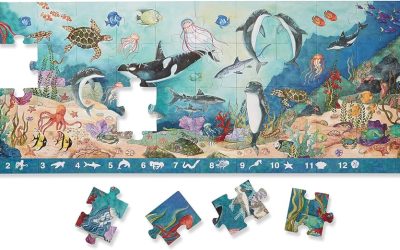
Beneath The Waves earns the top spot because it stretches the idea of a floor puzzle in a way older children appreciate. Instead of a small scene that is finished in minutes, the completed picture runs over four feet long, and it comes with a search and find activity layered on top. That extra job gives a child aged 6 or 7 a reason to keep looking after the last piece clicks in. Its length also makes it a talking piece for visitors, which is a small bonus for a gift.
The listing describes 48 extra thick cardboard pieces that join into an underwater scene crowded with ocean life. Once the puzzle is done, an identification guide helps children name the creatures they spot and hunt for specific ones. The pieces are large, which keeps assembly relaxed, and the long format means two or three kids can work from different ends at the same time. Parents who want a puzzle that grows with a child will appreciate how the hunt can be repeated with new targets each time.
This puzzle suits curious children who like facts as much as pictures. Matching a sea creature to the guide builds observation, vocabulary and patience, and it opens the door to library books about the ocean. For ages 6 and up, the build itself is on the easy side, so the search game does the heavy lifting for challenge. Younger siblings can join the construction without getting lost. Children who enjoy nature shows tend to connect quickly with the theme.
A few practical points are worth knowing. Four feet of puzzle needs a long strip of clear floor, so a hallway or a big rug works better than a small bedroom. Slide the finished scene onto a sheet of cardboard if you want to move it, and keep the identification guide in the box so it does not wander off. Adults should still supervise very young children near any small cardboard pieces. Plan the build as a shared session, and leave the guide nearby for reference.
2. United States Puzzles for Kids Ages: Best for Learning

Our score: 9.0/10 iOur editorial score (1 to 10), based on listing specs, features and how well each pick fits its use case. It is not an Amazon customer rating.
70 pieces State shaped pieces 23.6 x 17 inches Ages 4 to 8
The United States map puzzle is the clearest fit for school age children on this list, which is why it takes the learning award. The listing frames it for kids across two age bands, 4 to 6 and 6 to 8, and describes a 70 piece map you can build at home or in a classroom. It is the only pick here that teaches geography directly. Parents can point to a state on the finished map when it comes up in news, travel or school.
Each piece is shaped like a state, so the outlines do much of the explaining. When a child turns a piece around until it fits against its neighbors, they are learning where Texas sits compared with Florida without reading a single label. The listing gives the assembled size as 23.6 by 17 inches, which is compact enough for a coffee table or a spot on the carpet. It also helps children see how borders sit next to one another, which a flat worksheet rarely shows.
This puzzle works best for ages 6 to 8, with older siblings acting as coaches. It pairs naturally with school units on states and capitals, family road trip planning, or a wall map nearby for checking. Seven year olds often enjoy racing to place their home state first, then adding the others one by one. Children older than 8 may finish quickly, so treat it as a quick warm up. Some families keep a wall map nearby for checking, and that habit makes the lesson stick.
Because it is smaller than the jumbo scene puzzles, it is also easier to store and to pass between classrooms or cousins. Keep the pieces in a zip bag inside the box so none escape. Adults should check the box for the exact age guidance and keep an eye on younger children, since these pieces are smaller than the chunky pieces in toddler style puzzles. A short family quiz afterward, such as naming the neighbors of one state, reinforces the learning.
3. Melissa & Doug Outer Space Glow-in-the-Dark: Best for Surprises

Our score: 9.4/10 iOur editorial score (1 to 10), based on listing specs, features and how well each pick fits its use case. It is not an Amazon customer rating.
48 pieces Glow in the dark Outer space theme FSC certified materials
The Outer Space puzzle gets the surprise award because the fun does not stop when the pieces are in place. Build it in bright light, then switch the lights off and the listing says hidden glow in the dark pictures appear. For a child who has outgrown plain puzzles, a reveal like that turns an ordinary afternoon activity into something worth showing to guests. It is a good fit for a bedtime wind down, as long as an adult is nearby to keep things calm.
The 48 piece cardboard jigsaw covers a detailed space scene with natural objects such as planets and meteors, based on the listing text. The pieces are large and made from FSC certified materials, according to the title. A glow effect usually works by soaking up room light, so putting the finished puzzle near a lamp for a little while before lights out is a sensible habit. Children who love space facts may start asking questions the puzzle cannot answer, which is a nice excuse for a library visit.
This pick suits children who love science topics, from the early elementary years upward. It makes a natural companion to a library book about the solar system or a night of backyard sky watching. Siblings can split the job, with one assembling the edges while another sorts out the planets by color. Even older kids tend to enjoy the dark room moment, so it works well at sleepovers. Parents often find that a surprise element makes children more willing to rebuild a puzzle.
Keep expectations realistic about age. The box targets ages 3 and up, so the build is gentle and quick for a ten year old, and the glow reveal is the main draw. Store the puzzle flat in its box, and let a grown up check that no pieces are bent or lost before each rebuild. Reading the box before the first build helps you plan the glow moment properly. Many families keep it on a shelf for sleepovers, where the dark room reveal is always a hit.
4. Melissa & Doug Rainforest Floor Puzzle: Best for Animal Fans

Our score: 9.4/10 iOur editorial score (1 to 10), based on listing specs, features and how well each pick fits its use case. It is not an Amazon customer rating.
48 pieces 2 x 3 feet Jungle animals Ages 3 and up
The Rainforest Floor Puzzle is the pick for children who would rather identify a toucan than a train. The listing describes a colorful jungle scene with parrots, monkeys, frogs, a leopard and more, packed into a 48 piece jumbo jigsaw. It fits comfortably into a budget conscious plan because one puzzle supports animal talk, color matching and teamwork for many months. Pointing out where each animal lives builds simple science talk without any lecture.
At two by three feet when assembled, the scene is big enough to build as a family on a hallway floor. The pieces are thick cardboard in the jumbo style, which makes them easy to pick up and slot together. The busy artwork gives lots of clues, since a child can match a patch of green leaves or a bright parrot wing to the right neighbor. Pair it with a nature documentary or a visit to a zoo for extra context.
Younger school age children, around ages 5 to 7, get the most from this puzzle. It encourages them to name the animals, ask where each one lives and notice how a jungle has layers from the forest floor to the treetops. Older children can turn it into a game by timing a rebuild or by drawing their own animals to add beside the finished scene. A rebuild contest between siblings, with no pressure, keeps the activity friendly.
The listing labels the puzzle for ages 3 and up, so a child of ten may find it quick. Treat it as a relaxed screen free activity rather than a brain teaser. Keep a flat board or large tray handy for moving the finished puzzle, and have an adult supervise very young players who still put things in their mouths. If a younger child joins, ask them to find only the green pieces to keep them involved.
5. Melissa & Doug Fairy Tale Castle: Best for Storytelling

Our score: 9.6/10 iOur editorial score (1 to 10), based on listing specs, features and how well each pick fits its use case. It is not an Amazon customer rating.
48 pieces 2 x 3 feet Easy clean surface FSC certified
The Fairy Tale Castle puzzle earns the storytelling award because a finished castle begs for a story. Children assemble the scene, then often start inventing who lives inside, which turns puzzle time into pretend play. For families trying to stretch a small budget, a puzzle that doubles as a story prompt gives more value than one that is built once and forgotten. Children can narrate who lives in each tower while they build, which supports early language skills.
According to the listing, this jumbo jigsaw uses 48 extra thick cardboard pieces and finishes at two by three feet. The surface is described as easy clean, which matters for anything that spends time on a kitchen or playroom floor. A quick wipe is the kind of upkeep a busy parent can actually keep up with, and it helps the colors stay bright between uses. Make up a short story together once the scene is finished, and let each child add a line.
Children around ages 5 to 8 are a good match. They can practice sorting edge pieces from middle pieces, then work toward the castle towers and the sky. A younger sibling can place the easy sections, while the older child plans the order of attack. Having a role for each player keeps arguments down and gives everyone a small win. Rotating who picks the next piece keeps turn taking fair between siblings.
A word on age fit: the format is a classic jumbo puzzle meant for younger children, so it may feel gentle to an eleven year old. Use it for a calm weekend activity or as a shared project when cousins visit. Store the pieces in the box with a rubber band around it, and let adults check for bent corners before each rebuild. Look at the box art for age guidance before wrapping it as a present.
6. Peaceable Kingdom Jumbo Mermaid Floor Puzzle: Best Sparkle Pick

Our score: 9.6/10 iOur editorial score (1 to 10), based on listing specs, features and how well each pick fits its use case. It is not an Amazon customer rating.
41 pieces Jumbo floor size Foil accents Mermaid and sea creatures
The Jumbo Mermaid Floor Puzzle takes the sparkle award for families who want a little shimmer in their floor time. The listing describes a colorful mermaid scene with foil accents, plus fish and other sea creatures swimming around her. The foil catches the light, so the finished picture looks special on a rug and tends to draw children in before they have placed a single piece. It also makes a pleasant first puzzle for a cousin or a younger sister.
This Peaceable Kingdom puzzle has 41 pieces, an unusual number that the listing states clearly. It also calls the pieces thick and sturdy, which is what you want for a puzzle that will be rebuilt often. The listing adds that floor puzzles are a good way for children to learn, and a simple scene with clear shapes and colors supports that sort of easy practice. Counting the sea creatures after the build adds a quick math moment.
It fits younger school age children who love fantasy and ocean themes, especially around ages 4 to 7. The mixture of mermaid and sea life gives talking points about colors, counting fish and naming animals. Older children may find the build quick, so this one shines more as a gift for a younger sister or a shared sibling project than as a tough challenge. Gift buyers like it because the sparkle is visible from the box.
For practical tips, check the box for the exact age guidance and finished size before you buy. Keep the foil surface away from sticky fingers and damp spots to preserve the shine, and wipe gently with a dry cloth. Because the pieces are thick cardboard, a grown up should still watch very young children who might chew corners. Check the listing for the exact finished size before choosing a spot to build.
7. Ravensburger – Disney Pretty Princesses: Best Character Pick

Our score: 9.7/10 iOur editorial score (1 to 10), based on listing specs, features and how well each pick fits its use case. It is not an Amazon customer rating.
24 pieces Shaped floor puzzle Four Disney princesses Larger, durable pieces
The Ravensburger Disney Pretty Princesses puzzle is the character pick, and it will suit children who light up at a familiar face. The listing says the 24 piece shaped floor puzzle features Cinderella, Belle, Ariel and Rapunzel in bold, bright colors. Starting with characters a child already loves makes it easier to coax a reluctant puzzler into sitting down. Siblings can each claim a princess and build her section first, which avoids squabbles over pieces.
The title promises a premium quality product, and the listing describes larger, durable pieces that support fine motor skills and screen free play. Because it is a shaped puzzle, the finished outline follows the characters instead of a plain rectangle. That makes the build feel like assembling a poster of friends, and it can be tidied away more easily than a very long scene. It makes a cheerful companion for dress up play or a movie afternoon at home.
With only 24 pieces, this puzzle is best for younger school age kids and for siblings who are just learning to puzzle. A six year old can usually manage it alone, while a four year old might need a helper to find edges. Older children may enjoy it for nostalgia or as a quick warm up before a harder puzzle, but it is not a challenge for them. Be ready for requests to build it again right away, which is a sign of success.
One caution on budget thinking: a short puzzle like this can be finished in a few minutes, so its value comes from repeat builds and character appeal. Rebuilding it as a race, or building it with eyes closed for older kids, stretches the fun. Keep the pieces in the box and let adults supervise very young players. Read the listing for the finished size so you know where it will fit.
8. Melissa & Doug Safari Social Jumbo: Best for Easy Wins

Our score: 9.6/10 iOur editorial score (1 to 10), based on listing specs, features and how well each pick fits its use case. It is not an Amazon customer rating.
24 pieces 2 x 3 feet Safari animals Ages 3 and up
Safari Social is the easiest build on the list, which makes it the right pick for easy wins. It has just 24 pieces and finishes at two by three feet, according to the listing. That means larger pieces and a quick finish, so it suits a younger brother or sister who wants to join in while an older child works on something harder. It is also a handy puzzle to bring out when friends of different ages visit.
The scene shows wild animals such as elephants, giraffes and lions in a lively safari setting. The listing says it is a screen free activity that supports early learning skills, including fine motor skills. Big, simple pieces are easy to grab, turn and press into place, and the bold animal shapes help beginners work out where each piece belongs. Children can name the animals aloud as they place each piece, which supports vocabulary.
It fits best at the youngest end of this guide. A five or six year old can complete it alone, and a seven year old may only want it as a warm up or a gift to share. If your child is closer to ten, the map puzzle or the search and find ocean scene will hold interest longer. This one earns its place as a shared family option. A short, speedy build helps build confidence before a harder puzzle is tried.
As a budget choice, it works well when you want something that gets used by several children over time. Look for a shoebox sized spot to keep the pieces together, and let adults check the age labeling on the box. Very young children who still mouth objects should be supervised, even with large cardboard pieces. Check the listing for the finished size and keep a flat spot ready. Many families keep it as the easy puzzle for visitors, since nobody feels left out.
How to Choose the Best Affordable Floor Puzzles For Kids
What Budget Friendly Really Means for a Floor Puzzle
A budget friendly floor puzzle is not simply the one with the smallest cost. It is the one that gets rebuilt the most times before the family loses interest. Look for thick cardboard that survives dropped pieces, artwork that holds attention, and a theme children will still like next year. A sturdy puzzle used by three siblings is better value than a flimsy one that is thrown away.
Think in terms of cost per build. A puzzle that offers a second activity, such as a search and find hunt, a glow reveal or a map to learn from, gives you extra reasons to bring it out again. Listings change often, so check the live page for size, piece count and age guidance before you decide, and avoid paying for features your child will not use.
Age Fit: Why Many Floor Puzzles Skew Young for Kids Aged 6 to 12
Most jumbo floor puzzles are designed for ages 3 and up, with 24 to 48 large pieces. For a child of 6 or 7 that is a relaxed, satisfying build. For a ten year old it will usually be a short activity, so plan to use it for cooperative play, younger siblings or a calm afternoon rather than a serious challenge. Siblings of different ages can share a puzzle if each child is given a section that suits their skills.
If your child is at the upper end of the age range, lean toward puzzles with something extra, such as the map or the search and find scene. You can also add difficulty yourself by timing a build, building face down, or mixing two puzzles. Honest expectations help parents avoid disappointment and help gift buyers pick something that lands well.
Piece Count and Challenge Level
Piece count is the quickest signal of difficulty. Twenty four pieces suit beginners and easy wins, 41 to 48 pieces offer a slightly longer session, and 70 pieces start to feel like a real project for early primary children. The pieces on jumbo puzzles are large, so even the higher counts stay approachable. Always check the piece count on the listing, since it varies between products and series.
Piece shape matters too. A puzzle made of state shaped pieces gives clues through outlines, while a scene puzzle relies on colors and details. If a child gets stuck, suggest sorting by color, finding the corners first, and building one animal or character at a time. Small strategies like these teach persistence without making the activity feel like homework. Starting a child with an achievable puzzle protects their confidence.
Materials and Safety Labels to Look For
Floor puzzles are usually made of thick cardboard, and some listings mention FSC certified materials, which relates to responsibly sourced paper rather than toy safety. For toys in the United States, look for statements about compliance with CPSIA and ASTM standards on the product page or box. Only trust claims that the listing actually makes, and ask the seller if you cannot find them. Parents of kids with sensitive skin or allergies should read the listing carefully and contact the seller with questions.
Even sturdy cardboard pieces can be a choking concern for very young children who put things in their mouths, which is why the age label matters. Check for bent corners, peeling layers or torn surfaces before each rebuild, and retire a puzzle that has started to fray. Adults should supervise anyone younger than the stated age. Keep the packaging, since it often lists the age range and compliance details you may need later.
Floor Space, Assembled Size and Where to Build
Assembled size changes where a puzzle can live. A two by three foot scene fits on most rugs, a four foot long scene needs a hallway or a family room, and a map around 24 inches wide suits a coffee table or the carpet by the sofa. Measure your space before buying so the build does not become a tripping hazard. Check the finished dimensions on each listing, since a few extra inches can decide whether it fits.
Choose a spot away from doorways and pets, and keep the surface clean and flat. A bare floor can let pieces slide, so a rug or a large board underneath helps. If you share the room with other activities, build the puzzle on a poster board you can lift and slide under a bed between sessions. Pick up stray pieces at the end of each session so bare feet stay safe.
Storage, Sorting and Keeping Every Piece
Lost pieces are the real budget killer, because a puzzle with one missing corner loses much of its charm. Keep the original box, add a rubber band or a zip bag for the pieces, and train children to count the pieces back in. A simple habit such as always finishing a build before dinner can cut the chances of losing something.
When a puzzle is shared between siblings, give it a home on a shelf at kid height so it can be reached and put away without help. For long scenes, a flat storage bag or a drawer under the bed works well. Label the box with the date it was first built, and let children make a small tick mark for each rebuild to keep them proud.
Cleaning and Care to Make a Puzzle Last
Easy clean surfaces help puzzles survive snack time and sticky fingers. Wipe the pieces with a barely damp cloth, dry them quickly, and avoid soaking cardboard. Never use harsh sprays, because they can lift the printed layer. Foil, glow or glossy finishes need a gentle touch and a dry cloth, as scratching can dull them. Let the pieces air dry flat before boxing them, so the layers do not stick together.
Keep puzzles away from direct sun, damp basements and hot cars, which can warp the pieces or fade the colors. Rebuild on a clean surface, and wash hands first if the artwork is light. A little care adds many months of use, which is the most practical way to stretch any budget. Never use soaking water on cardboard puzzles. Treat the puzzle gently, and show children how to pick up pieces by the edges.
A Simple Learning Path From Easy Builds to Bigger Challenges
Start with a 24 piece scene so a new puzzler gets quick success. Move to 41 or 48 pieces once edges and corners are second nature, then try the 70 piece map to add geography. This ladder builds confidence and keeps the activity fun, because each step is only a little harder than the last. Celebrate each step with a small ritual, such as a photo of the finished build.
After that, add variety instead of only more pieces. Try a timed rebuild, a glow in the dark session, or a search and find game on the finished scene. When your child is ready for a table top challenge with smaller pieces, you can shift to regular jigsaws, which are covered in other guides on this site. Keep notes on which puzzles your child finds easy so the next purchase can step up sensibly.
Common Mistakes When Buying Affordable Floor Puzzles
One mistake is ignoring the age label because the picture looks fun. Another is judging only by piece count, when theme and piece thickness matter just as much. Some parents also buy a very long puzzle without checking floor space, or pick a character theme their child has already outgrown. A quick check of the listing avoids most of these. Reading the listing carefully, rather than only the photos, is the best habit.
A further mistake is expecting a jumbo puzzle to challenge a ten year old for hours. Floor puzzles shine at group play, quick wins and gentle screen free time. If you want a serious puzzle for an older child, choose a map, a search and find scene or a different category such as a table jigsaw. Setting honest expectations before the build keeps everyone happy.
Gift Tips for Floor Puzzles
A floor puzzle makes a friendly gift for birthdays, holidays, a new sibling or a visit to relatives. Pick a theme that matches the child’s current interests, such as animals, space, castles or a favorite character, and check the age guidance on the listing. Include a gift receipt in case the child already owns a similar one. A hand written note on the box adds a personal touch without adding cost.
Order early, since delivery windows can change and listings sometimes run low on stock. Wrap the box with a poster board or a large cloth bag so the puzzle has somewhere to be built. Pair it with a small prize for the first completed build, and consider a bundle of two puzzles for siblings to share. Tuck in a small bag for loose pieces to make the present extra practical.
Group Play and Family Puzzle Time
Floor puzzles are naturally social. Give each child a role, such as edge finder, color sorter or picture reader, and rotate roles on the next build. Cooperative play lets younger siblings take part without being left behind, and it gives older children a chance to teach, which strengthens their own understanding. Even a ten minute session counts, so do not worry about long blocks of time.
Add small family traditions, such as a Saturday morning puzzle, a rainy day build or a puzzle night with snacks kept off the floor. Praise effort and strategy instead of speed. Keep adults close for the youngest players, and let children lead the plan so the activity stays playful. Put away phones and tablets during puzzle time to keep the activity screen free.
Frequently Asked Questions
What age are these floor puzzles best for?
Most jumbo floor puzzles in this guide are labeled for ages 3 and up, so they feel right for ages 4 to 8. The map puzzle is aimed at ages 4 to 8 per its listing. Children up to 12 can enjoy them as group or sibling activities.
Which pick is best for a ten year old?
The Beneath The Waves puzzle with its search and find hunt and the United States map are the most engaging for older children. Both give a job to do after the build. Plain scene puzzles will feel quick at that age.
Is a 48 piece puzzle too easy for a school age child?
For a six or seven year old it is a comfortable session, while a ten year old may finish fast. You can raise the challenge by timing the build, building face down or mixing it with another puzzle.
How do I make an affordable floor puzzle last longer?
Keep the pieces in the original box or a zip bag, wipe them gently when sticky and store them flat. Rebuild on a clean surface and retire any piece that has frayed layers or bent corners.
Are floor puzzles safe for younger siblings?
Large pieces are easier to handle, but small parts can still be a concern for children who mouth objects. Follow the age label on the box and have an adult nearby whenever a younger child joins in.
What does FSC certified mean on a puzzle listing?
It refers to paper or cardboard from responsibly managed forests. It is not a toy safety standard. For safety labeling, look for statements about CPSIA or ASTM compliance on the product page or box.
How much floor space do I need?
A two by three foot puzzle fits on most rugs. The four foot long ocean scene needs a hallway or large room. The map is around 24 inches wide, so a coffee table or a patch of carpet will do.
Can the glow in the dark puzzle be used in a dark room?
The listing says hidden glow pictures appear when the lights go out. Expose the finished puzzle to bright light first, then dim the room. Supervise children so nobody trips in the dark.
Do these puzzles work in a classroom or at a party?
The map puzzle is described for home or school. Larger scenes suit a reading corner or a quiet activity table. For parties, pick one puzzle and let small teams race, with adults watching for stray pieces.
Where can I check current prices and availability?
Prices and stock change often, so we do not quote numbers. Use the links in each product section to open the live listing, then compare size, piece count and age guidance before you decide.
The Bottom Line
The best affordable floor puzzles for kids are the ones that match your child’s age, your floor space and your family’s habits. Our top pick, the Melissa & Doug Search and Find Beneath The Waves, offers a long ocean scene and a search game that keeps school age children busy after the build.
If your child loves geography, choose the United States map. For young siblings and quick wins, the Safari Social puzzle is a friendly start. Check live listings for current details, and supervise young children around small pieces.
Updated for the 2027 buying season. Amazon listings and availability change often, so check the product page for current details.
Write Your Review
No reviews yet. Be the first to share your experience!