

As an Amazon Associate we earn from qualifying purchases. If you buy through links on this page we may receive a commission at no extra cost to you. Product details come from Amazon listings and can change.
Choosing the best activity cubes can feel harder than it should, because the same product name covers very different toys. Some cubes are plastic with sounds, some are wooden with bead mazes, and some are gift sets with cups and a board book. This guide sorts nine activity cubes for babies and toddlers into clear roles so you can match one to your child and your home.
It is written for parents, grandparents and gift buyers shopping for a child from about six months to two years. We cover what each cube offers according to its listing, who it suits, and what to check before ordering. You will also find a buying guide, a learning path and answers to common questions.
Prices and stock change often, so we link to live listings instead of quoting numbers. Always confirm the age grade, battery needs and included pieces on the product page. Activity cubes are for play with an adult nearby, never for unattended time.
Key Takeaways
Best Activity Cubes at a Glance
| Product | Our score | |
|---|---|---|
| VTech Busy Learners Activity Cube Best Overall |
9.6 / 10 | Check Price |
| VTech Sort and Discover Activity Cube Best for Sorting Play |
9.6 / 10 | Check Price |
| Battat Wooden Activity Cube Best Farm Theme |
9.6 / 10 | Check Price |
| Hape Country Critters Play Cube Best for Shape Sorting |
9.4 / 10 | Check Price |
| Melissa and Doug Musical Farmyard Cube Best Musical Cube |
9.2 / 10 | Check Price |
| WOODMAM 7 in 1 Wooden Activity Cube Best Seven Activity Cube |
9.0 / 10 | Check Price |
| 6 in 1 Wooden Activity Cube with Stacking Cups Best with Stacking Cups |
9.0 / 10 | Check Price |
| SOCBTNSO Montessori Busy Cube Travel Toy Best for Travel |
9.4 / 10 | Check Price |
| Wooden Activity Cube for 1 Year Old Gift Set Best Gift Box Set |
9.2 / 10 | Check Price |
How We Chose the Best Activity Cubes
This is a research based guide, not a lab comparison. We read each listing closely, including the title and the features it names, and we weigh them against general knowledge of how activity cubes are built and used. Where a title gives few details, we say so and send you to the product page instead of guessing at specifics such as materials, batteries or certifications.
We looked for balance across the list: plastic and wooden cubes, quiet and musical ones, single toys and gift sets, and a range of starting ages from six months to two years. Safety matters throughout, so each pick comes with supervision and small parts notes. Every pick also carries an editorial score out of 10, based on features, specs and how well the cube fits its intended use.
In-Depth Reviews
1. VTech Busy Learners Activity Cube: Best Overall

Our score: 9.6/10 iOur editorial score (1 to 10), based on listing specs, features and how well each pick fits its use case. It is not an Amazon customer rating.
VTech brand Activity cube format Purple color Busy Learners line
The VTech Busy Learners Activity Cube takes the top spot because it matches what most families picture when they search for an activity cube: a compact, chunky toy with several things to do on every side. The listing title names the brand, the Busy Learners line and the purple color, and the format is clear. For a first activity cube, that straightforward identity matters. Parents can compare it against the wooden options in this guide and decide whether a plastic electronic style or a classic wooden style suits their home better. It also stands out as the only listing here that names a purple color, which can help parents who like to coordinate toys with a nursery or playroom palette.
The title does not list individual features, so this guide does not invent them. What a buyer can reasonably expect from an activity cube in this style is a cube body with a different play element on each face, such as something to spin, press, slide or open. Details like sounds, lights, batteries, song counts and exact activities are things to confirm on the product page before ordering, since the title only gives the brand, the line name and the color. Browsing the product photos is the quickest way to see how many faces are used for play and whether any part is meant to be pressed, turned or slid.
This cube is aimed at babies and young toddlers who are just discovering cause and effect. A child sitting up with support can reach for a face, push a part and watch something happen, which builds early hand and finger control. Because the layout is a cube, it also suits floor play with a caregiver sitting alongside, naming shapes and colors out loud. It works well as a first toy for a sitting baby and keeps working as the child grows into pulling to stand. Because the format is so familiar, grandparents and relatives shopping for the first time usually find it easy to understand, which makes it a low stress gift choice too.
A few practical notes apply. Check the age marking on the listing, because activity toys with moving parts are graded for specific ages and the grade is there for a reason. Look at whether the toy needs batteries and who can reach the battery door. Wipe the surfaces with a damp cloth rather than soaking it. Place it on a flat floor away from stairs, and always stay close while a baby plays, since no toy replaces watching a child. If the listing shows a sound or light feature, check the volume with the adult beside the child, and give the toy a rest between sessions.
2. VTech Sort and Discover Activity Cube: Best for Sorting Play

Our score: 9.6/10 iOur editorial score (1 to 10), based on listing specs, features and how well each pick fits its use case. It is not an Amazon customer rating.
VTech brand Sort and Discover line Red color Activity cube
Sorting is one of the first puzzles a young child enjoys, and the name of this cube puts that idea at the front. The VTech Sort and Discover Activity Cube is listed in red, and the title makes the sorting theme obvious. That is why it earns the award for sorting play. Among the cubes in this guide, it is the one whose name points most directly at matching and dropping objects into the right place. The red color and the VTech name make it simple to spot in a search, and it pairs naturally with the purple Busy Learners cube for families who want variety.
The listing title does not itemize the parts, so this guide sticks to what the name implies and leaves specifics for the product page. A sort and discover cube typically gives a child shapes or pieces to match with openings, along with other things to touch on the remaining faces. If that is the main reason you are shopping, scroll the listing images and description to see exactly which shapes are included and whether anything lights up or plays sound. Photos on the product page should show which shapes or pieces are included, and that is worth a close look before deciding whether sorting is the skill you want.
The toy suits older babies and young toddlers who have started to understand that a shape belongs in a particular hole. Even before success, the attempts are valuable. A child turns a piece, tries a spot, and learns by trial. Caregivers can narrate with simple words such as in, out, red and round. Compared with the other VTech cube in this guide, this one leans toward matching and problem solving rather than general busy play. Over time, a child can move from clumsy attempts to quick matches, and that visible progress is satisfying for both the child and the adult watching.
As with any toy that has loose pieces, check the age grade on the listing and keep an eye on whether pieces could fit into a small mouth. Store the pieces in a bag or bin so none go missing under furniture. If the cube uses batteries, keep the compartment closed and out of reach. Supervise play on a flat surface, and wipe it clean with a lightly damp cloth instead of submerging it. A small basket beside the cube makes cleanup part of the game, and the child can practice putting pieces away just as they practiced sorting them.
3. Battat Wooden Activity Cube: Best Farm Theme

Our score: 9.6/10 iOur editorial score (1 to 10), based on listing specs, features and how well each pick fits its use case. It is not an Amazon customer rating.
Ages 1 plus 5 sided play center Bead maze and peekaboo doors Farm theme
The Battat Wooden Activity Cube is the clearest example of a themed, wood based play center in this list. The listing describes a farm themed, five sided play center for ages one and up, with a bead maze, peekaboo doors, spinners, a zig zag race and mix and match animals. That long feature list gives parents plenty to work with and explains why it earns the award for best farm theme. The five sided design means the child can circle the toy and find something new on every turn, instead of looking at only one front face.
Each named feature gives a toddler a different skill to practice. A bead maze encourages sliding beads along a track, which builds finger grip and eye and hand coordination. Peekaboo doors turn a game parents already know into a toy of its own. Spinners reward a flick of the wrist, and the zig zag race adds a path to follow. The mix and match animals bring in early matching and animal names, which can be sung or spoken along the way. Because several features are named, the listing gives parents a checklist to compare against other wooden cubes, which makes the purchase decision easier.
This cube suits toddlers who are ready to sit and explore, and it fits families who like a calm, farm flavored play space instead of lights and sounds. Parents can build language around the theme, naming the animals and the sounds they make. Siblings can share it, with an older child demonstrating how a door opens. Compared with plastic electronic cubes, the wood style also tends to look at home in a living room, though the listing is the place to confirm finishes and materials. Pointing at each animal and saying its name or sound turns the toy into a short language lesson without any extra equipment or screens.
A few cautions apply. Check the age marking on the listing and confirm that the pieces are sized appropriately for your child. Mix and match animals are separate parts, so keep them together in a bin when playtime ends. Wipe with a damp cloth and dry the wood promptly, because soaking can harm wooden toys. A heavier wooden cube can topple or bump, so supervise play and keep it away from stairs and hard edges. Check the listing for dimensions so you know how much floor or shelf space the cube will need, and keep a basket nearby for the animals.
4. Hape Country Critters Play Cube: Best for Shape Sorting
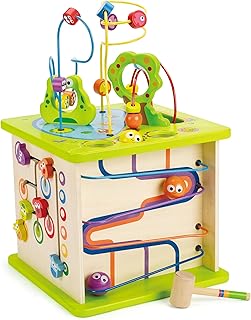
Our score: 9.4/10 iOur editorial score (1 to 10), based on listing specs, features and how well each pick fits its use case. It is not an Amazon customer rating.
Wooden toy 5 sided activity center Shape sorter blocks Wooden balls and mazes
The Hape Country Critters Play Cube is described as a wooden learning puzzle toy for toddlers with a five sided activity center. The title lists animal friends, shapes, mazes, wooden balls and shape sorter blocks. That combination of sorting and maze play is the reason it earns the award for shape sorting. It reads as the most puzzle minded wooden cube in the guide, with several different problem types in one cube. The phrase learning puzzle toy in the title shows that the maker sees it as a thinking toy as much as a play toy.
Based on the title, a toddler can work with shape sorter blocks, guide wooden balls through mazes and meet animal friends along the way. Those are separate activities, so the cube rewards a child who likes to switch tasks. Balls through a maze train slow, careful hand movement, while sorter blocks build the idea that shapes fit specific openings. Parents should check the listing images for exactly how many blocks and balls come with it. It helps to place the balls and blocks in a small bowl at the start of play so the child can pick them out one at a time.
This cube suits toddlers who have moved beyond simple grab and shake toys and want something with a clear goal. A caregiver can sit alongside and name the shapes, count the balls and talk about the animals. Because it is a learning puzzle toy, it works nicely as a quiet time activity before naps or during car free afternoons at home. Older toddlers may keep coming back to it as their hands become steadier and their solutions become faster. Parents who enjoy puzzle toys themselves often like this cube, since it rewards patience and gives a clear sense of finishing something.
There are practical points to consider. The wooden balls and blocks are separate pieces, so check the age marking and watch for anything that could be mouthed. Keep a small container nearby for storage. Clean with a lightly damp cloth, then dry. Place the cube on a rug or soft floor area so balls do not roll away under furniture, and supervise every play session, particularly while the child is still putting toys in the mouth. If a ball rolls out of sight, a quick look under couches and shelves at the end of the day saves frustration and helps prevent loss.
5. Melissa and Doug Musical Farmyard Cube: Best Musical Cube

Our score: 9.2/10 iOur editorial score (1 to 10), based on listing specs, features and how well each pick fits its use case. It is not an Amazon customer rating.
Musical farmyard theme Educational baby toy Melissa and Doug brand Cube format
Music is the headline here. The Melissa and Doug Musical Farmyard Cube is listed as an educational baby toy with a musical farmyard theme, and that sound focus earns it the award for best musical cube. If your household prefers toys that respond with noise, this is the pick that most clearly signals it in the name. Parents who want quieter play may prefer one of the wooden cubes. Unlike the wooden cubes in this guide, the title puts music first, so it offers a different feel from the calm bead maze style toys.
The title does not break down the activities, so details about song titles, buttons, animal sounds and power source are best confirmed on the listing. What the name does tell us is that the cube combines a farmyard scene with musical play. For a baby, that pairing offers a gentle introduction to cause and effect: touch something, hear something. Animal themes also help with early vocabulary, because adults can repeat the names and sounds. Reading the product description will show how the music is activated, which matters for a child who is still learning to press, slide or turn.
This cube suits babies and young toddlers who respond to sound and who enjoy a familiar theme such as farm animals. It can become part of a daily routine, for instance a short sitting session after breakfast with a caregiver singing along. Families with several children may find the musical element draws siblings in as well. It is a strong choice when a gift giver wants a toy that feels lively without needing complicated setup. A short sing along session can build a happy routine, and adults can pause the toy to let the child try the sounds with their own voice.
A few cautions are worth noting. Volume matters for small ears, so check whether the listing mentions volume control and keep the toy at a comfortable distance. If it uses batteries, confirm the type and keep the compartment secure. Always check the age grade and watch for any detachable parts. Clean the surface with a damp cloth, avoid soaking, and keep the toy off stairs and hard surfaces where a fall could occur. Take a few minutes to listen for how loud the toy sounds in your room, and consider a rug underneath to soften noise and protect floors.
6. WOODMAM 7 in 1 Wooden Activity Cube: Best Seven Activity Cube

Our score: 9.0/10 iOur editorial score (1 to 10), based on listing specs, features and how well each pick fits its use case. It is not an Amazon customer rating.
7 in 1 wooden cube Bead maze Xylophone Sorting and stacking board
The WOODMAM Wooden 7 in 1 Activity Cube packs the longest activity count in this guide, which is why it wins the award for best seven activity cube. The title names a bead maze, a xylophone, and a sorting and stacking board, and it also calls the cube Montessori style for one and two year olds. The listing mentions birthday gifts for a one year old boy or girl, so gift buyers are clearly part of the audience. A seven activity layout gives the cube a strong value story for families who would rather buy one toy with many faces than several single purpose toys.
Of the seven activities in the name, the title spells out three: bead maze, xylophone and sorting and stacking board. Confirm the rest on the listing. The bead maze builds finger control, the xylophone gives a child a simple way to make sound by tapping, and the sorting and stacking board adds shape play and building. Combining quiet manual tasks with a musical one makes the cube feel varied for a child who tires of a single trick. Because the title names an xylophone, parents can expect a musical face, and the child learns that tapping different bars may change the sound.
This cube suits toddlers who are one to two years old and who enjoy trying every face of a toy. It also suits parents who like the Montessori idea of simple, open ended wooden materials that invite repeated practice. A caregiver can tap a rhythm on the xylophone and let the child copy it, then move on to stacking. Because it is a gift oriented listing, it is a sensible choice for a first birthday when a family wants one toy with many options. Open ended wooden play is also easy to blend into daily routines, such as a short stacking game while dinner is being prepared in the kitchen.
Some cautions apply. A xylophone adds noise, though it is manual rather than electronic, so the volume depends on the child. Check the age marking, and look for loose pieces such as stackers or mallets that need storage. Wipe with a damp cloth and dry promptly to protect the wood. Place the cube on a flat surface and stay close, because a toddler leaning on a cube can tip it. Keep the mallet and any stackers in a pouch so they do not wander, and check the listing images to see exactly how the pieces are arranged.
7. 6 in 1 Wooden Activity Cube with Stacking Cups: Best with Stacking Cups

Our score: 9.0/10 iOur editorial score (1 to 10), based on listing specs, features and how well each pick fits its use case. It is not an Amazon customer rating.
6 in 1 learning toy 8 stacking cups Baby 6 plus months Wooden cube
The youngest age in the title belongs to this cube. The listing calls it a wooden activity cube for babies six months and up, a six in one learning toy that includes eight stacking cups. Starting at six months makes it the most baby focused of the wooden cubes here, and the stacking cups are the reason it earns the award for best with stacking cups. Parents who want a purchase that lasts more than a few weeks will find that the stacking cups give the cube a second life as a standalone toy.
The title lists a set of benefits: fine motor skills, counting, shapes, colors and coordination. Those are marketing style goals, and any toy can only support them, not guarantee them, but they do show the intended direction. Stacking cups are an old favorite because they work in many ways. A baby can bang them, a toddler can nest them, and an older child can build a tower and count as it goes up. Spreading the cups on the floor and letting the child choose one at a time keeps sessions varied and avoids a crowded, confusing pile.
This cube suits families who want a toy that grows across several months. A six month old can sit and grab, while a one year old can stack and sort. Parents can use the cups for counting aloud and for color words, since a family only needs to say red, blue and green while handing a cup over. Pairing a cube with stacking cups also gives a caregiver something to do together, which is better than leaving the child to play alone. Parents may also enjoy using the cups in the bath or sand only if the listing says so, but otherwise it is best to keep them for dry indoor play.
As always, check the listing for the age grade, the exact materials and the finishes used. Cups are small, loose parts, so keep them in a bag after play and check that none could cause a choking risk for your child. Supervise a young baby closely, and keep the cube away from stairs. A damp cloth is the gentlest cleaning method, with prompt drying to protect the wood. A small cloth bag or a zip pouch works well for storing the cups, so all eight can be counted at tidy up time.
8. SOCBTNSO Montessori Busy Cube Travel Toy: Best for Travel

Our score: 9.4/10 iOur editorial score (1 to 10), based on listing specs, features and how well each pick fits its use case. It is not an Amazon customer rating.
Montessori busy cube Travel toy 6 9 12 months Fine motor skills
Taking a toy on the road is a different job from setting it up in a playroom, and this busy cube is the one that the listing frames as a travel toy. The SOCBTNSO Montessori Busy Cube is described for fine motor skills and for babies of six, nine and twelve months, and the title also mentions stocking stuffers for toddlers and baby shower gifts. Those clues explain the award for best for travel. The mention of stocking stuffers in the title also signals that the cube is small enough to be given as a holiday extra, not a main present.
The title does not list the individual activities, so the product page is the place to see what is on each face. A Montessori style busy cube generally focuses on simple, practice with the fingers such as twisting, sliding, pressing or turning. The listing emphasizes fine motor skills, which means the toy is intended to give small fingers something to practice with in a compact form. Parents should check the photos for the size of the cube before assuming it fits a diaper bag. Looking closely at the images will help parents decide whether the cube fits a coat pocket, a diaper bag or only a larger backpack.
This cube suits families who spend time in waiting rooms, restaurants, car seats or relatives’ houses, where a quiet, self contained toy is useful. It also fits gift buyers who want something small for a stocking or a baby shower. The age span in the title, six to twelve months, suggests a younger baby audience, so it works for caregivers who want an early toy that can come along on every outing. Because it targets the earliest months in the title, it can become a familiar comfort item that a baby recognizes in a new setting like a doctor’s office.
A few cautions apply. A small toy can travel easily, but it can also be dropped or left behind, so keep track of it in a bag pocket. Check the age grade and watch for any small parts. Wipe it with a damp cloth between outings, since toys that travel touch many surfaces. In a car, a loose toy can become a projectile in a sudden stop, so check that it is stowed during the drive. Keep a travel wipe handy, and avoid leaving the toy in a hot car, where heat can damage some materials and finishes.
9. Wooden Activity Cube for 1 Year Old Gift Set: Best Gift Box Set

Our score: 9.2/10 iOur editorial score (1 to 10), based on listing specs, features and how well each pick fits its use case. It is not an Amazon customer rating.
Bead maze toy Stacking cups Board book Blue gift box
A gift needs to look ready to give, and this listing is built around that. The Wooden Activity Cube for 1 Year Old comes with a bead maze toy, baby stacking cups, a board book and a blue gift box, according to the title. That bundle is the reason it earns the award for best gift box set. A buyer can order one item and have a cube, a set of cups and a book in a single package. A bundle like this can reduce shopping time, since a parent can skip searching for a separate book and set of cups to go with the cube.
The extras change what a parent receives. The bead maze covers finger skills, the stacking cups offer nesting and counting, and the board book adds a quiet reading moment. The title does not say which book is included or how many cups come in the set, so the listing is the place to confirm those details. Gift buyers who want to add a card and ribbon will find the gift box a helpful starting point. Taking a moment to read the listing will help you confirm how many parts are inside the box before you wrap it.
This set suits first birthday gifts, baby shower presents for parents planning ahead, and holiday gifts for a child around the age of one. The title repeats the one year old theme several times, so the audience is clear. Because the bundle includes a book, it also supports reading routines: a caregiver can look at the pages together and then move to the cube. It is a good fit for a family that wants one present to cover several kinds of play. Reading the board book together first and then playing with the cube makes a gentle sequence that many toddlers learn to expect each day.
There are some cautions. Cups and beads are small, loose or moving parts, so confirm the age grade and keep play supervised. Board books can be chewed, so check the pages after rough use. If you are gifting it, include a gift receipt in case a duplicate arrives. Wipe wooden parts with a damp cloth, dry them quickly, and store the cups and book together so nothing goes missing. Keep the box if you can, since a sturdy gift box can double as storage for the cups once the wrapping paper is gone.
How to Choose the Best Activity Cubes
What counts as an activity cube
An activity cube is a compact toy with play elements on several faces, so a child can stay in one spot and explore many things. Typical elements include bead mazes, spinners, doors, shape slots and musical parts. Some cubes use five faces for play and leave the base flat, which is why you will see the phrase five sided play center on listings. Pay attention to how many separate faces actually have an activity on them, because a cube with one busy front and four plain sides gives less value than a fully used design.
The format works because it asks little of the child at first. A baby can bat at a part, a toddler can open a door, and an older toddler can follow a bead along a track. When comparing listings, count the activities named in the title and check which ones are physical, which are musical and which are puzzle based. A child who has several choices tends to stay near the toy longer, and that gives the caregiver more time for talking, naming and gentle guidance.
Wooden or plastic activity cubes
Wooden cubes tend to be heavier, quieter and calmer in look, and several in this guide include bead mazes and stacking parts. Plastic cubes often add electronic sounds or lights, and they can be lighter to carry. Neither material is automatically better. The right choice depends on how your family likes toys to look, sound and fit in a small space. A practical way to choose is to picture your living room or nursery and ask whether a bright electronic cube or a calm wooden one would feel right there.
Always confirm materials and finishes on the listing, because titles rarely list them in full. If a wooden cube is heavy, keep it on a flat floor and watch for tipping. If an electronic cube has a volume control, set it low. Parents who want silence during nap routines may lean toward wood, while sound lovers may prefer musical cubes. Sturdy joins and smooth edges are worth looking for in photos, and a heavier cube usually stays put better when a toddler leans on it.
Age fit from six months to two years
The cubes in this guide span a few stages. One listing mentions babies of six months and up, another mentions six, nine and twelve months, and others target one year olds and toddlers. A younger baby will mostly grab, bat and mouth, while a toddler can twist, slide and match. Choose the cube whose named activities fit what your child can already do. Think about the next three or four months as well as today, since a child who is just starting to sit will be pulling up and cruising before you know it.
Do not rush a child toward the most complex cube. A toy that is too hard can frustrate, while one that is slightly easy builds confidence. Check the age grade on the listing, because it reflects safety considerations about parts and not only skill. If you are between stages, a cube with a mix of simple and harder faces gives room to grow. A cube with both simple and harder faces buys time, and it avoids a quick cycle of outgrown toys that pile up in a closet.
Safety checks before you buy
Start with the age grade and the small parts warning on the listing. Cubes with loose pieces such as stacking cups, balls or animals bring extra attention for children who still put things in their mouths. For toys sold in the United States, look for mention of ASTM toy safety standards or CPSIA compliance, and for European markets look for EN71, but only count them when the listing states them. Also read any warning text on the listing, since it often explains why a toy is not for children under a certain age.
Check battery compartments on electronic cubes, which should close securely and stay out of reach. Inspect any toy regularly for cracks, splinters, loose beads or peeling finish, and stop using it if it is damaged. No product guarantees safety, so supervise play, especially during early months and any time a child is mouthing a toy. When in doubt, choose a cube without loose pieces for a younger baby, and add the sets with cups or animals once the child is past the mouthing stage.
Fine motor skills and early learning
Many activity cubes support small hand movements such as pinching, sliding, turning and pressing. Those movements are building blocks for later tasks such as self feeding, holding a crayon and using zippers. A bead maze is a good example, since the child must grip and guide a bead along a curved path. A toy supports this practice but does not guarantee any specific result. Give the child plenty of time to repeat an action, because repetition is how the skill sets in and how confidence grows.
Learning also happens through words. When an adult names the animal, the color or the action, the child hears language tied to something real. Counting stacking cups and naming shapes are simple ways to fold early math and vocabulary into everyday play. Short sessions repeated often usually work better than one long sit down. Celebrate small wins with a smile or a simple word, and avoid taking over the task, so the child can feel the satisfaction of doing it alone.
Sound, lights and quiet play
Sound is a real decision point. A musical cube may keep a baby engaged, but it can also wear on caregivers or overstimulate a child at bedtime. A manual xylophone, like the one named in one listing, lets the child control the volume through their own taps. Electronic cubes may offer volume options, but confirm that on the product page. Watch your child’s body language, because turned heads, fussing or covered ears may be signs that the toy is too loud or too busy.
Think about where the toy will live. A cube that stays in a playroom can be louder than one that travels to restaurants, waiting rooms or grandparents’ homes. If you are unsure, a quiet wooden cube is a safe default, and you can add musical toys later once you know how your child reacts to sound. A calm toy at the end of the day and a more lively one in the morning is a rhythm that works for many families.
Size, storage and space
Activity cubes are compact, but some are bigger and heavier than they look. Check dimensions on the listing and imagine where it will sit. A cube with loose parts needs a basket, bag or bin close by so animals, cups and balls do not wander. A small floor rug keeps the toy from sliding and cuts down noise on hard floors. Measure the spot where the cube will live before you buy, and remember that a toddler will often drag a toy to a different room.
For travel, a smaller busy cube is easier to pack. Larger wooden cubes stay at home and become a regular part of floor time. Keep the cube away from stairs, door frames and sharp furniture corners, because toddlers who pull up on a cube can move it unexpectedly. Rotating toys in and out keeps interest fresh and also keeps clutter down. A low shelf, a basket and a tidy rug can turn storage into a habit that even a small child can start to follow.
Budget friendly shopping without quoting prices
Value is not just about the lowest sticker. Count what the set includes, how many activities it offers and how long your child is likely to use it. A cube with several faces and loose parts like stacking cups may stay interesting across more months than a single trick toy. Gift sets that bundle a book can also replace a second purchase. Think about resale or hand me down value as well, because a well kept wooden cube can move to a cousin or a friend without much trouble.
Prices change, so compare live listings on the day you buy and check shipping windows if you need it for a birthday. Consider whether a sibling or cousin will use it later, since a sturdy cube can be handed down. Avoid buying duplicates by checking what relatives are already planning to give. Also consider whether a gift set already includes items you were planning to buy separately, since that can make the total cost of play lower.
Cleaning and care
Wipe wooden cubes with a lightly damp cloth and dry them right away, because soaking can swell or warp the wood. Plastic cubes can usually be wiped the same way, but electronic parts should never be submerged. Follow any care notes on the listing, and let the toy dry fully before it goes back in the play area. Keep a soft brush or a dry cloth nearby for dust on wooden surfaces and in the grooves of a bead maze track.
Clean more often during cold season and after outings. Check beads, doors and hinges for wear while you wipe. If a part loosens or a finish begins to peel, retire the toy. Store loose pieces in a bag or bin so nothing gets lost, and remove batteries from electronic toys that will be stored for a long stretch. Set a regular schedule, such as a quick wipe on Sunday, so cleaning becomes routine and the toy stays fresh for the next child.
A simple play path with an activity cube
Begin with short sessions where the adult sits beside the child and shows one action, such as sliding a bead or opening a door. Let the child copy at their own pace. At first, a baby may only touch or mouth the toy, and that is normal. Add words and gentle sounds without pushing toward a goal. Take a moment to stop at the end, tidy the toy up together and say goodbye to it, which turns cleanup into a calm closing ritual.
As skills grow, shift from showing to asking. Where does the animal go? Can you stack the cups? Which one is red? Then introduce a second toy, such as a board book, to link the cube to other routines. Stop when the child loses interest, and try again later. Short, relaxed play beats long, forced practice. Over weeks, you may notice that the child begins to lead the play, choosing which face to try first and showing you what they have learned.
Common mistakes parents make
One common mistake is buying for the age on the gift tag rather than the child. A cube with many complex faces may sit unused for months. Another is ignoring the age grade, which is there for a reason. A third is leaving a child alone with a toy that has loose parts or batteries. It also helps to ask yourself whether the child will actually use the toy in the next month, not only whether it looks impressive on the listing page.
Another trap is overbuying. A single cube with several activities usually does more than a pile of one trick toys. Finally, do not skip a glance at the listing’s photos and description, because titles are often stuffed with keywords. The images and product details are where you confirm sizes, pieces and power needs. Ask relatives for suggestions in advance so that two cubes do not arrive in the same week, and so the next gift can add something different.
Gift tips for activity cubes
Activity cubes make friendly gifts for first birthdays, baby showers and holidays. Pick a cube that matches the child’s current stage and does not require complicated setup. If you want a more complete present, choose a bundle with stacking cups or a board book, or pair a simple cube with a picture book of your own choosing. Think about the unboxing as well, since a cube that is easy to open and ready to play gets used the same day, while a complicated one may wait.
Order early, check delivery windows on the listing, and include a gift receipt so parents can exchange a duplicate. Wrapping ideas include a reusable fabric bag or a small basket. Remind parents to check the age grade and any battery needs, and to store small pieces safely once the wrapping is off. A handwritten note with a simple play idea, such as naming the animals together, adds a personal touch that costs nothing.
Activity cubes compared with other early toys
Activity cubes sit between simple rattles and more advanced puzzles. They give a child a single toy with several actions, which is a gentler step than a full playset or a large busy board. Many families find that a cube works well beside stacking cups, a soft ball and a few board books, which together cover touch, sound, movement and early language.
A cube also differs from a baby gym, because it is meant for sitting and exploring rather than lying back. For children who have outgrown the cube, the same skills move into puzzles, blocks and pretend play. Think of the cube as one useful stepping stone in a changing toy shelf, not as the only toy a child needs, and rotate it with other toys to keep it feeling new.
Frequently Asked Questions
What is an activity cube?
An activity cube is a small toy with different play features on several sides, such as bead mazes, spinners, doors or shape slots. It lets a baby or toddler explore many actions in one spot with an adult nearby.
What age is best for an activity cube?
Most listings in this guide point to babies from about six months through toddlers around two years. The right age depends on the cube, so check the age grade on each listing and match the activities to what your child can do.
Are wooden activity cubes better than plastic ones?
Neither is better in every case. Wooden cubes tend to be quieter and calmer, while plastic cubes often add sounds or lights. Choose by your family’s noise tolerance, storage space and the features named on the listing.
Do activity cubes need batteries?
Some do and some do not. The wooden cubes in this guide are described with manual features like mazes and stackers, while electronic cubes may need batteries. Confirm power needs on the product page before buying.
Are activity cubes safe for babies?
They can be used with supervision when the age grade fits, but no toy guarantees safety. Check small parts warnings, inspect the toy often for damage, and keep play within an adult’s sight.
How do I clean a wooden activity cube?
Wipe it with a lightly damp cloth and dry it right away. Avoid soaking, because water can swell or warp wood. Check the listing for any care notes and inspect beads and hinges for wear.
Can an activity cube help with fine motor skills?
Many named features, like bead mazes and stacking cups, give small hands practice with gripping and moving. A toy supports skill building through play, but it cannot promise a specific result for any child.
Which cube is best for travel?
The SOCBTNSO Montessori Busy Cube is framed as a travel toy in its listing. Check its size in the product photos to be sure it fits your bag, and keep it clean between outings.
What should I look for in a gift activity cube?
Look for a clear age grade, a mix of activities, tidy packaging and any extras such as stacking cups or a board book. Order early, check delivery windows, and include a gift receipt.
How long will my child use an activity cube?
It depends on the cube and the child. Cubes with several faces and loose parts may hold interest across more months, as a baby moves from grabbing to stacking and sorting.
The Bottom Line
The best activity cube is the one that matches your child’s stage, your home’s noise level and your budget logic. For a classic starting point, the VTech Busy Learners Activity Cube leads this list, while wooden fans have strong options in the Battat and Hape cubes.
Use the live listings to confirm ages, pieces and battery needs, and keep every play session supervised. Pick one cube with room to grow, add a board book and a few stacking cups if you like, and enjoy watching small hands get busy.
Updated for the 2027 buying season. Amazon listings and availability change often, so check the product page for current details.

Write Your Review
No reviews yet. Be the first to share your experience!