

As an Amazon Associate we earn from qualifying purchases. If you buy through links on this page we may receive a commission at no extra cost to you. Product details come from Amazon listings and can change.
If you are shopping for the best budget painting sets for preschoolers, you are really looking for a first paint box that a three, four, or five year old can open, dip into, and clean up after with a grown up close by. This guide covers eight picks drawn from live listings, including washable paint bottles, a spill proof jar set, watercolor palettes, paint sticks, finger paint, mini acrylic strips, and a pack of chubby brushes. We say plainly where a pick suits the age group and where it does not.
Budget here does not mean flimsy. For a preschooler, good value means paint that rinses out of skin and clothes, colors that mix into something recognizable, containers that survive a bump, and enough quantity that a small artist can paint freely without hearing the word careful every minute. It also means supplies a younger sibling can share a year later.
Prices change often, so we do not quote any. Every product below links to its live listing, where you can check the current offer and read the latest details before you choose. Adult supervision still matters at this age, especially around paint tasting, small brushes, and sets with many tiny pieces.
Key Takeaways
Best Budget Painting Sets For Preschoolers at a Glance
| Product | Our score | |
|---|---|---|
| Crayola Washable Kids Paint Set 12 Best Overall |
9.6 / 10 | Check Price |
| Crayola Spill Proof Paint Set Best Spill Proof Jars |
9.2 / 10 | Check Price |
| Cra-Z-Art Washable Paint 8 Pack Best Bulk Value |
8.8 / 10 | Check Price |
| TBC Washable Paint Sticks 12 Best No Water Painting |
9.6 / 10 | Check Price |
| Mr. Pen Washable Watercolors 2 Pack Best Watercolor Starter |
9.2 / 10 | Check Price |
| ABEIER Washable Finger Paint 12 Best Finger Paint |
9.2 / 10 | Check Price |
| Anezus Kids Paint Brushes 10 Pack Best Brush Upgrade |
9.2 / 10 | Check Price |
| MicoSim Mini Acrylic Paint Strips 140 Best for Older Siblings |
9.4 / 10 | Check Price |
How We Chose the Best Budget Painting Sets For Preschoolers
This is a research based guide, not a lab comparison. We read each listing closely, compared the paint type, the number of colors, the container style, the age wording, and any safety standard the seller mentions, and then balanced the picks so a parent can choose between bottles, jars, palettes, sticks, and accessories. Where a listing says nothing about a feature, we speak in general terms instead of guessing.
Each pick also carries an editorial score out of 10 on this site, based on features, specs, and how well the product fits a three to five year old painting at home or in a classroom. A high score does not mean a set is perfect for every child, so read the cons and the age notes in each section before you add anything to your cart.
In-Depth Reviews
1. Crayola Washable Kids Paint Set 12: Best Overall

Our score: 9.6/10 iOur editorial score (1 to 10), based on listing specs, features and how well each pick fits its use case. It is not an Amazon customer rating.
12 paints Washable Classic and glitter Crayola
Crayola Washable Kids Paint Set takes the top spot because it hands a preschooler a full palette in one box without asking a parent to buy extras. The listing describes 12 washable paints that mix classic colors with glitter shades. For a three to five year old, that blend is a sweet spot: enough colors to feel generous, yet not so many that a small child freezes at the choice. Washable paint also eases the nerves of a first painting afternoon, which is exactly what budget minded families want. That balance of variety and simplicity is why it works as a first purchase for a household with a single young painter.
Inside the box you get bottled paint that is meant to be squeezed or poured into a palette, a tray, or a recycled egg carton. Pairing it with large brushes or sponges keeps the session simple. Glitter shades add sparkle to cards and collage work, while the classic colors cover everyday subjects such as the sky, grass, and a very red fire truck. Younger artists tend to enjoy the tactile side of squeezing bottles, and that builds hand strength. Because the paint is liquid, it also works for stamping with sponges, cut potatoes, or cookie cutters, which adds variety without buying more supplies.
This set suits children who are ready to move past scribbling and start naming what they paint. It teaches basic color mixing, since blue and yellow become green on the paper, and it rewards patience as layers dry. Because the colors are bold, early pictures look finished even when the strokes are loose, which keeps confidence high. Siblings of different ages can share the same box, stretching the value across several years of art time. Parents who like to display artwork will find the bold colors photograph well and look cheerful on a fridge door or a classroom wall.
A few practical tips make this set smoother. Put a smock or old shirt on your painter, cover the table, and pour small amounts into a muffin tin so the bottles stay upright. Washable does not mean stain proof on every fabric or surface, so wipe spills quickly. Glitter paint can be harder to rinse from brushes, so keep a separate brush for it and always supervise at the sink. Store the bottles upright in a shoebox lined with a paper towel, and the set will stay tidy between sessions for a long time.
2. Crayola Spill Proof Paint Set: Best Spill Proof Jars

Our score: 9.2/10 iOur editorial score (1 to 10), based on listing specs, features and how well each pick fits its use case. It is not an Amazon customer rating.
5 paints Spill proof jars Washable Reusable jars
Crayola Spill Proof Paint Set earns its place for one reason that every parent of a preschooler understands: it is built to cope with tipped paint. The listing says it has five washable, spill proof paints in reusable jars. Instead of flimsy cups that slide across the table, each color sits in its own jar, so a sudden elbow or a curious toddler sibling is far less likely to turn a calm session into a floor cleaning project. For parents who have already lived through a tipped paint cup, that design detail alone can justify choosing this set first.
Five colors may sound small next to larger boxes, but that limit works in favor of three and four year olds. A short palette teaches mixing without overwhelm, and children quickly discover that two jars can create a third shade. The jars can be closed after use, which helps the paint last through several sittings. Pair them with chunky brushes and a sturdy sheet of paper taped to the table, and the setup is complete. Keeping the paint in separate jars also helps children learn to return each brush to its own color, which keeps the other jars cleaner.
This is a strong fit for the first painting experiences of the youngest preschoolers and for classrooms or playdates where several children paint at once. It teaches how to dip, tap off extra paint, and rinse a brush, small routines that build independence. Children who want a huge palette may outgrow it, but it works nicely as a starter pot set before upgrading to a bigger collection. It also makes a thoughtful gift for a family with a toddler sibling, since the jars give the youngest child a little more distance from the paint.
Keep expectations realistic. Spill proof describes the jar design, not the paint itself, so a brush that drips or a splashy stroke can still leave marks. Cover the table anyway, and wipe the rims so lids close cleanly next time. Because the listing gives only five colors, you may want to add white or a second set if your child loves pastel shades or detailed mixing. Place the jars on a tray with a rim, and you add a second layer of protection for the table and the floor underneath.
3. Cra-Z-Art Washable Paint 8 Pack: Best Bulk Value

Our score: 8.8/10 iOur editorial score (1 to 10), based on listing specs, features and how well each pick fits its use case. It is not an Amazon customer rating.
8 colors 4 oz bottles Washable poster paint Bulk pack
Cra-Z-Art Washable Classic Paint Bulk Pack is the pick for families, teachers, and playgroups who care about quantity. The listing describes eight washable poster paint colors, each in a 4 ounce bottle. Poster paint is the workhorse of the preschool classroom, and a bulk pack of this size can keep a whole table of children painting for many sessions before a refill is needed. It earns its award by stretching a modest budget over a lot of art time. That makes the pack a natural fit for teachers and parents who plan craft days well ahead of time.
The bottles are made for pouring into palettes, trays, or muffin tins, which means one adult can set up several stations quickly. Poster paint tends to have a smooth, opaque finish that covers paper well, so even a big, loose brushstroke looks bold. The classic color range in the title suggests the usual primaries and everyday shades, which is all a preschooler needs to learn mixing and color names. A small ladle or a plastic spoon helps children pour without squeezing, and it turns setup into a little lesson on measuring.
This pack suits busy households with more than one child, home daycare settings, birthday painting parties, and anyone who prefers refilling small pots over buying new boxes. It teaches sharing and turn taking, because the bottles go in the middle of the table and everyone pours their own small amount. Children can paint poster board, cardboard boxes, and paper plates, so a single bottle supports many different projects. Group painting also builds language, because children talk about colors, trade bottles, and describe what their neighbor is making.
The main caution is mess. Larger bottles are easier for small hands to squeeze too hard, so pour paint yourself for the youngest painters and keep the bottles out of reach afterward. Wipe nozzles after each use to stop dried paint from clogging the opening. Washable on the label should not be read as a promise for every fabric, so choose old clothes or a smock and always supervise. Label a lid with a name or a date if the bottles are shared in a classroom, so paint stays fresh and everyone knows whose bottle is whose.
4. TBC Washable Paint Sticks 12: Best No Water Painting

Our score: 9.6/10 iOur editorial score (1 to 10), based on listing specs, features and how well each pick fits its use case. It is not an Amazon customer rating.
12 paint sticks Washable tempera Beeswax formula Fast drying
TBC Paint Sticks are the most mess friendly option here, which is why they take the no water award. The listing describes 12 washable, blendable tempera paint sticks with a beeswax formula that dries quickly. A paint stick twists up like a glue stick and glides across paper like a thick crayon, so there are no cups, no rinse water, and no brushes to wash. For a busy parent, that can turn a rainy afternoon into a painting session with almost no setup. Parents often value that kind of calm, portable activity most on long trips and in places where wet paint would never be welcome.
Because the paint comes in solid form, small hands can hold it the same way they hold a crayon, which suits younger preschoolers still developing a pencil grip. The title lists the age range as 2 to 8, so the product is clearly aimed at young children. Colors can be layered and lightly blended on paper, and the fast drying note means pictures can be hung up or handed to grandparents soon after. A sheet of colored paper or cardboard can make the strokes stand out, and the sticks can be used to color in a printed page.
This set suits children who are not quite ready for wet paint, or families who want art that fits in a bag for the car, a restaurant, or a waiting room. It teaches pressure control, since pressing harder gives deeper color, and it introduces blending without any dripping. Older siblings can use the same sticks for posters and school projects, so the pack stays useful long after the preschool years. Teachers can keep a tin of sticks in a drawer and pull it out at a moment’s notice for a short, tidy art activity.
Keep a few limits in mind. Paint sticks cover large areas more slowly than a brush with liquid paint, and the colors may look less vivid on dark or very glossy paper. Always twist the stick back down and replace the cap so the tip does not dry out or break. Supervise the youngest children so sticks are used for paper and not for faces or furniture. Wipe the tips with a tissue before capping to keep colors from mixing inside the tube, and store the sticks flat in a cool place.
5. Mr. Pen Washable Watercolors 2 Pack: Best Watercolor Starter

Our score: 9.2/10 iOur editorial score (1 to 10), based on listing specs, features and how well each pick fits its use case. It is not an Amazon customer rating.
2 palettes 8 colors each Washable pigments Brush included
Mr. Pen Washable Watercolors stand out as the gentle introduction to wet painting. The listing describes two palettes with eight colors each, washable pigments, and a paint brush in the pack. Having two palettes is a clever budget feature: one can stay at home while the other travels, or two children can paint side by side without arguing over a single set. Watercolors are also very forgiving, so early results look soft and pleasant. It is a particularly good match for children who find thick, wet paint overwhelming or who dislike getting messy hands.
Each palette contains small cakes of paint that are activated with a wet brush. Children dip, swirl, and watch the color bloom, which makes a simple lesson in how water and pigment interact. Compared with bottled paint, watercolor uses less liquid and dries quickly, so cleanup is usually easier. A cup of water, a thick sheet of paper, and a towel are about all that is needed beyond the set itself. Many parents also enjoy sitting down with their own sheet of paper, which turns the activity into relaxed time together.
This option suits four and five year olds who can already manage a brush and a water cup, and who want something calmer than thick poster paint. It teaches control, patience, and color layering, since a pale wash can be painted over once dry. Parents who like quiet creative time will appreciate that watercolors encourage slow, careful strokes, and the pictures often look charmingly dreamy even from beginners. Painting flowers, rainbows, and clouds are natural first subjects, because soft blending looks lovely and mistakes disappear into the wash.
One honest caveat is that the included brush may be small for the youngest preschoolers, so pairing the set with a chubby brush can help. Thin paper will buckle when wet, so choose heavier paper if possible. Teach children not to chew on brushes or put paint cakes in their mouths, and supervise rinsing so the water cup does not tip across the table. Tape the paper edges to a board or the table to reduce curling, and let finished paintings dry flat before displaying them.
6. ABEIER Washable Finger Paint 12: Best Finger Paint

Our score: 9.2/10 iOur editorial score (1 to 10), based on listing specs, features and how well each pick fits its use case. It is not an Amazon customer rating.
12 colors Finger paint ASTM D-4236 per listing Washes easily
ABEIER Washable Finger Paint is the most hands in style choice on the list, and it earns the finger paint award by keeping the idea simple. The title promises 12 non toxic colors, and the listing says the paint conforms to ASTM D-4236 and washes easily. The product is labeled for toddlers aged 1 to 3, which means it is gentle enough for the younger end of the preschool range, though older three to five year olds can enjoy it too. That openness is what makes finger painting such a valued part of early childhood art for generations of families.
Finger paint skips the brush entirely. Children press palms, fingertips, and even knuckles into the color and spread it across paper, which makes it a rich sensory activity. A dozen colors give plenty of room to experiment, from handprint animals to swirly rainbow trails. The ASTM D-4236 note refers to a well known art material labeling standard in the United States, but a parent should still check the actual packaging for details. Hand painted sheets can also be cut into cards, wrapping paper, or collage pieces, which gives the paint a second life.
This set suits first time painters, sensory play, and any family that wants paint to feel like play rather than a lesson. It teaches cause and effect, color mixing with hands, and early shape making. Handprint and footprint keepsakes also make lovely gifts for grandparents. Preschoolers who prefer neat, controlled lines may eventually want brushes, but this is a happy first step into painting for most children. It is a lovely choice for a rainy day, a sensory table, or a messy play session in the garden that nobody needs to tidy up fast.
Plan for a big mess and set up outdoors or on a wipeable surface if you can. Use a smock, roll up sleeves, and keep a damp cloth nearby before the painting starts. Non toxic does not mean edible, so watch children who still put hands in their mouths. Offer small portions at a time, since a full dozen colors can quickly turn into a muddy swirl. A shallow baking tray under the paper catches stray drips, and a bucket of warm water by the door lets children rinse before they step inside.
7. Anezus Kids Paint Brushes 10 Pack: Best Brush Upgrade
Our score: 9.2/10 iOur editorial score (1 to 10), based on listing specs, features and how well each pick fits its use case. It is not an Amazon customer rating.
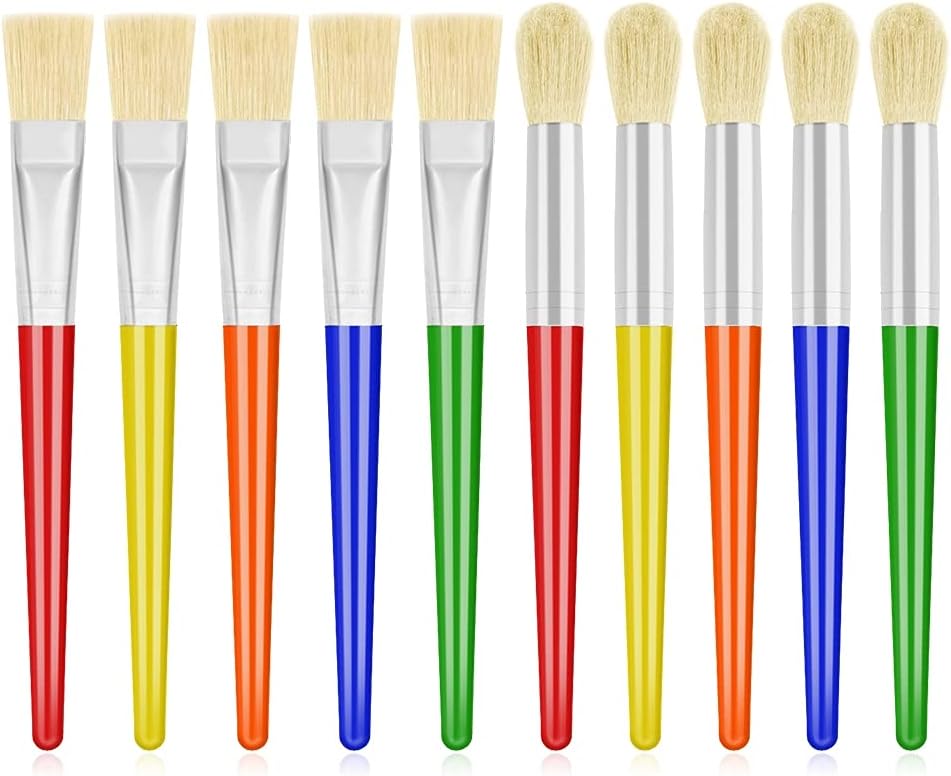
10 brushes 5 round, 5 flat Chubby handles Soft bristles
Anezus Kids Paint Brushes are not a paint set, and that is worth saying clearly. We include them because they solve a real problem for budget painters: many paint boxes come with brushes that are too thin or too short for a preschooler. The listing describes ten chubby brushes, five round and five flat, with soft bristles. Buying them alongside any bottled paint on this list can make the whole setup feel more like a true toddler friendly art kit. For families who have a drawer of mismatched, frayed brushes, a fresh set can feel like a real improvement.
Round brushes make dots, lines, and curved strokes, while flat brushes cover wide areas and make sharp edges. Offering both helps a child discover which movement they enjoy. Chubby handles are easier for small fists to grip, which supports the early pencil hold that develops between ages three and five. Soft bristles are gentler on paper and less likely to scratch, which suits a child who presses a little too hard. Using different shapes also helps children talk about what they are doing, with words like wide, thin, dot, and sweep entering their vocabulary.
This pack suits families who already own bottled paint, watercolor palettes, or poster paint and want a quick, low cost upgrade. It also works for classrooms, where having a brush for each color prevents muddy mixing. It teaches tool choice and care, since children can learn to rinse and sort brushes after painting. Because ten brushes are included, siblings and friends can paint together without sharing one worn out brush. They are also useful for glue, glitter, and other craft tasks, so the pack does not sit idle when the paint is put away.
Remember that brushes alone will not paint anything. You still need paint, paper, water cups, and a protected table. Check the bristles and handles before every session, since loose pieces can become a small parts concern for young children. Let brushes dry upright or flat rather than standing in water, which keeps the bristles in good shape for longer. Label a cup with each child’s name for brushes, and the drying rack becomes a simple routine that children can manage themselves.
8. MicoSim Mini Acrylic Paint Strips 140: Best for Older Siblings

Our score: 9.4/10 iOur editorial score (1 to 10), based on listing specs, features and how well each pick fits its use case. It is not an Amazon customer rating.
140 piece kit 120 mini paints 20 brushes Acrylic strips
MicoSim Mini Acrylic Paint Strips are the pick with the most pieces and the most caveats for this age group. The listing describes a 140 piece kit with 120 mini paints on polyethylene strips and 20 brushes, and the title says it is meant for kids and adults. It is included because the sheer quantity can be tempting, and because older siblings in the house may share it. For preschoolers, it needs close supervision and honest limits. It is best treated as a family kit that older children use first, with preschoolers joining in only when an adult is guiding the activity.
Acrylic paint is a different material from washable poster paint. It dries into a plastic like layer that tends to stay on fabric and furniture, and the listing does not describe it as washable. The mini strips hold small amounts of paint, which suits craft projects such as rocks, small canvases, and paper models. The twenty included brushes are small, so they may feel fiddly for a three or four year old. Rocks, wooden shapes, and small canvases are popular targets for this kind of paint, but those projects usually suit children past the preschool years.
This kit suits a five year old who is calm, patient, and always painting with an adult beside them, and it fits better for ages six and up. It teaches color planning and fine control, but those skills are beyond many younger preschoolers. If a younger child is joining in, give them a washable set from this guide and keep this one for the older kids at the table. If your family already owns the kit, you can use it for a gentle introduction where the preschooler picks colors and an adult does the painting.
Treat the small parts honestly: tiny paint strips and many little brushes can be a choking concern for young children, so keep everything stored away when not in use. Cover the whole table, use a smock you do not mind staining, and wash brushes right away. Do not let preschoolers paint skin, and never let them put paint or brushes in their mouths. Keep the packaging, because sorting the strips back into the box after use helps you spot missing pieces right away.
How to Choose the Best Budget Painting Sets For Preschoolers
What Budget Really Means for a Preschool Painter
A budget friendly painting set for a three to five year old is not simply the lowest cost box on the shelf. It is the box that gives the most painting time per purchase. That depends on how much paint is included, how well the containers hold up to bumps, whether the paint rinses out of clothes, and whether a younger sibling can inherit the leftovers. Think of value as time spent painting, not as the lowest number on a tag.
Watch for hidden extras. A set with no brushes, no palette, and no paper may look attractive until you add everything it needs. Compare what is in the box, then list what you already own. A modest set plus a few good brushes often beats a giant kit full of pieces your preschooler cannot use yet. Families who plan a few extra purchases at the start usually save effort and frustration later.
Washable Paint and Easy Cleanup for Little Artists
Washable paint is the single most useful feature for this age group. It lets a child explore freely without a parent worrying about every drip. The wording on a label usually means the paint will rinse from skin and many fabrics with water, but it is not a guarantee for every surface, carpet, or dark cloth. A small stack of old towels near the table also saves a surprising amount of time when a cup tips.
Prepare for cleanup before the paint comes out. Put on a smock, tape paper down, and keep a damp cloth and a small towel within reach. Rinse spills right away rather than letting them dry, because even washable paint is harder to remove once it has set into fabric or wood. This tiny habit turns a messy moment into a calm one and keeps the mood positive for everyone.
Non Toxic Labels and What They Do Not Cover
Many children’s art products mention ASTM D-4236, a well known standard in the United States for labeling art materials for health hazards. In this guide, only the finger paint listing mentions it, so we attribute it to that listing. Always check the actual product packaging for the labels, since listings can change. Reading the packaging and the listing together gives the clearest picture of what a set actually offers.
Non toxic does not mean edible. Preschoolers sometimes taste paint, lick brushes, or rub their eyes with painty hands. Supervise closely, keep paint out of reach when you leave the room, and wash hands after every session. If a child swallows a large amount of any art material, contact a poison control service or a doctor. If something is unclear, treat it cautiously rather than assuming it is fine for a three year old.
Choosing the Right Paint Type for Ages 3 to 5
Bottled poster paint is flexible and bold, finger paint is sensory and hands in, watercolor is calm and tidy, and paint sticks are the quickest to set up. Each suits a different child and a different moment. A restless three year old may love paint sticks, while a patient five year old may enjoy a watercolor palette. A good first routine is to start with one paint type and add a second only when the child is comfortable.
Acrylic paint is the odd one out. It is great for crafts but is generally not designed to be washed out, so it is a better match for older children. A balanced home art shelf for preschoolers often holds one bottled set, one tidy option, and one brush pack. This keeps the setup simple and helps you see which style your preschooler enjoys most.
Palette Size: How Many Colors Do Preschoolers Need
More colors do not always mean better painting. Five to eight bold colors are plenty for a three or four year old and encourage mixing. Larger palettes of twelve or more make sense for five year olds who want to paint animals, flowers, and detailed scenes with a wider range. Start small, watch what your child reaches for, and expand only when they ask for something specific.
Think about what will actually be used. Glitter shades are delightful for cards and collage, but they can look busy in everyday pictures. If your child loves a particular color, consider a set that makes it easy to refill that color rather than buying a larger palette they will use only in part. That approach also keeps supplies fresh, since paint is used up before it dries out in the bottle.
Brushes, Sponges, and Hands: Tools That Fit Small Grips
Chubby brushes with short, thick handles help young fingers build the grip they will later use for writing. Round brushes are good for dots and lines, flat brushes cover areas, and sponges make quick shapes. Mixing tools keeps a painting session interesting and can reduce frustration with thin brushes that bend or splay. Sponges, rollers, and even soft cloths can be added to the tool basket without any extra cost.
You do not need an expensive tool kit. A few chubby brushes, a sponge cut into shapes, and a recycled cardboard tube for stamping can add variety. Check brushes for loose bristles or handles before every session, and store them out of reach of younger siblings who may chew. Children often come up with their own ideas once they have several ways to make a mark.
Setting Up a Low Mess Painting Corner at Home
A painting corner does not need a full art room. A wipeable table, a plastic tablecloth, and a smock are enough. Tape the paper to the surface so it does not slide, and use a muffin tin or small bowls so you pour only small amounts of paint at a time. Place a small stool or child sized chair so feet rest on the floor, which helps young painters feel steady.
Keep a bucket of water for rinsing, a damp cloth for hands, and a drying spot for finished pictures. Position the setup near a sink if possible. When cleanup is built into the routine, children learn that painting includes tidying, and parents relax into the activity. A calm, comfortable setup often keeps a child engaged for far longer than a wobbly one.
Supervision and Small Parts at the Painting Table
Preschoolers need an adult nearby for painting. The main risks are paint tasting, brushes in the mouth, tipped water cups, and small pieces such as paint strips, caps, or tiny brushes. Sets that bundle many small items deserve extra care, especially when younger siblings are around. Younger siblings may be tempted by lids and brushes, so keep a separate toy basket for them to play with nearby.
Make a simple rule that paint stays on paper. Count brushes and lids before and after use, and put everything in a lidded box or high shelf afterward. Staying within arm’s reach for the whole session is a simple habit that prevents most accidents. Short sessions of ten to fifteen minutes often work best for this age and reduce the chances of accidents.
Early Learning Through Painting
Painting teaches far more than art. Children practice naming colors, mixing shades, counting brushes, and describing what they made. Squeezing bottles and gripping brushes builds the small hand muscles needed for writing later, while stroking across a big page builds shoulder and wrist control. Display finished pictures at child height so they feel proud of their effort and want to paint again. These quiet skills show up later in drawing, cutting, and early writing.
Ask open ended questions rather than correcting the picture. Try, what happened when you mixed blue and yellow, or tell me about this swirl. This builds vocabulary and confidence, and keeps the focus on exploring instead of getting a perfect result. Over time, the stack of artwork becomes a record of growth that families love to look back on. Finish by displaying the picture and naming one thing you noticed, which tells the child their work matters.
Sharing Paint Between Siblings and Classrooms
Bulk bottles, palettes, and brush packs are ideal for sharing. Pour paint into small containers so each child has a portion, and let them swap colors. Sharing reduces arguments and helps you make a modest purchase last longer across a playgroup, a home daycare, or a busy family table. Rotating who pours, who passes brushes, and who wipes the table gives every child a role in the activity.
For mixed age groups, pair a preschool friendly set with an older option kept out of reach. Label containers, store paints upright, and wipe lids before closing. A shared system also makes teaching easier, since everyone follows the same rules for pouring, painting, and cleaning up. Clear, friendly rules posted near the painting area help new children understand what is expected.
Gift Ideas and Wrapping a Budget Painting Kit
A painting gift for a preschooler works best as a bundle: a paint set, a brush pack, a pad of heavy paper, and a smock. Wrap everything in a reusable art bucket or a paint tray so the child has somewhere to store supplies afterward. Check delivery windows on each listing and order early if a birthday or holiday is near. A handmade card or a framed handprint from the child makes the present feel even more personal.
Match the set to the child. A sensory seeker may love finger paint, a neat artist may prefer watercolor, and a busy traveler may enjoy paint sticks. Include a gift receipt, and let the family know whether paint is washable so they can plan where to set it up. If you are unsure about the child’s tastes, ask a parent which style the family would enjoy most.
Common Budget Painting Mistakes to Avoid
The first mistake is buying a huge kit that is too advanced for the child. A big acrylic set can look impressive but sit unused or cause stress. The second is skipping supplies like paper, a smock, and water cups, then discovering a session cannot begin. Make a short list before you buy. Trying a new technique with every session is better than buying a bigger set with the hope of more creativity.
Another common problem is storing paint carelessly. Bottles left open dry out, jars without lids spill, and brushes left in water lose their shape. Close everything after use, rinse brushes quickly, and keep paint away from heat. A little care makes a modest set last for months. Simple habits and gentle guidance will do more for a young painter than any extra supplies.
Frequently Asked Questions
What are the best budget painting sets for preschoolers?
The best picks are washable ones that match a child’s skill level. Crayola Washable Kids Paint Set is our top choice, while the spill proof jars, bulk bottles, paint sticks, and watercolor palettes each suit a different child and setting.
Is washable paint really safe for a three year old?
Washable paint is designed to rinse from skin and many fabrics, but it is not a promise of total safety. Children aged three still need close supervision so paint stays on paper, not in mouths, eyes, or on furniture.
Which paint is easiest to clean up with preschoolers?
Paint sticks and spill proof jars usually leave the least mess, because there is no water and the paint stays in place. Washable bottled paint is also easy to rinse, but it needs a covered table and a smock.
Can preschoolers use acrylic paint?
Acrylic is better for older children. It dries into a plastic like layer that is hard to remove from clothes, and the mini strip kit here has many small parts. If a preschooler joins in, keep a grown up beside them.
Do I need brushes with every paint set?
Not always, since paint sticks and finger paint need none. Bottled paint and watercolors work best with chubby brushes that fit small hands. A separate brush pack is often a smart way to improve a basic set.
How many colors does a preschooler need?
Five to eight colors are plenty for three and four year olds, because fewer choices help them learn mixing. A dozen colors suit five year olds who want to paint detailed animals, flowers, and scenes.
What does ASTM D-4236 mean on art supplies?
It is a well known labeling standard in the United States for art materials and chronic health hazards. In this guide, only the finger paint listing mentions it, so check the actual packaging for what applies to your purchase.
Is finger paint meant for ages 1 to 3 suitable for older preschoolers?
Yes, many older children enjoy finger paint for sensory play and handprint keepsakes. It just needs a lot of cleanup, so set up on a wipeable surface and keep a damp cloth ready.
How do I make a paint set last longer?
Pour small amounts at a time, close lids tightly, and rinse brushes right away. Store bottles upright and away from heat. Sharing one set between siblings is fine as long as supplies are kept tidy.
Why are prices not listed in this guide?
Prices on listings change often, so quoting one here would quickly become wrong. Each product links to its live listing, where you can check the current offer and compare it against your own budget.
The Bottom Line
For most families, the Crayola Washable Kids Paint Set is the best starting point because it offers a generous palette in a format that preschoolers understand. If spills worry you, choose the Crayola Spill Proof Paint Set, and if you need to paint with a group, the Cra-Z-Art bulk pack gives you the most room to share.
Add a pack of chubby brushes, a smock, and heavy paper, and a modest budget goes a long way. Keep acrylic kits for older children, supervise every session, and check each live listing for the latest details before you buy.
Updated for the 2027 buying season. Amazon listings and availability change often, so check the product page for current details.
Write Your Review
No reviews yet. Be the first to share your experience!