

As an Amazon Associate we earn from qualifying purchases. If you buy through links on this page we may receive a commission at no extra cost to you. Product details come from Amazon listings and can change.
Choosing the best budget sewing kits for kids is mostly about getting more finished projects out of every box. A good starter set should give a child several small wins, include sensible tools, and be easy enough that a parent is not stitching the whole thing. This guide covers seven kits and sewing sets, from unicorn and fairy felt boxes to animal doll and bag projects. We keep the focus on value, safety and real fit for each age.
The readers we have in mind are parents, grandparents and gift buyers shopping for children roughly four to twelve, plus tweens who want their own supplies. Some picks are guided project kits and two are general tool sets, and we say plainly which is which. Needles are sharp, so every pick assumes an adult nearby.
Prices change often, so we link to live listings instead of quoting numbers. Read the current details on each page, including contents and age range, before you order, because listings are updated by sellers from time to time.
Key Takeaways
Best Budget Sewing Kits For Kids at a Glance
| Product | Our score | |
|---|---|---|
| EZCRA Unicorn Sewing Kit Best Overall Budget Pick |
9.6 / 10 | Check Price |
| EZCRA Fairy Sewing Kit Best Second Kit for Siblings |
9.6 / 10 | Check Price |
| KRAFUN My First Sewing Kit Best Budget Kit for Ages 6 to 12 |
9.4 / 10 | Check Price |
| Klever Kits Sewing Kit Best Mini Pillow Starter |
9.2 / 10 | Check Price |
| KRAFUN Sewing Bag Kit Best Bag Making Project Set |
9.4 / 10 | Check Price |
| Vellostar 100 Piece Sewing Kit Best Refill and Tool Set |
9.2 / 10 | Check Price |
| Coquimbo Portable Sewing Kit Best for Simple Repairs |
9.2 / 10 | Check Price |
How We Chose the Best Budget Sewing Kits For Kids
This is a research based guide, not a lab comparison. We read each listing carefully, looked at the titles, feature bullets, stated age ranges and what each box says it includes, and balanced the options so the list covers different ages, skill levels and project types. We checked that the products suit children and kept an eye on safety points such as sharp needles and small parts.
Where a listing leaves out a detail, we say so instead of guessing. Each pick also carries an editorial score out of 10, based on features, specs and how well the product fits its intended use. Two of the seven are tool sets rather than project kits, and we kept them because many families end up needing supplies after the first box is finished.
In-Depth Reviews
1. EZCRA Unicorn Sewing Kit: Best Overall Budget Pick

Our score: 9.6/10 iOur editorial score (1 to 10), based on listing specs, features and how well each pick fits its use case. It is not an Amazon customer rating.
Ages 4 to 8 8 beginner projects Unicorn theme Mess free
The EZCRA Unicorn Sewing Kit for Kids earns the top spot because it packs the most beginner friendly structure into a budget friendly box. The listing describes a mess free unicorn sewing and sticker kit with 8 beginner projects, aimed at ages 4 to 8. For a parent shopping on a tight budget, eight separate projects means one purchase can fill several afternoons instead of ending after a single craft session. Many families will find that plenty.
Inside, the idea is simple. Children work on unicorn themed projects that combine basic stitching with stickers, so the finished pieces look bright and complete even when the stitches are a little uneven. The listing calls it mess free, which usually points to pre cut shapes and no glue, paint or loose scraps to sweep up. Kits like this normally include a blunt needle and thread, so check the listing details for the exact tools supplied.
This kit suits children who love unicorns and are meeting a needle and thread for the first time. It teaches the core habits of sewing: holding the fabric steady, pushing the needle through a marked spot, pulling the thread snug, and finishing a project. The sticker element helps younger kids who tire quickly, because they get a decorating reward between stitching sessions. Eight projects also give room to improve with practice.
A few practical notes help. Although the listing says ages 4 to 8, the youngest children should sew beside an adult who can thread needles, tie knots and keep needles and small pieces away from toddlers or pets. Children at the top of the age range may finish the projects quickly and want a harder follow up. Keep leftover pieces in a small tub so nothing goes missing between sessions.
2. EZCRA Fairy Sewing Kit: Best Second Kit for Siblings

Our score: 9.6/10 iOur editorial score (1 to 10), based on listing specs, features and how well each pick fits its use case. It is not an Amazon customer rating.
Ages 4 to 8 8 felt projects Fairy theme Mess free
The EZCRA Fairy Sewing Kit for Kids lands in second place as a close companion to the unicorn version. The listing describes a mess free fairy sewing and sticker kit with 8 felt projects for ages 4 to 8. Because the format matches the first pick, a family with two children, or a child who finishes one box and wants more, can buy both and keep the same easy routine going.
The felt focus is worth noting. Felt is a forgiving fabric for beginners because the edges do not fray, the thickness is easy to see, and a needle slides through without much force. Children stitch fairy themed pieces and add stickers for the finishing touches. As with other kits in this style, expect basic tools in the box, and read the listing carefully to confirm what is supplied before you buy.
This set suits children who prefer woodland and fantasy stories over animals or unicorns. It builds the same early skills as other beginner kits, including hand eye coordination, patience and following picture based steps, while giving a different look for the finished pieces. Siblings can swap designs, which turns sewing into a shared activity rather than a solo one, and it makes a thoughtful gift for a birthday party swap.
For budget minded buyers, pairing two themed kits from the same maker is a sensible way to keep the learning curve smooth without guessing at a new format. As always, supervise any child who is still learning not to put small items in their mouth. Store needles in a closed container after each session, and count them before and after sewing so none are left on the carpet or sofa.
3. KRAFUN My First Sewing Kit: Best Budget Kit for Ages 6 to 12

Our score: 9.4/10 iOur editorial score (1 to 10), based on listing specs, features and how well each pick fits its use case. It is not an Amazon customer rating.
Ages 6 to 12 7 animal dolls Reusable storage box My First kit
The KRAFUN My First Sewing Kit for Kids targets the true six to twelve audience better than most picks here, which is why it is the strongest choice for older beginners. The title promises 7 animal dolls, and the listing adds a reusable storage box. Making seven small dolls gives children something they can play with, display or give away, so the value feels bigger than a single craft. It is a fair step up from sticker kits.
Each project is an animal doll, so the kit teaches how flat pieces become a stuffed shape. Children stitch the edges together, leave a gap, add filling and close it up. The reusable box matters for budget logic, because it keeps tools and unfinished dolls together and can serve again for a later kit. Check the listing for the exact list of needles, thread and stuffing, since those details are not spelled out in the short description.
This is a good match for a child who has outgrown sticker style sewing and wants to make a real toy. It teaches pattern following, simple stuffing technique and the patience to finish seven separate items. The skills carry over to bigger plush projects later, such as hand sewn pillows or pouches. An eight year old can often manage most steps independently, while a six year old may want help with the tricky corners.
Some caveats apply. Doll projects involve more handling of small stuffing and loose pieces than flat felt kits do, so families with babies or toddlers at home should store the box well out of reach. Needles are sharp, and an adult should explain safe handling before the first stitch. Finished dolls with small attached parts are display and play items for older children, not toys for toddlers. Wash hands before and after crafting to keep the work clean.
4. Klever Kits Sewing Kit: Best Mini Pillow Starter
Our score: 9.2/10 iOur editorial score (1 to 10), based on listing specs, features and how well each pick fits its use case. It is not an Amazon customer rating.
Beginner friendly Mini pillow project Multiple projects My First kit
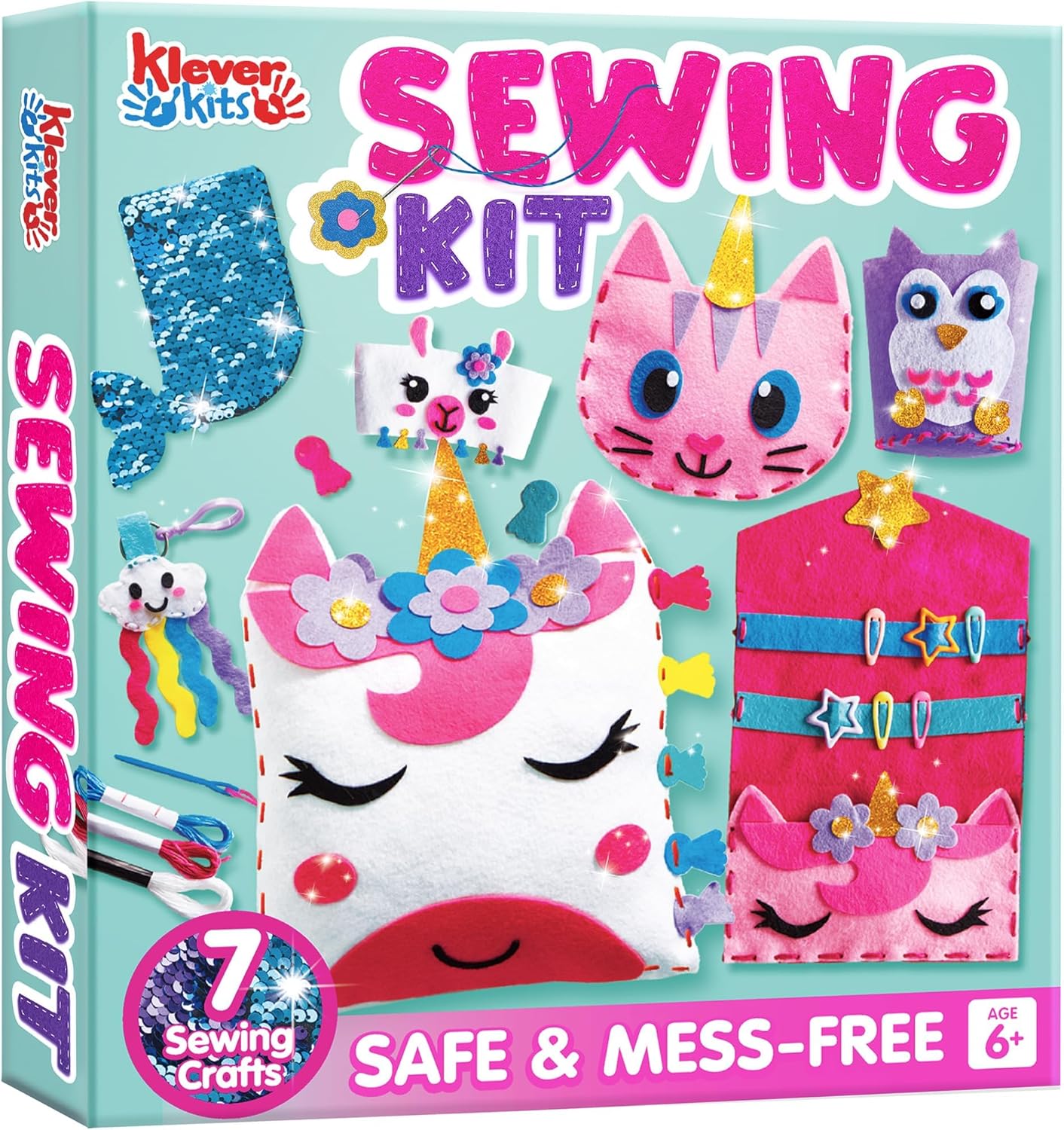
The Klever Kits My First Kids Sewing Kit is a practical pick for children who want to make something they can actually use. The title advertises 7 sewing projects, while the feature bullet mentions 6 beginner friendly projects including a mini pillow. Since the two numbers differ, check the listing before buying so you know exactly how many projects to expect in the box. Reading the contents list avoids surprises.
The mini pillow is the headline item of the project list, and it shows a different skill from flat felt crafts. A pillow involves two pieces joined around the edge, a small gap for filling, and a neat closing stitch. The other projects are described as beginner friendly, which suggests a mix of small makes that build confidence step by step. Treat the exact materials as something to confirm on the listing page.
This kit works for children who like practical crafts and want a keepsake for their bedroom or reading nook. It teaches the basic running stitch, how to stay near the edge of the fabric, and how to turn a flat shape into something with volume. Because the projects are described as beginner friendly, it is a reasonable first purchase for a child with no sewing background who is old enough to manage a needle.
Budget buyers should note that useful items such as a mini pillow can double as a gift, so one kit can cover a birthday present for a friend as well. Adult supervision is sensible for needle handling and for any filling that could be a choking hazard for small siblings. Keep a pair of safe kids scissors nearby for trimming thread, and let the child do that part under watch.
5. KRAFUN Sewing Bag Kit: Best Bag Making Project Set

Our score: 9.4/10 iOur editorial score (1 to 10), based on listing specs, features and how well each pick fits its use case. It is not an Amazon customer rating.
Age 6 and up 6 bag projects Animal themes Reusable storage
The KRAFUN Sewing Bag Kit for Beginner Kids stands out because every project becomes a small bag. The listing describes 6 animal themed bag projects for age 6 and up, along with reusable storage. Bags give children a sense of purpose, since each one can hold coins, hair clips, craft supplies or small treasures once it is finished and the stitching is secure. That makes it feel like real craft work.
The animal themes keep the designs playful, and the bag format teaches something new compared with doll kits. Children join pieces so that the finished item has an opening, which introduces ideas like seams, edges and sometimes simple closures. The listing mentions reusable storage, which suggests the box can be kept for tools and leftover pieces. Look at the listing for the full tool list rather than assuming what is inside.
This set suits a child who has finished a first beginner kit and wants a project that feels more grown up. Sewing a bag teaches careful stitch spacing, because a weak seam will show as soon as something is placed inside. Children aged six and over who can already thread a needle with a little help will get the most from it, and the six designs allow repeated practice with new animals.
For families watching the budget, six bags can double as party favors or small gifts for classmates, which stretches the value of one box. Remind children that bags are for light items only, and that their strength depends on tidy stitching. As with every needle craft, adults should supervise, explain how to pass the needle safely, and make sure sharp tools are put away at the end of each session.
6. Vellostar 100 Piece Sewing Kit: Best Refill and Tool Set

Our score: 9.2/10 iOur editorial score (1 to 10), based on listing specs, features and how well each pick fits its use case. It is not an Amazon customer rating.
100 pieces Portable kit Pink beginner set Teens and adults too
The 100 piece pink sewing kit is the odd one out on this list, and it earns its place as a practical tool set rather than a project box. The title calls it a pink beginner set for adults, teens and kids, and the listing bullet says it is a 100 piece portable sewing kit. It will not hand a child a finished toy, so think of it as supplies for a growing sewer. It also suits shared family use.
With 100 pieces in a portable case, a set like this typically holds the everyday basics of hand sewing, such as needles, thread, buttons and small tools. The listing does not break down the contents, so check the product page for the exact list. Because it is portable, it fits in a school bag, a craft drawer or a travel case without needing a shelf of its own. It makes a handy grab and go option.
This is best for tweens and teens who already enjoy sewing and want their own supplies, or for a household that wants one shared kit for button repairs and small craft jobs. It is less suitable for young beginners aged four to eight, because the title points to a general beginner set for all ages rather than a guided children’s project. A younger child would still need a project plan and supervision.
For budget planning, a reusable tool set can pair well with a project kit, since it supplies extra thread and needles once the original box runs out. Keep in mind that needles and pins are sharp, so an adult should supervise younger children and keep the case closed between uses. Sort pieces after each session so small items such as buttons do not wander into the wrong hands. Label the case clearly.
7. Coquimbo Portable Sewing Kit: Best for Simple Repairs

Our score: 9.2/10 iOur editorial score (1 to 10), based on listing specs, features and how well each pick fits its use case. It is not an Amazon customer rating.
Basic tool kit Repair focused Travel friendly Not a project kit
The Coquimbo Sewing Kit rounds out the list as a repair oriented set, and the listing is open about it: a basic sewing kit with tools for simple repairs, not a project kit. The title mentions gifts for kids, moms, grandmas and adults, and describes it as handy for beginners and travelers. It is useful, but it solves a different problem from the animal and unicorn kits above. Think of it as a household helper first.
A basic kit of this kind usually carries the small tools needed for fixing a loose button or a small tear, but the listing does not detail every item, so confirm the contents on the product page. Nothing about it is designed to produce a finished toy, pillow or bag. Children will need a pattern, felt or a separate project kit if they want to make something new. Be sure to read the product page for the full tool list.
It suits older children, tweens and teens who want to learn practical skills such as sewing on a button or closing a seam on a stuffed toy. It is also a smart addition to a family travel bag. It is not a good first choice for preschoolers or early elementary children who want a ready to sew craft with pictures and pre cut pieces to follow. Older kids will see the point right away.
On a budget, the value comes from usefulness rather than entertainment. A repair kit can save a school uniform button or a stuffed animal seam, and it teaches kids that sewing is a life skill. Keep it with an adult at first, because needles and small tools are sharp, and teach children to put everything back into the case immediately after use. Treat it as a companion to a project kit rather than a replacement.
How to Choose the Best Budget Sewing Kits For Kids
What budget really means for a kids sewing kit
A budget friendly kit is not simply the smallest box. The real measure is how many finished projects a child gets, and how many of those they will actually want to make. A kit with eight small designs often delivers more play and learning than a single larger project that stalls halfway. Parents often compare boxes by size alone, but a smaller kit with well chosen pieces can outperform a bulky one. Ask yourself how many hours of activity each box realistically offers a child.
Look for pre cut pieces, clear picture instructions and tools that are included. Missing needles or thread turns a bargain into a second shopping trip. Reading the listing for what is in the box protects you from that, and it keeps your total spending steady. Spending a little more attention up front saves frustration later. Think of the kit as a short course in sewing rather than a single toy, and judge it by the skills it teaches.
Age fit from preschool to the tween years
Listings usually give an age range, and it is worth taking seriously. The felt and sticker kits here are aimed at ages 4 to 8, while the doll and bag kits point to ages 6 and up or six to twelve. Younger children can enjoy sewing, but they need an adult to thread needles and guide each stitch. Reading the age line on the listing is the quickest filter, and it keeps you from buying something that feels babyish or too hard within a week.
Skill matters as much as age. A seven year old who has never held a needle may prefer an easy felt kit, while an eight year old with experience can handle dolls. Match the kit to what the child can do today, then step up when confidence grows. Younger children also tire sooner, so short sessions of ten to fifteen minutes usually work better than one long sitting. Stop while they still want to continue, and pick the project up again tomorrow.
Mess free kits versus open ended supplies
Mess free kits arrive with shapes already cut and decorations ready to place. They suit classroom tables, car rides and small homes, because there is little to clean up afterward. They also reduce frustration, since the child does not have to measure or cut before stitching. Parents of very active kids often prefer these formats for rainy days, because the whole project fits on a tray and cleanup takes seconds.
Open ended supplies, like a general tool set, give freedom but need more planning. Children must find fabric, pick a pattern and decide what to make. That is wonderful for a teen with ideas and tiring for a six year old who just wants to start. Adults who sew can always add extras later, such as extra thread colors or buttons, to turn a closed kit into something more personal without losing the easy start.
Felt, fabric and filling basics
Felt is the friendliest material for new sewers because the edges stay clean and the needle goes through easily. Woven fabrics look more polished but fray and ask for neater stitching. Dolls and pillows add stuffing, which is soft but creates small loose pieces. Texture matters too. Soft felt is easier on small fingers, while stiffer fabrics can make the needle tougher to push and lead to sore thumbs.
When a listing does not state the fabric or filling, treat the details as unconfirmed. Children with sensitive skin or allergies may need extra care around fibers and filling, and adults should check labels on the product page where they are shown. A quick look at the product photos on the listing often shows the fabric type clearly, and that is a quick way to avoid a mismatch between kit and child.
Needle safety and supervision for young crafters
Needles are the main hazard in every sewing kit, along with pins and scissors. Start each session by showing the child how to carry a needle, where to park it and how to pass it. Children under about eight should sew with an adult within arm’s reach. A thimble or a bit of masking tape on the finger can help children who push hard on the needle, though many beginner kits rely on blunt tools instead.
Count needles before and after each session, and keep them in a closed case or pin cushion. Small parts such as buttons and stuffing are a choking risk for toddlers, so store kits away from little brothers and sisters and from pets. Teach one rule early: needles are only held while stitching, and never waved around, pointed at others or left on the floor, the sofa or a pillow.
Small parts, stuffing and toddler safety at home
Many kits are labeled for children over three because of small parts, and sewing kits can include needles, thread ends and stuffing pieces. Households with a baby or toddler should treat every kit as a hazard until the work is finished and put away. Even a kit labeled for older children can shed tiny pieces like thread clippings and filling fluff, so tidy up the table the moment the child is finished.
Finished dolls with small attached details are display and play items for older children. Do not hand them to toddlers. If an item comes apart, repair it or retire it. Safety labels on the box and listing are worth reading before you buy. A small vacuum or a damp cloth over the work area picks up stray bits, and a quick scan of the floor under the table catches anything that rolled away.
A beginner learning path that stretches your budget
Start with a guided felt or sticker kit, move to dolls or pillows, then try bags or pouches. Each step adds one new skill without a big jump in difficulty. This path means the child keeps succeeding, which is what keeps them interested. Each completed project becomes a reference the child can look back on, which makes progress visible and builds the confidence to try something harder.
Later, a general tool set lets the child choose their own projects and repair things around the house. Spacing purchases this way avoids buying a pile of advanced supplies that sit unused while a young sewer is still learning the basics. If a project goes wrong, treat it as practice rather than failure. Unpicking a seam is a useful skill in its own right and teaches patience.
Sharing one kit across siblings and friends
Value rises when more than one child can use a box. Kits with several small projects are easy to divide, so two siblings can each make a few designs. A reusable storage box helps keep tools and unfinished work from getting mixed up. Tell children that sharing is easier when the work is labeled, so write initials on the box lid or place a sticky note on each unfinished project.
Give each child their own needle and thread color, and agree who finishes which project before starting. Matching kits from the same maker, like a unicorn and fairy pair, keep instructions familiar and reduce arguments about whose turn it is. If siblings differ in age, let the older one help the younger with threading. That turns the craft into a small lesson in teaching and gives the adult a break.
Classroom, club and party use
Teachers, scout leaders and party hosts often want a craft that every child can finish in a short session. Kits with pre cut pieces are tidy and predictable, and small animal or bag projects make good party favors for guests. Pre cut kits are also easy to count out, which helps a teacher make sure every child has the same number of pieces and nobody feels left out.
Plan one adult helper for every few young children, because threading needles takes patience. Set a basket of safe scissors and a tray for finished pieces, and collect every needle before the group leaves the table. Finished items can go home in a paper bag with the child’s name, and any spare supplies can be returned to a labeled tub for the next class.
Care, storage and keeping a kit useful for longer
Store every kit in a lidded box, tin or zip bag, with needles tucked into a cushion or piece of felt. A kit that returns to its box after every session loses fewer parts. Finished projects can be washed gently only if the listing or fabric label allows it. Avoid storing kits near radiators or in damp rooms, because heat can warp small plastic parts and moisture can leave needles rusty and fabric musty.
Leftover thread, felt scraps and buttons are useful for later crafts, so keep them. A reusable box makes this easy, and it gives a second life to a kit that would otherwise be thrown away once the first projects are done. If a needle does bend or rust, throw it away safely in a lidded container and replace it, since a damaged needle snags fabric and can hurt small fingers.
Common mistakes when buying budget sewing kits
The biggest mistake is buying for the wrong age. A kit built for ages 4 to 8 will bore a confident tween, and a general tool set will frustrate a preschooler. Another mistake is skipping the contents list and assuming needles and thread are included. A related error is expecting the child to finish alone. Even confident children benefit from an adult who can knot thread, fix tangles and admire each finished piece.
A third trap is confusing a repair kit with a project kit. A set of basic tools for fixing buttons is useful, but it does not give a child a toy to sew. Read each title carefully, because small wording differences change what you receive. Rushing to buy the biggest kit available can also backfire. A child who finishes two projects and loses interest never reaches the other ten, so start modestly.
Gift tips for budget minded sewing kit shoppers
A sewing kit makes a thoughtful birthday, holiday or classroom reward gift when it matches the child’s interests. Pick a theme they already love, such as unicorns or animals, and pair the box with a small pincushion or a pair of safe scissors if your budget allows. Include a short handwritten note with the gift explaining what to do first, so the child and family know how to begin without hunting for instructions.
Order early and check delivery windows on the live listing, since stock and shipping change. Include a gift receipt if you are unsure about skill level, and remind the family that an adult should be around for the first session. If the recipient already owns a basic kit, choose a different project theme to avoid duplicates, and keep the packaging so the gift can be returned if needed.
How to read a sewing kit listing before you buy
Start with the title, because it usually states the age range, the number of projects and whether the item is a kit or a tool set. Then read the feature bullets for materials, storage and any theme or character details. If a fact is missing, treat it as unknown rather than assuming a needle, thread or stuffing is included. Photos can also show the real size of the pieces.
Compare two or three kits side by side on the same points: age range, project count, tools supplied and storage. A short checklist like this turns a confusing page of options into a clear choice, and it helps you spot when a title and a feature bullet disagree about the number of projects. Write your notes down so the decision is easy to share with a partner or relative.
Frequently Asked Questions
What is the best budget sewing kit for kids overall?
The EZCRA Unicorn Sewing Kit is our top pick because it offers eight beginner projects, stickers and a mess free setup for ages 4 to 8. It gives a child many small wins from one box.
What age should a child start sewing?
Many children can begin simple felt sewing around age four with an adult beside them. Independent sewing with a blunt needle usually becomes easier around six to eight. Always match the kit to the age range stated in the listing.
Are sewing kits safe for young children?
They can be, with supervision. Needles are sharp, and stuffing and buttons are small parts. Keep the kit away from toddlers, count needles after each session, and check the safety information on the live listing.
Which kit is best for ages 6 to 12?
The KRAFUN My First Sewing Kit fits the older range best, with seven animal dolls and a reusable storage box. The bag kit is another good option for children aged six and up.
Can two siblings share one kit?
Yes, especially with kits that have several small projects. Give each child their own needle and thread, divide the designs, and use a box to keep unfinished work separate. Matching kits from the same maker also help.
Do these kits include needles and thread?
Sewing project kits normally include basic tools, but the short listings do not always list every item. Check the product page for the exact contents before buying so you do not need a second purchase.
Is the 100 piece pink set a good first sewing kit for kids?
It is better for tweens, teens and adults who want a portable supply set. It is not a guided project kit, so younger beginners may find it too open ended without extra help.
What is the difference between a project kit and a repair kit?
A project kit gives you pieces and steps to make a specific item, like a doll or pillow. A repair kit holds basic tools for fixing buttons and seams, and does not produce a finished toy.
How do I make a budget kit last longer?
Keep all parts in a lidded box, count needles after each session, and save leftover felt and thread. Share the kit between siblings, and add a small tool set later instead of buying a whole new box.
Do listing details change for these kits?
Yes, listing details and offers change often, which is why this guide links to live pages instead of quoting numbers. Check the current page for contents, age range and delivery information before you order.
The Bottom Line
The best budget sewing kits for kids give several finished projects, clear steps and the right tools for the child’s age. For most families with younger crafters, the EZCRA Unicorn Sewing Kit is the strongest all round choice, thanks to its eight beginner projects and mess free format.
Older beginners should look at the KRAFUN My First Sewing Kit or the bag kit, while a matching fairy kit works well for siblings. Add a basic tool set once the first box is done, and always keep an adult close by for needles.
Updated for the 2027 buying season. Amazon listings and availability change often, so check the product page for current details.
Write Your Review
No reviews yet. Be the first to share your experience!