

As an Amazon Associate we earn from qualifying purchases. If you buy through links on this page we may receive a commission at no extra cost to you. Product details come from Amazon listings and can change.
Finding the best kids keyboards means matching an instrument to a particular child, not just picking the biggest feature list. A five year old who wants to bang out a tune on a compact board needs something very different from a ten year old who is asking for piano lessons. This guide looks at nine electronic keyboards, ranging from small 37 key models to full 61 key bundles with a stand, stool and headphones.
It is written for parents, grandparents and gift buyers who want to know what each keyboard is aimed at, what the listing actually says it includes and where it may fall short. Every pick comes with plain advice on age fit, volume, space at home and how long a child is likely to stay interested. Buying guide sections cover key counts, learning tools, power, posture and practice habits.
Prices change often, so this guide does not quote any. Each product links to its live listing, where you can see the current offer, confirm what is in the box and check the age marking before you order.
Key Takeaways
Best Kids Keyboards at a Glance
| Product | Our score | |
|---|---|---|
| Yamaha PSS-F30 – Portable and Lightweight Best Overall |
9.4 / 10 | Check Price |
| Yamaha 61-Key Portable Keyboard for Beginners Best for Serious Beginners |
9.2 / 10 | Check Price |
| Beginner electric keyboard piano set with Best Starter Bundle |
9.0 / 10 | Check Price |
| Beginner electric keyboard piano set with WWK Best for App Based Lessons |
9.0 / 10 | Check Price |
| Electric Keyboard Piano Set w/Lighted Keys Best for Lighted Key Practice |
9.2 / 10 | Check Price |
| Learning Keyboards Piano for Beginners With Best Full Setup for Home Practice |
9.2 / 10 | Check Price |
| Best Choice Products 37-Key Kids Electronic Best for Young Beginners |
9.0 / 10 | Check Price |
| Multifunction Portable Electronic Learning Music Best for Ages 3 to 8 |
8.8 / 10 | Check Price |
| 61 Keys Kid Keyboard Piano Toddler Best Larger Keyboard with a Screen |
8.8 / 10 | Check Price |
How We Chose the Best Kids Keyboards
This is a research based guide, not a lab comparison. We read each product’s listing details, including titles, key counts, named features and included accessories, and combined that with general knowledge about how beginner keyboards work. Where a listing does not state a fact, such as power type or lesson format, the article says so and suggests checking the product page.
We looked for a balance of options: compact toy style boards for small hands, mid sized keyboards, and full 61 key sets for children who plan to keep learning. Safety matters too, so the guide flags small parts, cords, volume and adult supervision where they apply. Each pick carries an editorial score out of 10 based on features, specs and how well it fits its intended use.
In-Depth Reviews
1. Yamaha PSS-F30 – Portable and Lightweight: Best Overall

Our score: 9.4/10 iOur editorial score (1 to 10), based on listing specs, features and how well each pick fits its use case. It is not an Amazon customer rating.
120 built in voices 30 songs Smart chord function Portable and lightweight
The Yamaha PSS-F30 takes the top spot because it was designed around children rather than shrunk down from an adult model. The listing calls it a portable, lightweight children’s keyboard, and that single detail matters for families who want an instrument a child can carry from the bedroom to the living room without help. It also comes from a brand known for musical instruments, which gives parents a familiar name to look for when they compare it with unbranded toy keyboards. Parents who value a trusted instrument name often start their search with this kind of model.
On paper the feature list is compact but meaningful. The listing says it has 120 built in voices and 30 songs, plus a smart chord function and a fun learning instrument focus. Voices are the different instrument sounds, so a child can switch from piano to something playful in a few presses. The smart chord idea, as the listing names it, points toward simple accompaniment, which can make a beginner sound fuller without knowing music theory yet. Together these features give a child plenty to explore without a pile of buttons to learn on day one.
This keyboard suits children who are curious about music but not ready for a full size instrument. Younger beginners, roughly the early primary years, are the likeliest fit, and the compact body should feel less intimidating than a long 61 key board. It teaches basic ideas such as pitch, rhythm and playing along with a song. Because the listing does not state a key count in the title, buyers should read the product page to confirm how many keys and what size the keyboard has. It also makes a friendly choice for a second child in a family, since siblings can share it easily.
A few practical points are worth planning for. The listing does not mention a stand, stool or headphones, so check what is in the box and decide whether a table at a comfortable height will do. Confirm how it is powered, since batteries or an adapter may be needed. Keep volume at a moderate level, because small ears are sensitive, and supervise very young players around any cables. Children who want to learn full piano technique may outgrow it and move to a larger model. A soft cover or a shelf spot at a child’s height helps it get played instead of forgotten.
2. Yamaha 61-Key Portable Keyboard for Beginners: Best for Serious Beginners

Our score: 9.2/10 iOur editorial score (1 to 10), based on listing specs, features and how well each pick fits its use case. It is not an Amazon customer rating.
61 keys Learning tools Music rest included Power adapter included
The Yamaha PSRE283 earns its place as the pick for kids who already know they want to keep playing. The listing describes a 61 key portable keyboard for beginners, with learning tools, a music rest and a power adapter. That is a fuller instrument than the small toy style boards in this guide, and it points toward lessons and real practice rather than a few weeks of novelty. For a child who talks about wanting to play real music, this is a natural next step up from a toy.
Sixty one keys give a child more room to explore than a mini keyboard can. Players can use both hands, play across several octaves and begin to read simple sheet music. The music rest named in the listing gives printed songs or lesson books a place to sit, and the learning tools are meant to guide early practice. Including a power adapter, as the listing says, also saves buyers from relying only on batteries. A keyboard with this many keys also helps teachers, who can set tasks that use both hands.
This model is best for children around the upper primary years, tweens and teens who want a more grown up feel. It also works for families who plan to pair the keyboard with a teacher or an online course. It teaches finger placement, scales, chords and the habit of regular practice. Younger children can use it too, though small hands may find the full width of the board a stretch at first. Parents who like to see steady progress can use it to set weekly goals, such as one new song a month.
Before buying, read the listing for what else is in the box. The title mentions the music rest and adapter but does not list a stand, bench or headphones, so those may need to be bought separately. A flat, sturdy table or a dedicated keyboard stand helps posture. Headphones are a good idea for shared homes, and an adult should help with setup and volume. Portable does not mean it should be dropped or left in a hot car. Treat the first month as a trial period, and adjust the setup once you see how your child sits and plays.
3. Beginner electric keyboard piano set with: Best Starter Bundle
Our score: 9.0/10 iOur editorial score (1 to 10), based on listing specs, features and how well each pick fits its use case. It is not an Amazon customer rating.
61 keys 100 rhythms and 50 tones Stand, stool and headphones Note stickers and lessons
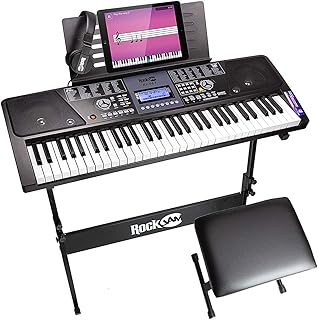
The RockJam RJ561 is the best starter bundle here because the listing packs nearly everything a new player needs into one purchase. It describes a beginner electric keyboard piano set with 100 rhythms, 50 tones, note stickers and lessons, built for kids and adults alike. The 61 key kit comes with a stand, stool and headphones, which removes several shopping decisions for parents. For many households, that all in one approach means music can start the day the box arrives.
Inside the bundle, the keyboard offers a spread of rhythms and tones, so a child can switch backing beats and sounds while practicing. Note stickers are a simple aid, because they label the keys and help a beginner find middle C and the notes around it. The listing also mentions lessons, though buyers should check the product page for how they are delivered. Headphones let a child play without disturbing others. Children often enjoy choosing a rhythm first and then playing a simple melody on top of the beat.
This set suits beginners from roughly the early primary years up through teens, and it is also pitched at adults, which makes it handy for a family where a parent wants to learn alongside a child. It teaches note names, basic melodies and keyboard layout. Because a stool and stand are included, children can practice with better posture, which matters more than most families expect. A shared family keyboard can also encourage parents to sit down for a few minutes of duets.
There are caveats to weigh. Bundles with a stand and stool take floor space, so measure the spot before ordering. Adults should help with assembly and make sure the stool is stable before a child sits on it. The listing does not state power details, so confirm whether an adapter or batteries are needed. Stickers can leave marks if left on for years, so plan to remove them once the child learns the keys. Keep a small cloth nearby to wipe the keys, and store headphones in a spot where they will not tangle.
4. Beginner electric keyboard piano set with WWK: Best for App Based Lessons

Our score: 9.0/10 iOur editorial score (1 to 10), based on listing specs, features and how well each pick fits its use case. It is not an Amazon customer rating.
61 keys Pitch bend LED panel Simply Piano lessons
The RockJam RJ5061 stands out for families who like learning through a screen. The listing describes a beginner electric keyboard piano set with pitch bend, an LED panel, Simply Piano lessons and note stickers, all included. That combination makes it the app friendly choice in this guide, aimed at kids who respond well to guided, game like practice. Families who already use tablets for homework may find this approach feels familiar from the start.
The kit is a 61 key piano set that arrives with a stand, bench and headphones according to the listing. Pitch bend is a control that lets a player slide a note up or down, which adds a bit of expressive fun beyond plain piano sounds. The LED panel displays settings so a child can see what the keyboard is doing. Note stickers help with finding keys during the first few sessions. Together these parts create a setup that looks more like a mini studio than a toy.
This model suits motivated beginners from around the upper primary years, tweens and teens, especially those who enjoy tablets or phones. Structured lessons can give a clear next step each day, which helps children who get bored with open ended practice. It teaches note reading, rhythm and coordination between hands. Younger children can join in too, with a parent guiding the lessons and watching screen time. Teachers sometimes suggest pairing app practice with a weekly chat about what the child enjoyed most.
Check a few points on the product page before buying. Confirm how the included lesson access works, whether an app is required, and what device it needs, because the title alone does not explain this. An adult should handle account setup and set screen limits. The bench and stand need careful assembly, and the keyboard should sit on a level surface. Headphones are useful, but volume should stay at a comfortable level. Agree on a clear start and stop time, so lesson sessions do not slide into extra screen time.
5. Electric Keyboard Piano Set w/Lighted Keys: Best for Lighted Key Practice

Our score: 9.2/10 iOur editorial score (1 to 10), based on listing specs, features and how well each pick fits its use case. It is not an Amazon customer rating.
61 keys Lighted keys 3 teaching modes LCD screen
This 61 key electric keyboard piano set takes the award for lighted key practice. The listing says it has lighted keys, an LCD screen, built in speakers, a microphone and three teaching modes. Lights that show which key to press can turn a confusing keyboard into a follow the glow activity, which many children find encouraging in the first weeks. Parents of kids who learn best by watching will see the appeal right away.
The set includes a stand, stool, headphones, note stickers and a microphone alongside the keyboard itself, as the listing describes. Three teaching modes suggest different ways to learn, such as listening, following the lights or practicing on your own, though buyers should read the product page for exactly what each mode does. The LCD screen gives visual feedback, and the built in speakers mean no extra equipment is required. Mixed together, these parts give a child several ways to stay interested over a longer session.
It suits children from the primary years through the early teens who learn best by watching and copying. Visual learners may enjoy seeing lit keys line up with a song. It teaches key recognition, timing and basic song structure. The microphone also gives confident singers a chance to perform, which can keep a child engaged on days when finger practice feels like work. Because the board comes with an included microphone, it also suits families who like singing together.
Be honest about the limits. Lights guide a child toward the right notes but do not replace learning to read music, so plan to wean off them over time. Stands and stools need adult assembly. Make sure the microphone cable stays away from small children, and keep the volume sensible. Because the product is unbranded in the data, check the listing for warranty details, power needs and what is in the box. Pair it with a simple songbook so the child builds reading skills while the lights fade into the background.
6. Learning Keyboards Piano for Beginners With: Best Full Setup for Home Practice

Our score: 9.2/10 iOur editorial score (1 to 10), based on listing specs, features and how well each pick fits its use case. It is not an Amazon customer rating.
61 keys Lighted up keys LCD screen Stand, stool, headphones, microphone
This black 61 key learning keyboard set is the full setup pick for home practice. The listing describes learning keyboards piano for beginners with a piano stand, LCD screen, headphones and microphone, offered with a stool in black, plus lighted up keys. Everything a child needs to sit down and start is named in the title, which makes it easy to picture where it will live in the house. Parents who want a keyboard that looks tidy in a living room may find the black finish appealing.
As a 61 key electric piano keyboard, it gives players a broad range of notes to explore. The lighted up keys can point to the next note, the LCD screen shows information while playing, and headphones allow quiet practice. A microphone is included for singing, which adds variety to a session. The black finish and stand give it a more instrument like look than brightly colored toy boards. Together these elements create a ready to play corner that encourages regular practice.
This set suits beginners in the upper primary years and the tweens who want something that looks like a real piano. It also works as a family keyboard shared between siblings or between a child and a parent. It teaches key recognition, hand position and following along with light cues. Young children can enjoy it with help, but the size and setup are better matched to older beginners. If two children share it, a simple schedule on the fridge keeps turns fair and calm.
Plan the space before ordering, since a stand and stool call for a clear corner of a room. Adults should assemble the stand and check that screws are tight, then recheck from time to time. The title does not state battery or adapter details or the exact lessons included, so confirm those on the product page. Keep microphone and headphone cables tidy, and take regular breaks so young players do not strain their hands. Wiping the keys with a dry cloth after practice keeps the surface in good shape for the next player.
7. Best Choice Products 37-Key Kids Electronic: Best for Young Beginners

Our score: 9.0/10 iOur editorial score (1 to 10), based on listing specs, features and how well each pick fits its use case. It is not an Amazon customer rating.
37 keys Multiple sounds Lights Microphone and stool
The Best Choice Products 37 key keyboard is the best fit here for young beginners. The listing calls it a kids electronic musical instrument piano learning toy keyboard with multiple sounds, lights, a microphone and a stool, in blue. It is a toy style instrument built to feel playful, so it speaks to children who want to jump in without reading a manual. Its simple, toy like approach makes it welcoming for a child who has never touched a keyboard.
A 37 key layout is shorter than the 61 key sets in this guide, which keeps the whole instrument within reach of smaller arms. The listing mentions multiple sounds and lights for fun feedback, a microphone for singing, and a stool so a child can sit at the right height. The blue color gives it a bright, toy shelf look that suits younger players. Together these features give younger kids easy, instant feedback every time they press a key.
This keyboard suits young children, including those in the preschool and early primary years, as an introduction to cause and effect in music. It teaches simple melodies, sound exploration and the basic idea that pressing a key makes a note. Adults should stay close during play, because it is a toy style item and a first experience of music is best shared. It also works well for siblings of mixed ages, with an older child showing a younger one how to play a tune.
Think of it as a first step rather than a long term instrument. Children who stick with music may want a larger keyboard with more keys in a year or two. Check the listing for age marking, batteries or power source, and what the stool is made of. Small parts, cords and a microphone can be hazards for very young children, so supervise play and store the pieces after use. A small basket for accessories keeps stray pieces from ending up on the floor.
8. Multifunction Portable Electronic Learning Music: Best for Ages 3 to 8

Our score: 8.8/10 iOur editorial score (1 to 10), based on listing specs, features and how well each pick fits its use case. It is not an Amazon customer rating.
37 keys Ages 3 to 8 Microphone Dual speakers
This multifunction portable keyboard earns the award for ages 3 to 8 because the listing states that age range plainly. It describes an educational birthday gift toy, a 37 key keyboard piano for kids with a microphone and dual speakers. Having the target ages in the title makes it one of the easier picks for gift buyers who want a clear signal about who it is meant for. That clarity is helpful when a gift needs to be chosen quickly and the child’s age is the main guide.
The key count is 37, giving a manageable layout for small hands, and the listing names a microphone and dual speakers. Two speakers can make the sound fuller than a single small driver, though buyers should read the product page for details. The portable design means a child can take it to a grandparent’s home or a friend’s party without a major packing effort. A light, portable body also suits families with limited space or children who like to change rooms.
It fits kids in the preschool and early primary years, which matches the listed age range, and it can work for a boy or a girl. It teaches early music exploration, singing along and rhythm play. Parents of three year olds should supervise closely, as a microphone, cords and any removable parts need adult eyes. Older children near eight may prefer a bigger keyboard. Parents will find it a gentle way to introduce music to a child before any formal lessons begin.
As with any unbranded gift toy, confirm the basics on the listing before purchase, including the power type, whether batteries are included, and the exact contents. Place the keyboard on a stable surface so it does not slide off a lap or a low table. Set a comfortable volume from the start, and decide with the child when music time starts and ends so it does not become a source of noise battles. Consider keeping the box, which makes storage and moving the keyboard simpler.
9. 61 Keys Kid Keyboard Piano Toddler: Best Larger Keyboard with a Screen
Our score: 8.8/10 iOur editorial score (1 to 10), based on listing specs, features and how well each pick fits its use case. It is not an Amazon customer rating.
61 keys LED screen Microphone Toddler marketed
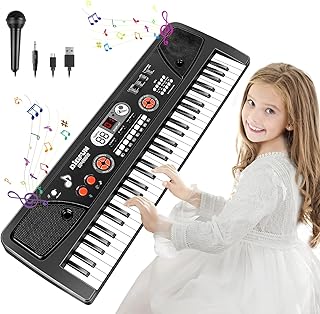
This 61 key kid keyboard piano is the larger board with a screen in this guide. The listing describes it as a toddler piano with an LED screen and a microphone. The wording points at toddlers, but a 61 key keyboard is a lot of instrument for the very young, so it earns its place as an option for children who want more keys while still being treated as a kid friendly product. Parents browsing quickly might miss that the key count is quite large for the age the title suggests.
With 61 keys, players have room for two handed play and longer melodies than a 37 key board allows. The LED screen, according to the listing, gives visual information while playing, and the microphone invites singing. Buyers should read the product page to confirm the sounds, songs and any teaching features, because the title does not list them. With these features, a child can experiment freely while a parent helps explain what each control does.
Honestly, the toddler label and the full key count do not fit neatly together. A toddler may find the keyboard wide and heavy to handle, so it is better matched to a preschooler or young primary school child with an adult close by. It can teach finger exploration, listening and early rhythm, and it gives a child room to grow into the instrument over several years. The long keyboard also lets two children sit side by side and play different parts of the board.
Practical checks matter here. Confirm the age marking on the listing, because toddler marketing does not replace an official age grade. Look at what power source is needed and whether a stand is included, since the title mentions neither. Supervise any child under three, especially around cords and the microphone. A sturdy table at the right height will help a young child reach the keys comfortably. Moving the keyboard to a low, stable table can make a big difference to how comfortable a young player feels.
How to Choose the Best Kids Keyboards
How many keys does a child really need?
Key count is the first thing to sort out when choosing the best kids keyboards. Small boards with 37 keys cover a limited range, which is plenty for simple songs and for tiny hands. A 61 key keyboard spans several octaves, so a child can play with two hands and tackle more varied music without running out of notes. A music teacher can help you decide in just a short conversation.
A larger count is not automatically better for a young child. Wide keyboards can feel awkward to reach across, and small players may tire quickly. A sensible rule is to choose a compact board for ages 3 to 6 and a 61 key instrument for children who already show steady interest or who will take lessons. Taking your child to try a real piano at a shop or a friend’s house can also help you judge size and interest.
Age and skill fit, from preschool to teens
Preschoolers mostly want sound, lights and quick results, so a toy style keyboard with simple controls suits them. Early primary children can start picking out tunes and following lit keys. Upper primary children, tweens and teens usually want a keyboard that looks and feels like a real piano and can grow with their skills over several years. Short breaks make that learning curve feel gentler and keep sessions positive.
Always check the age marking on the listing, because marketing words like toddler or kids do not equal an official age grade. Young children need an adult close by during play, and older children benefit when a parent shows interest in what they are learning, even if the parent has no musical background. Parents can also ask a teacher which features they would like to see in a beginner’s instrument.
Learning tools, lights and lessons
Many beginner keyboards advertise learning features, such as lighted keys, teaching modes, note stickers, an LCD screen or included lessons. These can make the first weeks easier by telling a child which key to press and when. A music rest also matters, because it holds a songbook or a tablet at eye level instead of flat on the keys. A few simple games, such as echoing a short tune, make those sounds feel like play and not work.
Treat lights as training wheels. They help a child move from random pressing to playing a tune, but they do not teach note reading by themselves. Look for a keyboard where the aids can be switched off, and plan to move toward sheet music, a teacher or an app course as skills improve. Spare batteries and a clear charging or plug in spot make it easy to start playing whenever the mood strikes.
Voices, rhythms and built in songs
Voices are the instrument sounds a keyboard can imitate, while rhythms are backing beats and built in songs act as demo tunes. A modest number is enough for a beginner, but variety keeps children curious. Some families find that a small catalog of sounds is more useful than hundreds that nobody explores. Hearing health is easy to protect when good habits start at the very first session.
Use these features as a bridge to real playing. A child can pick a favorite rhythm, play a simple melody over it and feel like part of a band. Built in songs are handy for listening and for copying by ear. If a keyboard lists a smart chord function, ask how it works and whether it suits your child’s goals. A small rug beneath a stand can stop it from sliding on a smooth floor.
Volume, headphones and hearing comfort
Keyboards can get loud, especially in small rooms, and children’s ears are sensitive. Set the volume at a comfortable level from the very first session and keep it there. A good habit is to agree on a family rule, such as playing at a level where you can still talk normally nearby. Check that all cords reach the outlet comfortably without stretching.
Headphones are valuable in shared homes and apartments, since they allow long practice sessions without annoying others. Choose a comfortable fit and avoid maximum volume, because loud sound in small headphones is hard on young ears. Some bundles in this guide include them, and for others you may want to buy a separate pair that fits a child’s head. It is a good idea to leave a few spare inches around the stool, so a child can climb on and off safely.
Power, cables and safety around the home
Check on the listing how a keyboard is powered. Some models use batteries, some an adapter and some both. Adapters should be the type supplied or recommended for that product, and cables should be routed so they cannot trip a child or be pulled off a table. Never leave cords where a toddler can chew or tug them. Sharing also teaches turn taking, which is a helpful habit in any music room.
Microphones and cables can be hazards for very young children, so adult supervision matters. Place the keyboard on a sturdy table or stand, away from edges and from drinks. Small parts, such as stickers or removable accessories, should be kept from children under three, and any cracked or damaged piece should be replaced. Open the listing for the current offer, and note whether accessories are really part of the bundle.
Stands, stools and posture
Some sets include a stand and stool, and others expect you to supply your own surface. A dedicated stand keeps a keyboard at the right height, which helps a child sit with relaxed shoulders and wrists. A stool that is too high or too low can lead to hunched playing and sore hands during longer sessions. Small wins, such as playing a full tune from memory, deserve a little celebration at home.
Adults should assemble stands and stools, tighten every screw and check stability before a child sits. Check that the stool is suited to the child’s size and weight on the listing. If you use a table instead, pick one where the child’s elbows are roughly level with the keys, and add a firm cushion or a footrest if their feet dangle. Keeping a simple practice chart on the fridge can make progress visible to the whole family.
Space, storage and portability
Full bundles with a stand and stool need floor space, and a bedroom corner or a family room nook is usually the best home. Measure the spot before ordering, leaving room for a child to sit comfortably and for the stool to move. Think about outlets too, so cords are not stretched across a walkway. A shared family keyboard time at the weekend is a nice way to keep the habit going.
Compact and lightweight keyboards are easier to store under a bed or on a shelf, and they can travel to relatives or lessons. A cover or a clean cloth protects the keys from dust and sticky fingers between sessions. Avoid leaving any keyboard near radiators, windows with strong sun or damp walls. Children who feel pressured sometimes lose interest, so keep the mood light and positive.
Budget logic and value without comparing prices
Value for a first keyboard comes from matching features to real use. A bundle that includes a stand, stool and headphones can save separate purchases, while a compact board may be enough for a child who plays occasionally. Ask how long the child is likely to use it before choosing a more elaborate set. Spare minutes after dinner can become a favorite part of the daily routine.
Think about sharing too. A keyboard that can serve two siblings, or later a parent who wants to learn, spreads its value across the family. Since prices change often, open the live listing to compare current offers, and look at what is included so you do not buy duplicate accessories. If a listing seems vague, send the seller a question before you order.
A simple learning path for the first months
Start with ten to fifteen minutes a day. In week one, find middle C, name the white keys and play a simple five note tune. In the next weeks add the other hand, try an easy built in song and use lights or note stickers only as needed. Short, regular sessions beat long, tiring ones for most children. A handwritten card tucked in with the keyboard makes the gift feel personal.
After a couple of months, consider a teacher, a lesson book or an app course, and begin reading simple notation. Let the child choose some of the songs, because enjoyment is what keeps practice going. If interest fades, a break is normal, so keep the keyboard visible and ready instead of hiding it in a closet. Shop with a checklist, and the whole process becomes much simpler.
Common mistakes and gift tips
Common mistakes include buying a very wide keyboard for a small child, ignoring volume, skipping the stool or stand and expecting lights to teach music. Another is assuming that every listing includes accessories, when many do not. Read the product page carefully for what is in the box, and for any batteries or adapters needed. Review the box contents against the listing when it arrives, so nothing is missing.
For gifts, wrap the keyboard with a small songbook or a pair of headphones if they are not included. Order early so delivery is not rushed, keep the receipt in case the size is wrong, and consider a short note promising to play a song together. Gifts that invite shared time tend to be remembered longest. Enjoy the first few songs together, because shared excitement tends to set the tone for months of practice.
Frequently Asked Questions
What age is a child ready for a keyboard?
Many children enjoy simple toy keyboards from around age three with an adult nearby. Structured practice usually works better from about five or six. Always read the age marking on the listing, and let your child’s interest, not a birthday, guide the timing.
Is a 37 key or 61 key keyboard better for a child?
A 37 key board suits younger children with small hands and short attention spans. A 61 key keyboard suits kids who want two handed play or lessons. If your child is under six, start small; if they already practice regularly, go bigger.
Do kids need a stand and stool?
They are not required, but good posture makes practice more comfortable. A stand and stool help a child sit at the right height. If you skip them, use a sturdy table and a chair where the child’s elbows are near key level.
Are lighted keys worth having?
Lighted keys can make early practice feel like a game and help a child find notes quickly. They work best as a temporary aid. Plan to turn them off over time so the child also learns to read notes and find keys alone.
How loud are children’s keyboards, and how can I protect hearing?
Volume varies by model and room, so set a moderate level from the start. Headphones allow quiet practice but should also stay at a comfortable level. If you must raise your voice to talk nearby, the sound is too loud.
Do these keyboards need batteries or an adapter?
It depends on the model, and not every listing states it in the title. Some include a power adapter, as the Yamaha PSRE283 listing does, while others do not mention power. Confirm on the product page before buying, and have spare batteries ready if needed.
Can a keyboard replace a piano for lessons?
A keyboard with 61 keys can work for early lessons, and many teachers accept one for beginners. Weighted keys and full size pianos feel different, so a teacher may suggest an upgrade later. Ask your teacher what they recommend.
How long should a child practice each day?
Ten to fifteen minutes is a good start for most young beginners. Older children can build up to twenty or thirty minutes. Short, regular sessions help more than a long weekly one, and breaks are fine when fingers or attention tire.
Are keyboards with microphones a good idea?
A microphone lets confident children sing along and can keep sessions fun. It also adds a cable and one more item to supervise. For children under three, keep it out of reach unless an adult is watching closely.
What should I check on the listing before I buy?
Look at the age marking, key count, power source and what is in the box, such as a stand, stool, headphones or music rest. Confirm how any lessons are delivered. If something is unclear, the seller’s questions section or support can help.
The Bottom Line
For most families, the Yamaha PSS-F30 is the best place to start. It is a lightweight children’s keyboard with 120 voices and 30 songs, and it is easy for a young player to carry and enjoy. Families planning lessons may prefer the Yamaha PSRE283 or one of the RockJam bundles.
Whichever you choose, confirm the age marking, power needs and contents on the live listing, keep the volume sensible, and sit your child at a comfortable height. A little shared music time at the start often matters more than any feature on the box.
Updated for the 2027 buying season. Amazon listings and availability change often, so check the product page for current details.
Write Your Review
No reviews yet. Be the first to share your experience!