

As an Amazon Associate we earn from qualifying purchases. If you buy through links on this page we may receive a commission at no extra cost to you. Product details come from Amazon listings and can change.
Finding the best math manipulatives is easier once you know what you want a child to learn. A manipulative is any physical object a child can move, stack, sort or snap together to make a number idea visible. This guide looks at nine sets, from linking cubes and counting blocks to a base ten kit, number matching games and classroom teaching sets, so parents, homeschoolers and teachers can pick a set that fits the age and the skill.
The nine picks cover roughly ages 3 to 8, from first counting with preschoolers to place value and addition work in the early grades. Each entry explains what the listing says, who the set suits, what it teaches and what to watch for, including honest notes where a set is aimed at a different age than you might expect. Several sets have small parts, so adult supervision matters for toddlers and for any child who still mouths objects.
Product prices and stock change often, so we do not quote any amounts here. Every pick links to a live listing where you can check the current offer, the contents and the age label before you buy. Near the end you will find a buying guide, a short learning path and answers to common questions.
Key Takeaways
Best Math Manipulatives at a Glance
| Product | Our score | |
|---|---|---|
| Learning Resources MathLink Cubes – Set Best Overall |
9.6 / 10 | Check Price |
| Math Manipulatives for Preschool & Kindergarten Best for Preschool Counting |
9.6 / 10 | Check Price |
| Math First Grade Games, School Supplies Best for Place Value |
9.6 / 10 | Check Price |
| Montessori Number Counting Block Toys for Best Montessori Style Pick |
9.2 / 10 | Check Price |
| 2 in 1 preschool learning toy Best for Handwriting Plus Math |
9.2 / 10 | Check Price |
| 20 Sets Number Matching Preschool Toys Best Matching Game |
9.4 / 10 | Check Price |
| Double sided reusable classroom must haves Best for Classroom Reuse |
9.6 / 10 | Check Price |
| Teaching Addition and Subtraction, Educational M Best for Addition and Subtraction |
9.0 / 10 | Check Price |
| Math Manipulatives for Preschoolers and Pre-K Best for Pre-K Linking Play |
9.6 / 10 | Check Price |
How We Chose the Best Math Manipulatives
This is a research based guide, not a lab comparison. We read each listing title and the details it gives, such as the age range, the number of pieces, the grade level and the stated use at home or in class. We then weighed how broad each set is, how well the age label fits the skills it claims to teach, and how safe the format looks for the ages named. We also made sure the list includes a balance of cube sets, a place value kit, matching games and teacher style sets.
Where a listing title is short or cut off, we say so and tell you what to confirm on the product page rather than guess at materials or contents. Each pick also carries an editorial score out of 10 on the site, based on its features, specs and how well it fits its intended use. The score is our own and sits apart from the written advice, so you can read the reasoning first and then decide.
In-Depth Reviews
1. Learning Resources MathLink Cubes – Set: Best Overall

Our score: 9.6/10 iOur editorial score (1 to 10), based on listing specs, features and how well each pick fits its use case. It is not an Amazon customer rating.
100 cubes Ages 5+ Kindergarten STEM activities
Learning Resources MathLink Cubes lead this guide because the title packs the key points into one line: a set of 100 cubes, ages 5 and up, aimed at kindergarten, with STEM and math activities in mind. Cubes that snap together are one of the most flexible math tools a young child can own, since a single set covers counting, patterns, measuring and early addition. A brand known for classroom supplies also reassures parents who want something familiar. It takes the top slot for breadth, because few other picks here stretch across as many skills.
The listing describes a set of 100 cubes, so a child gets enough pieces to build a tall tower, a long pattern strip or two separate number trains at once. Each cube connects to others, which lets a child build a bar of five, snap on a bar of three and watch eight appear. Parents should check the listing for the exact colors, the number of connecting sides and whether activity cards are included, because the title does not spell those details out. Snapping pieces together also builds small hand strength that later helps with pencil grip.
This set suits kindergarten age children and early elementary learners, and the title points to ages 5 and up. Typical uses include skip counting by twos and fives, comparing which tower is taller, making simple bar graphs and building repeating color patterns. It also supports early fact fluency, because a child can break a ten bar into a six bar and a four bar and see why those numbers belong together. Teachers can keep a bin at a table group, while families can use it for homework help and quiet weekend play.
A few cautions apply. The ages 5 and up label means younger siblings should stay away unless an adult is close, since small cubes can be a choking risk for toddlers. Keep the whole set in a lidded tub and count the pieces after each session so none go missing. With only 100 cubes, a full classroom group will need several sets. Begin with ten minutes of free building, then add one small challenge, such as a tower of exactly twenty, so the session feels like a game and not a worksheet.
2. Math Manipulatives for Preschool & Kindergarten: Best for Preschool Counting

Our score: 9.6/10 iOur editorial score (1 to 10), based on listing specs, features and how well each pick fits its use case. It is not an Amazon customer rating.
100 counting blocks Preschool Kindergarten edxeducation
The edxeducation Math Cubes set takes second place because its title speaks straight to the youngest learners: math manipulatives for preschool and kindergarten, in a set of 100 counting blocks. That wide age band helps families with a mixed age household, since a four year old and a six year old can both find a use for the same bin. It is a clear choice for parents who want a simple counting tool that needs no batteries, no screen and no long list of rules.
Counting blocks of this kind are usually bright and made to connect or stack, and a set of 100 gives a child room to count past ten and into the teens and twenties. The listing title does not give the exact connection style or the size of each block, so check the product page if you need to match them with cubes already at school. A child can sort by color, line blocks up in rows of ten and count each row, which offers a first taste of place value.
Preschool teachers and parents can use this set for sorting, one to one counting and making patterns such as red, blue, red, blue. Kindergarten children can move on to adding two small piles and counting all, then writing the matching number sentence. The set also builds language, because a child has to say words like more, fewer, same and equal while comparing stacks. Since the title names both preschool and kindergarten, it makes sense as a first purchase that a child can keep using for a few years.
As with any set of small blocks, adult supervision matters for children under three, and homes with toddlers should store the cubes out of reach. Count the blocks into a bag or tub after play and ask the child to help. If you plan to buy a second cube set, check that the sizes match, because mixing brands can leave pieces that do not connect well. Keep sessions to about ten or fifteen minutes so a three or four year old stays interested.
3. Math First Grade Games, School Supplies: Best for Place Value
Our score: 9.6/10 iOur editorial score (1 to 10), based on listing specs, features and how well each pick fits its use case. It is not an Amazon customer rating.
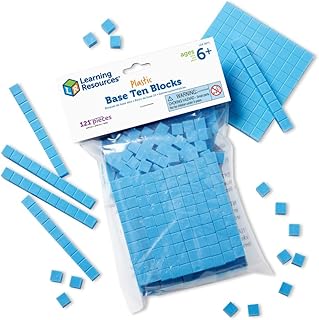
121 pieces Grades 1+ Ages 6+ Base ten
This Learning Resources base ten set is the pick for first graders because its title names the grade, the age and the piece count: grades 1 and up, ages 6 and up, 121 pieces. Place value is the idea that the same digit means different amounts depending on its spot, and it is easy to say but hard to see. Base ten blocks make it visible by turning ones, tens and hundreds into objects a child can hold, which is why teachers reach for them in the early grades.
A base ten set usually has small unit cubes for ones, long rods for tens and flat squares for hundreds, so a child can trade ten ones for one rod and ten rods for one flat. The listing gives a total of 121 pieces but does not list how many of each kind are inside, so look at the product page for the exact breakdown. The title also mentions games, which suggests activity ideas may be included, though parents should confirm that on the listing.
This set suits children who already count past twenty and are ready to build numbers such as 34 or 127 with blocks. It supports adding with regrouping, subtracting with borrowing and comparing which of two numbers is larger. Because the title says first grade, it fits a classroom or a homeschool shelf better than a preschool toy box. Pair it with a simple place value mat drawn on paper, and a child can record each build as a written number.
The age label is the main caution. At ages 6 and up this is not meant for younger children, and the small unit cubes need supervision around toddlers and pets. Count the unit cubes before and after play, since they are the easiest pieces to lose. Introduce the blocks slowly, starting with ones and tens only, and add hundreds once the trading idea feels natural. Rushing to three digit numbers too early is the most common reason children get stuck.
4. Montessori Number Counting Block Toys for: Best Montessori Style Pick

Our score: 9.2/10 iOur editorial score (1 to 10), based on listing specs, features and how well each pick fits its use case. It is not an Amazon customer rating.
Number counting blocks Ages 3 to 5 Montessori style Gift friendly
This Montessori style number counting block toy is aimed at children aged 3 to 5, and the title mentions boys, girls and holiday gifting. It made the list because it brings counting into a toy format that a preschooler may want to play with on their own. The Montessori label usually points to self directed, hands guided learning with simple materials, though the listing title is the only source here, so parents should read the full description to see exactly what comes in the box.
Number counting blocks generally pair numerals with a quantity, so a child can see the symbol 4 and place four blocks beside it. That link between a written number and a real amount is the heart of early math. The title does not state the number of pieces, the materials or the finish, so check the product page for these details and for any paint or coating information before you buy for a child who still mouths toys.
The 3 to 5 age range is the right fit for this style of toy. A three year old can match shapes and colors and start to count aloud to five, while a five year old can order numbers from one to ten and begin simple adding. It also works as a gift, because the title mentions holidays and the toy format is easier to wrap and hand over than a classroom set. Siblings can share it for turn taking games.
Treat this as a preschool toy, not a classroom curriculum. It will not carry a child far into addition or place value, so plan to move to cubes or a base ten kit around kindergarten. Because the pieces are meant for young hands, check the age label on the listing for any small parts warning, and stay close with a child under three. Short, playful sessions work best, such as counting three blocks into a cup and then four into another.
5. 2 in 1 preschool learning toy: Best for Handwriting Plus Math

Our score: 9.2/10 iOur editorial score (1 to 10), based on listing specs, features and how well each pick fits its use case. It is not an Amazon customer rating.
2 in 1 design Handwriting practice Numbers toy Preschool
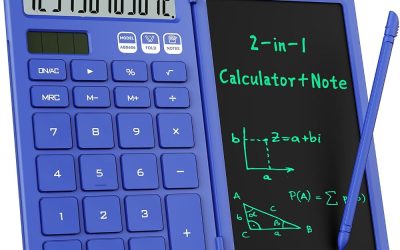
The 2 in 1 preschool learning toy earns its spot by combining two jobs the title names together: handwriting practice and math manipulatives. For a preschooler, learning to write a numeral and learning what the numeral means usually happen in different activities. A set that joins the two can save shelf space and help a child connect the shape of a 5 with five real objects. It is the most hybrid pick on this list.
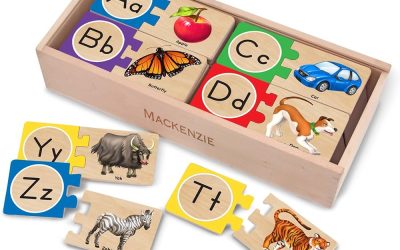
The listing title calls it an educational numbers toy for preschool, but it does not describe the exact parts, so parents should read the product page to learn how the handwriting side works, whether it is a board, a tracing surface or a set of cards, and what tools it uses. Make sure any writing tool is described as child friendly, and look for details on whether the surface can be wiped and reused many times.
This kind of toy suits children who are just starting to hold a pencil and trace lines. It can support number recognition from one to ten, early counting and the fine motor control that writing needs. Parents of four and five year olds who are getting ready for kindergarten may like it as a bridge between play and school tasks. It is less useful for older children, who will want a manipulative that supports addition or place value.
A hybrid toy can do two things reasonably well without being the best at either. If your main goal is pure counting, a set of cubes will give you more pieces to work with. If your main goal is letter and number writing, a dedicated workbook may go further. Treat this as a gentle introduction and sit with your child for the first few sessions, since young children often need help holding a pencil in a comfortable grip.
6. 20 Sets Number Matching Preschool Toys: Best Matching Game

Our score: 9.4/10 iOur editorial score (1 to 10), based on listing specs, features and how well each pick fits its use case. It is not an Amazon customer rating.
20 sets Number matching Ages 3 to 5 Montessori style
The 20 Sets Number Matching Preschool Toys pack is the matching game pick. Its title says it is made for ages 3 to 5, carries a Montessori label and comes as 20 sets. Matching is one of the first real math skills a child learns, because it asks them to notice that two different looking things share the same value, such as the numeral 3 and a card with three dots. This pack turns that skill into a game that many children will enjoy repeating.
The listing says 20 sets but does not describe what a set contains, so check the product page to see whether each set pairs a numeral with objects, dots or pictures, and how many pieces there are in total. Many matching toys of this type include a base piece and a matching top piece, which lets a child check their own answer. If that is how this one works, it gives a child quick feedback without an adult needing to hover.
Children aged 3 to 5 are the target. A three year old can match shapes and colors and count a few items, while a five year old can match numerals to quantities up to ten or beyond. It also works well for parents who run a small group, because 20 sets allow several children to work at once without fighting over pieces. A teacher might place a few sets in a tray each week and rotate them to keep interest high.
The main caveat is the number of pieces. Twenty sets could mean many small parts, so keep it away from children under three and count the pieces into a bag after each use. Because the title does not state the material, look for details on the listing about the finish. A matching game also has a limit: it teaches recognition well but does not teach adding. Use it as a warm up, then move on to counting blocks for the next skill.
7. Double sided reusable classroom must haves: Best for Classroom Reuse

Our score: 9.6/10 iOur editorial score (1 to 10), based on listing specs, features and how well each pick fits its use case. It is not an Amazon customer rating.
Double sided Reusable Kindergarten and elementary Special education
This double sided reusable set is written for teachers, and its title names kindergarten, elementary and special education classrooms. It made the list because reusable materials matter in a busy room: a tool that can be used on both sides and wiped clean or used again saves a teacher from printing new worksheets every week. The title is cut off and does not say exactly what the item is, so treat the details below as general guidance and read the full listing.
Double sided teaching tools often put two related tasks on one piece, such as counting on one side and number writing on the other, or a simple board on one side and a grid on the other. Because the title does not tell us the item type, check the product page for what is included, what size it is and what pens or markers, if any, it needs. Look for any note on the surface finish and how it should be cleaned.
The listing mentions special education teachers as well as general classroom teachers, which suggests a focus on clear, simple, repeated practice. That can help children who need extra time with number concepts, since a reusable tool lets them try again without the pressure of a permanent mistake. Parents who homeschool may also find it useful, especially if they teach more than one child and want to use the same materials for both.
As a pick for home buyers, it is a more specialised choice than a bin of cubes. If you are shopping for a single preschooler, the other sets in this guide will be a better first purchase. If you are a teacher setting up stations, a reusable double sided tool can make rotation easier. Before ordering, confirm the item type, the age fit and any small parts, and ask whether it is meant for use by children alone or with a teacher.
8. Teaching Addition and Subtraction, Educational M: Best for Addition and Subtraction

Our score: 9.0/10 iOur editorial score (1 to 10), based on listing specs, features and how well each pick fits its use case. It is not an Amazon customer rating.
Addition and subtraction Math manipulatives Classroom supplies For teachers
Teaching Addition and Subtraction is the pick for children who have moved past plain counting. Its title names the two skills directly and describes the product as educational math manipulatives and classroom supplies for teachers. Addition and subtraction are the first operations that make children say, what happens when I put things together or take them away. A tool built around those actions gives them something to touch while they work out the answer.
The listing is short on details, so parents should check the full description for the number of pieces, the materials and whether a guide or activity cards are included. In general, manipulatives for these operations help a child model a problem by laying out groups, joining them and counting the total, or by starting with a group and removing some. Having objects to move makes it easier to see why seven take away three leaves four.
This set fits kindergarten through the early elementary grades, when children first meet number sentences. A teacher might model a story problem at the front of the class while students use their own tools at their desks. At home, a parent can turn it into a game, such as pulling out five pieces, hiding two and asking how many are left. That kind of play builds the number sense that written math later depends on.
The caution is that it is aimed at teachers, so younger children and those still learning to count may find it more than they need. If your child is under five, start with cubes or a matching game and come back to this later. Check the age label and any small parts warning on the listing. Use it alongside written number sentences, so that each hands guided build is paired with an equation such as 4 plus 3 equals 7.
9. Math Manipulatives for Preschoolers and Pre-K: Best for Pre-K Linking Play

Our score: 9.6/10 iOur editorial score (1 to 10), based on listing specs, features and how well each pick fits its use case. It is not an Amazon customer rating.
100 linking cubes Preschoolers and Pre-K Counting cubes edxeducation
The edxeducation Linking Cubes set of 100 rounds out the list as a Pre-K friendly option. Its title says math manipulatives for preschoolers and Pre-K, and it names the item as linking cubes and counting cubes. Where the other edxeducation set in this guide calls itself counting blocks, this one stresses the linking feature, so children can join pieces into bars and trains. If a preschooler loves building, this is the version most likely to keep them interested.
Linking cubes let a child make a physical bar for each number: a bar of two, a bar of seven, a bar of ten. Placing bars side by side shows which is longer and by how much, which is an early form of subtraction. The listing does not state the cube size or how many sides connect, so check the product page. A set of 100 also gives enough pieces to build a ten bar ten times, which is a good way to see a hundred.
Pre-K children can start with free building, then move to sorting by color and making patterns. Four and five year olds can count out a target number, such as six, and snap that many together. The cubes also support language growth, because children describe what they build with words like taller, shorter, longer and equal. Teachers can use a set at a table of four, giving each child a handful and asking them to build a bar of the same length.
The same cautions apply as with other sets of small pieces. Keep them away from toddlers, store them in a tub and count them after play. If you already own another cube set, check that the cubes are close in size before mixing them, because uneven pieces can pop apart. Because the title targets preschoolers and Pre-K, it is best bought for ages 3 to 6, with a base ten kit as the next step when a child is ready for place value.
How to Choose the Best Math Manipulatives
What Counts as a Math Manipulative
A math manipulative is a physical object that lets a child act out a number idea. Cubes, blocks, counters, tiles, rods and matching cards all qualify, as long as the child moves them with purpose. The value lies in the link between the object and the idea: three blocks become the number 3, and joining three blocks to two more becomes 3 plus 2. Without that link, a pile of blocks is just a toy.
Most children need to handle objects before they can picture numbers in their head. Researchers and teachers often describe a path that runs from real objects, to pictures, to written symbols. Manipulatives cover the first step and let a child safely make mistakes while the idea settles. That is why a set of cubes belongs on a shelf for years, not just for one school term.
Matching Math Tools to Ages 3 to 5
Children aged 3 to 5 are learning that each object gets one number word and that the last number said tells how many. Good tools for this stage are easy to grab, bright and simple. Counting blocks, matching games and numeral toys such as the preschool picks in this guide fit well, because they ask for sorting, matching and one to one counting without needing any writing.
Keep tasks short and playful. A three year old may count to five with help, while a five year old might count to twenty and make simple groups. Do not push for speed or for written answers. Let the child lead, ask open questions such as which pile has more, and celebrate effort. If the child loses interest, put the tool away and try again the next day.
Choosing Tools for Ages 6 to 8
From about six, the goal shifts from counting to operations and place value. This is where base ten blocks, snapping cubes used for number bonds and addition focused sets come into play. A child can build a two digit number, trade ten ones for a ten and see why regrouping works. Written number sentences should now appear next to each build, so the objects and the symbols grow together.
Children at this age can also work with a partner or a small group, which brings in talking and explaining. Ask a child to show how they got an answer using the tool, then write it down. If they can explain it with blocks, they usually understand it better than a child who only memorised a fact. Mixed ability pairs can work well here.
Linking Cubes, Counting Blocks and Base Ten Compared
Linking cubes snap together, so they make bars, trains and towers that can be lengthened or broken apart. Counting blocks may only stack or sit side by side, which can make them easier for very small hands but less useful for building number bars. Base ten sets use different shapes for ones, tens and hundreds, so the size of each piece shows its value.
If you can only buy one set, a linking cube set is the most flexible for ages 4 to 8. If your child is already in first grade, add a base ten kit next. Counting blocks and matching games fit best at the very start, before linking and trading ideas are needed. Many families end up with one of each over time.
Teaching Place Value With Physical Models
Place value is one of the biggest hurdles in early elementary math. The key idea is that ten ones make one ten and ten tens make one hundred. A base ten set lets a child feel that trade in their hands, which is far more powerful than hearing the rule. Linking cubes can do the same job if you snap ten into a bar.
Start with numbers under twenty and ask a child to show them as one ten and some ones. Then move to two digit numbers, then add a new number and watch for the moment ten ones turn into a new ten. Only after that is secure should you bring in hundreds. Slow, steady practice avoids confusion later in subtraction, where borrowing from a ten is the step that trips many children.
Small Parts, Materials and Safety Labels
Most manipulatives have small pieces, so check the age label on each listing and keep sets with small parts away from children under three. A useful habit is to look for wording about age grading and any choking hazard warning, and to buy from sellers that show clear product information. In the United States, children’s products are expected to meet general consumer safety rules, and in Europe the EN71 toy standard is a common reference, but a listing must state it before you rely on it.
Surface finish matters for young children who mouth objects. If a listing does not say what the material is, treat that as a question to ask before buying. Supervise play with children who still put things in their mouths, and check the pieces for chips or cracks from time to time. Throw away any piece that has broken into sharp or tiny fragments.
Home Sets Versus Classroom Quantities
A set of 100 pieces is plenty for one or two children at home, but it will not stretch far in a class. Teachers who want every child to have a full set will need many boxes, so many choose to share a set between two or three students or run small group stations. Think about how many children will use the set at one time before deciding how many sets to buy, and whether a group can share without arguments.
Homeschool families sit in the middle. One set per child is ideal for independent work, while a single shared set suits a one on one lesson. If more than one child at home will use the same tool, look for a set with enough pieces that two children can each build a bar of ten without trading, and decide where the shared bin will live.
Storage and Keeping Count
Small pieces vanish fast, so plan storage before the set arrives. A lidded plastic tub, a zip bag inside a box or a sectioned tray all work well. Keep one container per set and train children to return pieces at the end of each session. A habit of counting ten bars of ten at pack up time turns tidying into a math task.
Label the tub with the set name and number of pieces so you can spot a missing item quickly. Keep sets on a low shelf for children aged 4 and up, but put them out of reach for toddlers. If you travel or take lessons to a library or cafe, a small bag of linking cubes fits easily in a backpack.
Getting Good Value Without Overbuying
Value in a math set comes from how long a child will keep using it and how many skills it supports. A set of linking cubes may stay useful from age four to eight, while a themed numeral toy may be outgrown in a year. Sets with many pieces and flexible shapes usually offer more play for the money than a single purpose toy.
Avoid buying many overlapping sets at once. Pick one core manipulative for your child’s age, add a specialised tool such as a base ten kit when a new skill begins and leave the rest for later. Prices change often, so check the live listing for the current offer and compare piece counts, age labels and the skills each set supports, not just the headline description.
A Simple Learning Path From Counting to Regrouping
A practical path begins with sorting and one to one counting, moves to matching numerals with quantities, then to building bars of a given length. Next come number bonds, where a child splits ten into pairs such as six and four, followed by addition and subtraction stories. Each step should feel like a small win for the child. Place value arrives after that, with tens and ones and then regrouping.
You do not need to follow it rigidly. Some children skip steps, others need extra weeks on one. A good check is whether the child can explain what they did in their own words. If they can, move on. If they cannot, go back one step and use the tool again with a different task, such as building the same number in two colors.
Common Mistakes When Buying and Using Manipulatives
The first mistake is buying a set that is too advanced and then putting it away when a child struggles. Match the set to the age and the skill your child has right now, not the one you hope for next year. A second mistake is treating the tool as a toy only, with no questions or goals, which wastes much of its value.
A third mistake is leaving out the written side. Pair each build with a picture or number sentence so that the idea moves from objects to symbols. Finally, do not skip the age label. A set marked for ages 5 and up may look fun to a three year old, but it may not be safe for them to handle.
Gift Tips for Parents, Teachers and Relatives
Gift buyers should check the age on the listing first, then think about the child’s current skill. For a preschooler, a counting toy or matching game is a safe pick. For a kindergartner, a set of snapping cubes is a strong choice. For a first grader, a base ten kit is a thoughtful gift that links directly to what is taught at school.
Teachers receiving classroom gifts often welcome reusable materials and sets that can be shared. If you are not sure what a teacher needs, ask which grade they teach and what manipulatives they already own. Order early in busy seasons, check the delivery window on the listing and include a gift receipt where the seller allows it. A short note with two or three play ideas makes the gift easier to start using.
Frequently Asked Questions
What are math manipulatives?
They are physical objects such as cubes, counters, blocks or tiles that a child can move and arrange to show number ideas. Handling them helps a child see how counting, adding and place value work before moving to written symbols.
What age should a child start using math manipulatives?
Many children start around age three with sorting and counting simple objects. Sets with small pieces should only be given to children who no longer put things in their mouths, and always check the age label on the listing.
Are linking cubes better than counting blocks?
Linking cubes are more flexible because they connect into bars and trains. Counting blocks can be simpler for very young hands. For ages 4 to 8, linking cubes usually cover more skills, but either works for early counting.
Do I need base ten blocks in kindergarten?
Usually not. Kindergarten work focuses on counting and small numbers, for which cubes are enough. Base ten sets become more useful in first grade, when children begin working with two and three digit numbers.
How many pieces do I need at home?
A set of about 100 pieces is plenty for one or two children. A larger group or a class will need several sets or a plan for sharing, so think about how many children will use the tool at once.
Are Montessori style toys different from regular math toys?
The term usually points to simple, self directed materials that children can use on their own. The label is not a guarantee of quality, so read the listing for the age range, piece list and material details.
Is a handwriting and math toy a good idea?
It can be a gentle bridge for preschoolers who are learning numerals and pencil grip at the same time. It does less for older children, who need tools for addition and place value.
How do I keep small pieces from getting lost?
Use a lidded tub or a zip bag for each set and count pieces at pack up time. Teaching children to return everything to the same container also builds a helpful habit.
Are these sets safe for toddlers?
Sets with small pieces are not meant for toddlers unless the listing says otherwise. Keep them out of reach of children under three, supervise older siblings and read any warning printed on the product page.
Can teachers use these sets in a classroom?
Yes, many of them are written with classroom use in mind. Check how many pieces each set holds, decide whether students will share, and confirm the item type and age label on the listing before ordering.
The Bottom Line
If you want one safe pick for a kindergarten or early elementary child, Learning Resources MathLink Cubes are our top choice. A set of 100 snapping cubes covers counting, patterns, number bonds and early addition, and it will stay useful for several years.
Add the edxeducation sets for preschool and Pre-K, the Learning Resources base ten kit when place value begins and a matching game for quiet play. Check each live listing for the current offer, the age label and the piece details before you buy.
Updated for the 2027 buying season. Amazon listings and availability change often, so check the product page for current details.



Write Your Review
No reviews yet. Be the first to share your experience!