

As an Amazon Associate we earn from qualifying purchases. If you buy through links on this page we may receive a commission at no extra cost to you. Product details come from Amazon listings and can change.
Finding the best affordable jewelry making kits for kids can feel like sorting through a giant bowl of loose beads. Some boxes promise thousands of pieces, others focus on a handful of chunky wooden shapes, and many look alike at first glance. This guide cuts through that noise and explains what each kit actually offers, so you can match a set to the child who will use it.
We cover ten kits that suit different ages, from preschoolers who love big beads to tweens who want trendy chains, tassels and glass beads. Each entry explains what is in the box, how the kit works, who it suits and what to watch for. A buying guide, a short learning path and a set of common questions follow the picks.
This article is meant for parents, grandparents, teachers and gift buyers who want good value without guessing. Prices and stock change often, so we link to live listings instead of printing numbers. Check the current listing for the exact contents and age label before you order.
Key Takeaways
Best Affordable Jewelry Making Kits For Kids at a Glance
| Product | Our score | |
|---|---|---|
| Melissa & Doug Created by Me! Bead Bouquet Deluxe Best Overall |
9.6 / 10 | Check Price |
| Redtwo 5100 Clay Beads Bracelet Making Kit Best Clay Bead Supply |
9.4 / 10 | Check Price |
| Funtopia 1368pcs 6mm Glass Beads for Bracelets Jewelry Making Best Glass Beads |
9.4 / 10 | Check Price |
| 520+ Pop Beads Best No String Option |
9.2 / 10 | Check Price |
| Charm Bracelet/Jewelry Making Kits for Kids Girls Best Mess Free Charm Kit |
8.8 / 10 | Check Price |
| Make It Real Neo-Brite Chains & Charms Best for Tweens |
9.0 / 10 | Check Price |
| Dowsabel Bracelet Making Kit Best Letter Bead Variety |
9.4 / 10 | Check Price |
| leitait Girls Toys Bracelet Making Kit -3400pcs Charm Jewelry Best Huge Bead Count |
9.2 / 10 | Check Price |
| AIPRIDY 208 Pieces Charm Bracelet Making Kit Best Gift Box |
9.2 / 10 | Check Price |
| Disney Princess Necklace Activity Case Best Themed Gift |
9.4 / 10 | Check Price |
How We Chose the Best Affordable Jewelry Making Kits For Kids
This is a research based guide, not a lab comparison. We read each listing closely, compared the stated contents, bead sizes, tools and age labels, and looked at how each kit is meant to be used. We also weighed general craft knowledge, such as how stretchy cord behaves, why bead hole size matters and why small parts call for supervision. Where a fact was not in the listing, we speak in general terms instead of guessing.
The ten picks aim for a balanced spread: chunky beads for the youngest crafters, snap together and tool free kits for easy starts, clay and glass supplies for kids who want more variety, and themed sets for gifts. Every pick has an editorial score out of 10 shown on the site, based on features, specs and use case fit. Safety matters throughout, so small parts, sharp tools and age labels are called out wherever they apply.
In-Depth Reviews
1. Melissa & Doug Created by Me! Bead Bouquet Deluxe: Best Overall

Our score: 9.6/10 iOur editorial score (1 to 10), based on listing specs, features and how well each pick fits its use case. It is not an Amazon customer rating.
220 wooden beads 8 cords included Wooden storage tray Ages 4 to 8
The Melissa & Doug Created by Me! Bead Bouquet Deluxe Jewelry Kit earns the top spot because it fits the way young children actually craft. The listing describes 220 colorful wooden beads in shapes like hearts, flowers and butterflies, plus cords and a tray. That mix gives a child plenty to play with without a confusing pile of tiny parts. For families who want a dependable, budget friendly starter set, this one makes the strongest case on simplicity and sensible design.
Inside the box, buyers can expect 220 wooden beads, 8 cords and a wooden tray that holds the beads while a child works. The beads are large, which the listing says makes threading easier for small hands. A child picks a cord, slides beads on in any order, and ties the ends to finish a bracelet or necklace. Because the beads are big and the holes are easy to find, a project can be finished in one short sitting.
This kit is aimed at ages 4 to 8, which covers preschoolers and early grade school kids. The listing says it supports fine motor skills, hand eye coordination and cognitive growth while children string bracelets, friendship bracelets and necklaces. It is a good fit for a child who is new to jewelry making and needs wins early. Older kids who want a fashion look may find the wooden shapes a little young, but they still work well for gifts and sibling projects.
A few practical tips help. Even large beads can be a choking risk for children under three, so adult supervision is wise for younger crafters. Keep the beads in the tray when the set is not in use, and plan on tying knots for smaller kids. The wooden finish is charming but less sparkly than glass or acrylic, so set expectations if your child is picturing glitzy jewelry. For pure value and ease, it is hard to beat.
2. Redtwo 5100 Clay Beads Bracelet Making Kit: Best Clay Bead Supply

Our score: 9.4/10 iOur editorial score (1 to 10), based on listing specs, features and how well each pick fits its use case. It is not an Amazon customer rating.
About 4600 clay beads About 500 charms 6mm flat heishi beads Scissors and tweezers
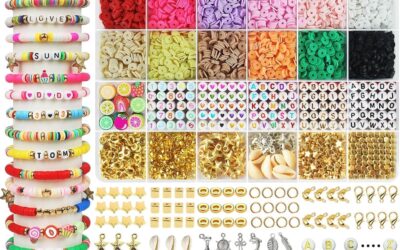
The Redtwo 5100 Clay Beads Bracelet Making Kit is the pick for kids who love the flat, colorful look of preppy friendship bracelets. The listing counts about 4600 flat polymer clay beads and about 500 charms, which is a very large supply for a single box. That quantity is the main reason it lands so high on a value focused list. A child can make bracelet after bracelet and still have beads left to share with friends.
According to the listing, the beads are flat polymer clay heishi beads with a 6mm diameter, a 2mm hole and a thickness of 1mm. The set also includes letter beads, number beads, heart beads, gold beads, spacer beads, a lobster clasp, a roll of stretchy string, scissors and plastic tweezers. Stretchy string makes assembly simple, because no knots beyond a basic tie are needed. The tweezers help with picking up tiny beads and charms.
This kit suits older kids, tweens and teens who like stacking colors and making matching sets for a friend group. The listing mentions bracelets, necklaces, earrings, anklets and keychains as possible projects. Making name bracelets with letter beads teaches planning and spelling, while patterns teach counting and sequence. Parents are encouraged by the listing to craft alongside their kids, which makes it a good weekend activity for a parent and child pair.
Because the holes are only 2mm wide, threading takes patience, and younger children may get frustrated. The scissors and small beads call for adult supervision around little ones, and loose beads can disappear fast on a carpet, so work over a tray or table edge. Sort the beads into small containers before starting so colors stay easy to find. For a big supply of friendship bracelet materials at a friendly cost, this set delivers.
3. Funtopia 1368pcs 6mm Glass Beads for Bracelets Jewelry Making: Best Glass Beads

Our score: 9.4/10 iOur editorial score (1 to 10), based on listing specs, features and how well each pick fits its use case. It is not an Amazon customer rating.
1368pcs 6mm glass beads 34 color combinations Elastic line included Sorted compartment box
The Funtopia 1368pcs 6mm Glass Beads set is the choice for kids who want jewelry that looks polished and more grown up. The listing highlights 34 color combinations, including solid and gradient options, and a total of 952 colorful glass beads. Glass catches the light in a way plastic and clay do not, so finished bracelets have a sparkly, crystal like look. For older kids and teens, that upgrade is a real reason to choose this kit.
The listing explains that the set includes a roll of crystal elastic line, 400 gold and silver spacer beads and 6 silver pendants. Each round bead is about 6mm wide with a hole of roughly 1.5mm, according to the description. The box has separate compartments for each color, which keeps the project area tidy and makes color matching easier. A child threads beads onto the elastic, adds a pendant or spacers, and ties the ends to make a stretch bracelet.
This kit works best for tweens, teens and patient younger kids who enjoy detail. The listing says it can make bracelets, earrings, necklaces and keychains, and it suggests gifts for occasions such as teacher appreciation. Choosing a color story, such as ocean blues or sunset shades, teaches design thinking. Kids who like planning a pattern before they start will enjoy the compartment box, because they can pull out exactly the colors they need.
Glass beads are heavier than plastic and can chip or break if dropped on a hard floor, so keep them away from very young children. The 1.5mm holes mean a fine needle or stiff tip helps, and elastic should be tied with a secure knot. Always supervise children who put things in their mouths. Closing the compartment lids after each session prevents spills. If your child wants a more refined result, this set is the strongest option here.
4. 520+ Pop Beads: Best No String Option

Our score: 9.2/10 iOur editorial score (1 to 10), based on listing specs, features and how well each pick fits its use case. It is not an Amazon customer rating.
520+ pop beads Snap together design Layered storage case Ages 3 to 8
The 520+ Pop Beads set from Funzbo is a good fit for families who dread tangled cord. The listing says the beads snap together, so no rope is required to join them. One bead has a hole and another has a ball, and pressing them together builds a bracelet, ring or necklace. With over 520 pieces in assorted types, the kit gives young children a flexible, forgiving craft that can be taken apart and rebuilt again and again.
Inside the box, buyers will find the pop beads in a layered storage case with a carrying handle, which the listing describes as gift ready. Because there is no string, a child does not need to learn knots or thread a needle. Beads simply click into place and can be pulled apart to fix mistakes. This makes the kit more like a building toy than a traditional beading set, which suits restless or easily frustrated crafters.
The listing aims this kit at ages 3 to 8 and says the pulling and pressing motion strengthens fingers and supports hand eye coordination. That makes it a fit for preschoolers who are ready for a first jewelry project, as well as for early grade school kids. Siblings can share it, and the ring option is popular with kids who like to wear something right away. It is also a calm travel activity because of the case.
One practical point is that pop beads are small enough to raise choking concerns for toddlers, so adult supervision is essential for the youngest users. Snap together bracelets can also pop apart if tugged, so they work better for play than for everyday wear. Keep the case closed and stored upright to prevent beads from mixing between layers. As a low stress, tool free craft, it offers great value. Pairing it with a second kit later gives a child a wider palette.
5. Charm Bracelet/Jewelry Making Kits for Kids Girls: Best Mess Free Charm Kit

Our score: 8.8/10 iOur editorial score (1 to 10), based on listing specs, features and how well each pick fits its use case. It is not an Amazon customer rating.
No tool, no glue Screw end cap design Unicorn, mermaid, rainbow charms Ages 5 to 12
The Charm Bracelet Making Kit for Kids is the pick for parents who want creativity without a mess. The listing says it needs no tools and no glue. A child unscrews the end cap, strings on the beads and charms, and screws the end cap back on. That is a refreshingly simple process, and it keeps the project from turning into a scavenger hunt for scissors or a spill of adhesive across the table.
Buyers can expect a variety of charmingly themed charms and beads, with the listing naming unicorns, mermaids, butterflies, angels, hearts, summer and Hawaii designs and rainbows. The bracelets use a screw end design, so there is no knotting and no clasp to fumble with. Each piece slides on and stays secure once the cap is tightened. A child can change the order, remove a charm and start again without wasting any supplies.
The listing says this kit suits girls ages 5 to 12, and its mix of whimsical charms makes it a good match for kids who love fantasy themes. It teaches color matching, pattern planning and basic sequencing. Because every bracelet can be redesigned, it also encourages experimenting, which is a gentle way to build confidence. A group of friends could each make a bracelet and swap charms as part of a birthday party activity.
A few cautions apply. Small charms and caps are choking hazards for toddlers, so keep the set away from children under the labeled age. Check that each end cap is tightened fully before wearing, since a loose cap could let beads slide off. Store charms in a small container to avoid losing favorites. For a tidy, beginner friendly set that suits shared craft time, this kit offers excellent value. Parents hosting a craft night can set out a few extra containers for shared charms.
6. Make It Real Neo-Brite Chains & Charms: Best for Tweens

Our score: 9.0/10 iOur editorial score (1 to 10), based on listing specs, features and how well each pick fits its use case. It is not an Amazon customer rating.
10 bracelets 195 pieces Cord and tassel designs Ages 8+
The Make It Real Neo Brite Chains & Charms kit is aimed squarely at tweens who want trendy accessories rather than toy jewelry. The listing says it makes 10 cord and tassel bracelets from 195 pieces, with neon beads, gold chains, pompom charms and gem charms. The bold color palette and chain details give finished bracelets a fashion look. For kids moving past chunky beads, this set offers an affordable way to try a more stylish craft.
Inside the box, buyers will find beads, tassels, gold chains and a play tray, according to the listing. The tray keeps small pieces from rolling away while a child plans a design. The cord and tassel format means kids can adjust bracelet length and mix chains with neon beads to create layered looks. Because the contents are sized for 10 projects, it is easy to make a set to keep and a few to give away.
The listing recommends this kit for ages 8 and up and says it helps with fine motor, visual and tactile skills. Tweens who care about personal style tend to enjoy deciding which colors and charms belong together. It teaches planning ahead, because a design with chains and tassels works best when the layout is chosen before the cord is cut. Friends can build matching bracelets together, which suits a sleepover or a rainy afternoon.
As with any kit that contains small parts, adult supervision is smart for younger siblings in the house. Cord ends may need a small dab of care to keep tassels secure, so ask a parent to help with tricky knots. Because the kit makes 10 bracelets, it is best for kids who like finishing a series rather than one big project. For a style focused option, it is a strong choice.
7. Dowsabel Bracelet Making Kit: Best Letter Bead Variety

Our score: 9.4/10 iOur editorial score (1 to 10), based on listing specs, features and how well each pick fits its use case. It is not an Amazon customer rating.
About 350 letter beads About 300 pony beads 27 grid storage box About 90 clay beads
The Dowsabel Bracelet Making Kit is a smart pick for kids who like to write messages in beads. The listing describes about 300 pony beads in 12 colors, about 90 polymer clay beads in 6 types and 350 random letter beads. It also includes 22 plastic smile beads and small spacer pieces. That mix makes it easy to spell names, nicknames and short phrases while still having plenty of color variety to work with.
The listing gives bead sizes: pony beads are 9mm across and 6mm tall with a 4mm hole, polymer clay beads are about 10mm long with a 2mm hole, and letter beads are about 6mm cubes with 4mm holes. Everything is sorted in a 27 grid plastic box, which keeps types separate and makes picking pieces easier. Larger holes on the pony and letter beads make threading easier than on tiny clay discs, which helps newer crafters.
This kit suits kids who enjoy kandi style bracelets, hair braids and keychains. The listing says beads can also be used for necklaces, earrings and pendants. Spelling a friend name builds literacy, while choosing patterns builds planning skills. The listing points to hand eye coordination, concentration and creativity as benefits. It also makes a good gift for a child who loves messages, because each finished bracelet feels personal rather than generic.
Since letter beads come in a random assortment, a child may not find every letter needed for a long phrase, so plan short words first. The mix of clay and plastic means thread choice matters, and the 2mm holes in the clay beads need thin cord. Supervise children around small beads and always close the grid lids tightly after use. For a versatile set with personalized touches, it is a solid pick.
8. leitait Girls Toys Bracelet Making Kit -3400pcs Charm Jewelry: Best Huge Bead Count

Our score: 9.2/10 iOur editorial score (1 to 10), based on listing specs, features and how well each pick fits its use case. It is not an Amazon customer rating.
3400pcs total 2640 clay beads 12 clay colors Ages 5 to 12
The leitait Girls Toys Bracelet Making Kit leads with sheer quantity. The title advertises 3400 pieces, and the listing says 2640 of them are clay beads in 12 colors, joined by pony beads, charm beads and string. For a family with several kids, a classroom or a party host, that volume stretches a long way. When the goal is plenty of material for a modest outlay, this kit makes a compelling argument.
The listing says the kit comes with instructions, which helps beginners start right away. Clay beads are used for flat, colorful stacking, while pony beads and charm beads add shape and texture. String is included for stretchy bracelets. The variety means a child can make simple single color bands or more complex patterned pieces. Different combinations give the kit real replay value, so it works for a series of afternoon crafts.
Aimed at ages 5 to 12, this set suits a wide age range. Younger kids can follow instructions and make simple designs, while older ones can mix patterns and share with friends. The listing mentions improvements in hand eye coordination, color perception, manual dexterity and concentration. Because the set encourages making bracelets for friends and family, it also teaches generosity and gift giving, which parents often value as much as the skill practice itself.
With so many tiny pieces, organization is the main challenge. Bags of clay beads can spill easily, so work over a tray or a rimmed table and store beads in small jars between sessions. Adult supervision is needed for younger children because of small parts. Check how much of the string is included if you plan to make many bracelets, as extra elastic is cheap and easy to add. For stocking up on craft supplies, this is a useful choice.
9. AIPRIDY 208 Pieces Charm Bracelet Making Kit: Best Gift Box

Our score: 9.2/10 iOur editorial score (1 to 10), based on listing specs, features and how well each pick fits its use case. It is not an Amazon customer rating.
208 pieces Unicorn themed charms Necklace cords included Gift box with handle
The AIPRIDY 208 Pieces Charm Bracelet Making Kit works well as a ready to wrap present. The listing says it arrives in an attractive unicorn themed gift box with a carrying handle, so there is little extra packaging to buy. Inside are 208 pieces including colorful beads, charms, necklace cords and bracelet bases. For gift buyers who want a polished presentation and a fantasy theme, it is an easy, budget friendly choice.
According to the listing, the charms are unicorn inspired, and the set also includes rainbow beads, hearts and other whimsical decorative elements. The kit includes necklace cords and bracelet bases, so a child can make charm bracelets, cord necklaces and beaded designs. Mix and match options allow different combinations, which means the same box can produce several finished pieces. The carrying handle makes the box easy to move from room to room.
This kit suits kids who love unicorns, rainbows and magical themes, and it is described as a craft set for young jewelry makers. The mix of beads and charms teaches color choices and pattern planning, while stringing builds fine motor control. It is a good fit for birthday parties, holiday gifts or a quiet weekend project. The listing does not state an age range here, so check the current page for the recommended age.
Because the contents include small charms and beads, adult supervision is wise for younger kids. At 208 pieces, the supply is smaller than the giant bulk sets in this guide, so it is better for a handful of projects than for a whole classroom. Keep the pieces inside the box between sessions so favorite charms are not lost. If you care most about a themed gift with its own handle, this kit is a charming fit.
10. Disney Princess Necklace Activity Case: Best Themed Gift

Our score: 9.4/10 iOur editorial score (1 to 10), based on listing specs, features and how well each pick fits its use case. It is not an Amazon customer rating.
Licensed Disney Princess set Beads, charms and cords Reusable carry case Ages 3+
The Disney Princess Necklace Activity Case is built for fans of the characters. The listing says it includes beads, charms and colorful cords so girls can design Disney Princess themed jewelry, with charms featuring princesses such as Belle, Ariel and Cinderella. Because it is a licensed set from Tara Toys, the artwork and names will be instantly familiar to young fans. For a themed gift at a friendly budget, it offers a lot of recognizable fun.
The kit comes in a reusable carry case that the listing says keeps materials organized and works for travel or play on the go. Inside, children use the cords to string beads and charms into custom necklaces. Because the case doubles as storage, clean up is quick, and the pieces stay together for the next session. The project format is simple and aimed at young crafters who like a clear result they can wear.
The listing recommends the kit for ages 3 and up and says it supports creativity, fine motor skills, hand eye coordination, self expression and confidence. That makes it a natural fit for preschoolers and early grade school kids who love princess stories. It also works well as a birthday present or rainy day activity. Parents can help with threading at first, then step back as the child gains skill and starts designing independently.
A caution matters here. A 3 and up label does not guarantee that every piece is safe for every three year old, and small beads and charms can be choking hazards. Adult supervision is strongly advised for the youngest crafters. The themed charms are fun but limit the style range compared with open ended bead kits. For a child who loves princess characters, the theme is the main appeal. A parent can also help sort the charms by character before the first session begins.
How to Choose the Best Affordable Jewelry Making Kits For Kids
What Makes a Jewelry Kit Good Value
Value is more than the number of pieces in a box. A set with thousands of beads sounds generous, but if the beads are too tiny for a child to thread, much of that quantity goes unused. A smaller kit with large beads, a tray and cords may deliver more finished jewelry for a young crafter than a giant bag of tiny discs. Time spent sorting and untangling counts too, so tidy packaging is a quiet but real part of the value you receive.
Think about what a child can actually complete. Look for sets that include stringing material, clasps or end caps, and a storage container. Missing parts mean extra shopping, which erodes savings. A good value kit matches the child, supplies nearly everything needed, and gets used more than once. A kit that holds a child attention for several afternoons is cheaper per hour of fun than one abandoned after ten minutes.
Matching Kits to Age and Skill
Preschoolers and early grade schoolers do best with large beads, wide holes and simple cord. Wooden beads and snap together pop beads are friendly because they need little dexterity. Kids around 5 to 8 can handle stretchy cord and mid sized beads, and they often enjoy charms and themed sets. Watching how a child handles a button or a zipper can hint at whether tiny bead holes will be manageable or frustrating.
Tweens and teens usually want a more grown up look. Flat clay beads, glass beads, chains and tassels give a trendy result, but the holes are smaller and the work takes patience. Always check the age label in the listing, and add your own judgment about your child, since skill and maturity vary. If you are unsure, pick the larger bead option, because it is always easier to move up in difficulty than to rescue a discouraged crafter.
Understanding Bead Types
Pony beads are plastic, fairly large and have wide holes, which makes them easy to string. Letter beads let kids spell names. Polymer clay heishi beads are thin, flat discs that stack into colorful bands. Glass beads are heavier and shinier. Wooden beads are warm in feel and good for young hands. Knowing these differences helps you read a listing quickly and see which kit matches the look your child imagines.
Each type gives a different result. Clay discs create soft, stacked patterns. Glass beads look polished and sparkle. Pop beads snap together without cord. Charms add personality, while spacer beads add contrast between colors. A good kit often mixes a few types so a child can experiment with texture. Variety also stretches a kit, since the same few beads look new when paired with a different material or color.
Cord, Elastic and Other Stringing Options
Stretchy elastic cord is the most common choice in kids kits because bracelets can be slipped on without a clasp. It needs a secure knot to stay together, and thin elastic can be hard for small fingers to tie. Thicker cords are easier for little hands but may not pass through tiny bead holes. Some kids prefer to pre tie one end with a stopper bead so beads cannot slide off while they work.
Other options include snap together beads that need no cord at all and screw end cap bracelets that remove knotting entirely. Chains and tassel cords give a fashion look. Match the stringing method to the child. Frustration with knots is a common reason kids abandon jewelry kits. A small dab of patience goes a long way here, and many crafters find a second set of hands helpful for the final knot.
Safety Basics for Small Parts
Beads, charms and caps are small parts. Children under three should not use bead kits, and even older preschoolers should be supervised closely. Make sure the child understands that beads do not go in mouths, ears or noses, and set up the craft area where adults can see it. A simple rule helps older siblings too: beads stay at the craft table, and anything dropped goes straight into a container.
Look at the age label on the listing and treat it as a minimum, not a guarantee. Scissors and tweezers in some kits call for adult help with younger kids. Pick up dropped beads right away, especially if there are toddlers or pets in the home. Store finished kits out of reach. Teach kids to ask for help with scissors, tweezers and tight knots rather than forcing them, since rushed work causes most small accidents.
Materials and Skin Friendliness
Many kits mention non toxic or skin friendly materials, but those claims come from the seller. In the United States, children products are expected to meet CPSIA requirements, and toys sold in Europe follow EN71 safety standards. ASTM D4236 relates to art materials and labeling for chemical hazards. Keep the original packaging or a photo of it, since it lists the age label and any warnings you may want later.
If a child has sensitive skin, look for smooth beads without sharp edges or rough coatings. Wash hands after crafting, especially before eating. Avoid wearing jewelry made of unknown materials for long periods if skin becomes red or itchy, and take it off at the first sign of irritation. When in doubt about a material, a short wear time and a quick skin check afterward is a sensible habit for parents.
Storage and Organization
Bead kits become a mess quickly. A sorted compartment box, a layered case or a wooden tray keeps colors separate and cuts clean up time. Kids who can see their beads sorted by type tend to make more deliberate designs. A simple shoebox with dividers works well if the original packaging tears, and an egg carton can sort colors in a pinch.
If a kit arrives in a bag, move beads into small jars or a craft organizer. Use a rimmed tray or a towel on the table so dropped beads do not roll away. Label containers if several kids share a set. Good storage also protects delicate glass and clay beads from damage. Putting everything away together at the end of each session also teaches responsibility and keeps small pieces out of reach of younger siblings.
Budget Logic Without Chasing Counts
A smart budget approach starts with the child, not the piece count. Ask who will use the kit, how old they are and how many projects they are likely to finish. A kit that fits the child will be used up and enjoyed, while a giant set may sit in a closet. Remember that gift packaging, a carry case or a themed look can be worth paying for if it saves you from buying extras.
Compare what is included in each box. Cord, clasps, tools, storage and instructions all add real value. If two kits look similar, choose the one with the most useful extras. Refills of cord and spare beads are usually easy to find later, so a modest starter set can grow over time. Setting a clear limit before you browse prevents impulse upgrades to bigger sets your child may never finish.
Care and Longevity of Finished Jewelry
Handmade bracelets last longer with gentle handling. Remove them before rough play, and avoid pulling them over the hand with force. Elastic cord stretches over time, so a bracelet worn every day may need restringing after a few months. Teaching kids to take bracelets off before washing hands or swimming is a simple habit that extends the life of every piece.
Some listings say clay beads are waterproof, but cord and other parts may react to chlorine or soap. Rinse jewelry and let it dry if it gets wet. Store finished pieces flat in a small box or pouch. Keep a few spare beads and a length of cord on hand for repairs. If a bracelet does break, collect the beads right away and restring them, since most breaks are easy fixes rather than disasters.
A Simple Learning Path for Young Jewelry Makers
Start with a single color or simple pattern, such as alternating two colors. Once a child can finish a bracelet, add a repeating three bead sequence, then introduce charms or a name. Counting beads and picking colors builds early math and planning skills. Celebrate each finished piece, because early success builds the motivation needed for harder designs later on. Short sessions of fifteen or twenty minutes suit younger kids best, and finishing one small piece beats leaving a big plan half done.
Next, try a necklace with a center pendant, or a set of matching bracelets for friends. More advanced kids can design a plan on paper before stringing, mixing materials such as glass, clay and chains. Moving up in steps keeps projects fun instead of frustrating. Keeping a small notebook of favorite patterns can turn a casual hobby into a lasting creative habit. Each step teaches something new, from spacing and symmetry to choosing which materials look good side by side.
Common Mistakes to Avoid
The most common mistake is buying a kit that is too advanced. Tiny beads and thin cord frustrate younger kids quickly. Another mistake is skipping the age label or ignoring small part warnings. A third is forgetting about storage, which leads to lost beads and a ruined set within weeks. Overbuying is another trap, since a huge set can overwhelm a child who only wants to make one pretty bracelet.
Parents also sometimes expect a kit to fill many afternoons, then find that a single set is used up quickly. Do not tie knots too loosely, because beads can slip off. And do not rush the first project. Patience at the start sets up easy success later. Finally, avoid pulling cord too tight, because bead stacks need a little room to move so the bracelet can flex on a wrist.
Gift Giving Tips
For a gift, think about the child interests first. A unicorn or princess themed set suits fans of those characters, while a clay bead kit suits a kid who likes friendship bracelets. Boxes with handles or cases look nice wrapped and are easy to carry to a party. If the gift is for a birthday party guest, a small and tidy kit travels better than a giant one.
Consider adding a small extra, such as a roll of elastic cord or a pair of kid safe scissors, so the child can keep crafting when the first kit runs out. Include a note about adult supervision for small parts. Check the live listing for the contents and age label before ordering. Pairing the kit with a time to craft together, such as a planned weekend afternoon, makes the present feel even more special.
Frequently Asked Questions
What age is best for jewelry making kits?
It depends on the kit. Large wooden or snap together beads suit ages 3 to 8, while clay and glass bead sets are better for ages 8 and up. Always check the age label and supervise small parts.
Are jewelry making kits safe for young children?
They can be with supervision. Beads and charms are small parts and can be choking hazards, especially for children under three. Choose kits labeled for your child age and keep an adult nearby during play.
What is the easiest kit for a beginner?
Snap together pop beads and screw end cap charm kits are the simplest because they need no knots or tools. Large wooden beads with a thick cord are also friendly for first time crafters.
Do I need extra tools for these kits?
Most kits include what is needed, but some benefit from scissors or tweezers. Check each listing. Tool free kits, like screw cap or snap together sets, remove the need for scissors and glue entirely.
How do I choose between clay, glass and pony beads?
Pony beads are easy to thread and good for younger kids. Clay beads make colorful stacked patterns. Glass beads look polished but are heavier and fragile, so they suit older kids who handle small items carefully.
Can these kits be used for a party activity?
Yes. Kits with lots of beads or tool free designs work well for groups. Give each child a tray, set clear rules about small parts and have adults on hand to help with knots and cord ends.
How do I stop beads from getting lost?
Work over a rimmed tray or towel and store beads in sorted boxes or jars. A compartment box or layered case helps. Pick up dropped beads right away, especially in homes with toddlers or pets.
How long do homemade bracelets last?
That depends on materials and wear. Elastic cord stretches over time, so daily bracelets may need restringing after a few months. Remove jewelry before rough play and store it flat when not in use.
Are the beads in these kits non toxic?
Many listings describe their materials as safe or skin friendly, but those claims come from sellers. Look for safety labels, wash hands after crafting and stop use if skin becomes irritated.
What should I look for in a good value kit?
Look for a clear age label, a complete set of cord and clasps, useful storage and beads sized for your child. A smaller set that gets used often beats a huge box that is too fiddly.
The Bottom Line
The best affordable jewelry making kits for kids share a few traits: clear age fit, useful included supplies and materials that match a child skill level. Our top pick, the Melissa & Doug Created by Me! Bead Bouquet Deluxe kit, balances large beads, cords and a handy tray in a form that young crafters can finish with little frustration.
Other picks shine for specific needs, from glass beads and clay supplies to snap together fun and themed gift boxes. Choose the one that fits your child, supervise small parts, and check the live listing for current contents before buying.
Updated for the 2027 buying season. Amazon listings and availability change often, so check the product page for current details.

Write Your Review
No reviews yet. Be the first to share your experience!