

As an Amazon Associate we earn from qualifying purchases. If you buy through links on this page we may receive a commission at no extra cost to you. Product details come from Amazon listings and can change.
Finding the best math games means looking for activities that children ask to play again, not ones they tolerate for five minutes. This guide covers nine options, from adventure board games and a classic wooden dice game to pocket sized electronic devices and a spatial puzzle. They span roughly kindergarten through upper elementary, with a mix of solo and shared formats, so you can match the game to the child and the moment.
The guide is written for parents, grandparents, teachers, and gift buyers who want practice that feels like play. Each pick explains what the game covers, who it suits, and what to watch for, including small parts and the point where a younger child may need an adult nearby. A buying guide and a set of common questions follow the product sections to help you decide.
Prices and availability change often, so we do not quote any amounts here. Instead, every pick links to its live listing, where you can confirm the current contents, age guidance, and any power requirements before you order.
Key Takeaways
Best Math Games at a Glance
| Product | Our score | |
|---|---|---|
| Learning Resources Math Island Addition & Best Overall |
9.6 / 10 | Check Price |
| Number Hunter Math Board Game for Best for Family Game Night |
9.6 / 10 | Check Price |
| Learning Resources Mathswatters Addition & Subtr Best for Siblings |
9.4 / 10 | Check Price |
| alilo Math Games for Kids Ages Best Portable Variety |
9.0 / 10 | Check Price |
| Educational Insights Math Whiz Best for Fact Fluency |
9.0 / 10 | Check Price |
| Educational Insights Math Slam Best Handheld for Early Grades |
9.0 / 10 | Check Price |
| Evermade Adsumudi Math Game – The Best for Upper Elementary |
9.2 / 10 | Check Price |
| Nicecho Shut The Box Dice Game,2-4 Best Classic Dice Game |
9.0 / 10 | Check Price |
| Educational Insights Kanoodle, Brain Teaser Puzz Best Brain Teaser |
9.4 / 10 | Check Price |
How We Chose the Best Math Games
This is a research based guide, not a lab comparison. We read each listing’s title and feature text, noted the stated age range, number of players, operations covered, and format, and added well known general knowledge about each style of game. Where the listing did not give a detail, such as piece counts or power source, we say so and suggest checking the live page instead of guessing.
We also balanced the list so that it is not nine copies of the same idea. It includes board games, a dice game, three handheld devices, and a puzzle, covering ages from about five to twelve. Each pick has an editorial score out of 10 based on features, specs, and how well the game fits its intended use. The score appears separately on the page and is not a claim about real world performance.
In-Depth Reviews
1. Learning Resources Math Island Addition &: Best Overall

Our score: 9.6/10 iOur editorial score (1 to 10), based on listing specs, features and how well each pick fits its use case. It is not an Amazon customer rating.
Addition and subtraction Volcano island adventure Math fact practice Learning Resources
Math Island earns the top spot because it wraps core arithmetic inside a story kids want to follow. The listing describes an adventure game where children solve addition and subtraction problems to move across a volcano island, so every correct answer feels like progress on a map instead of a mark on a worksheet. That framing matters for reluctant learners, who often resist drills but happily chase a goal. It also makes the game easy to explain in one sentence, which helps on a busy evening. Its theme gives reluctant learners a reason to keep going after the first few turns.
The listing says children practice essential math facts as they travel, and that is the heart of how it works. Players answer problems to advance, so the same facts come up again and again in different situations. Repetition is how fact recall becomes automatic, and a board style adventure hides that repetition well. Exact components are not spelled out in the data we have, so check the live listing for the full contents before you buy. Review the rules together so everyone knows how a correct answer moves a player forward.
This game suits early elementary children who are learning or reviewing addition and subtraction, and it fits families who want a shared activity rather than a solo screen. It builds confidence because the facts are the same ones taught in class, just practiced in a lively setting. A parent can join as a player or as a quiet helper who asks how an answer was reached. Talking through the thinking is where much of the learning happens. Teachers and tutors can also borrow the format for small group practice sessions.
As with most printed board games, expect to spend a few minutes reading the rules the first time. Younger players may need an adult to read problems or check answers, and any small playing pieces should be kept away from children under three. Play a short round at first, then lengthen it as stamina grows. Once subtraction feels easy, swap roles so the child acts as the game leader and checks everyone else. Rotating the role of game leader keeps older players involved and thinking.
2. Number Hunter Math Board Game for: Best for Family Game Night

Our score: 9.6/10 iOur editorial score (1 to 10), based on listing specs, features and how well each pick fits its use case. It is not an Amazon customer rating.
Ages 5 to 7 Addition and subtraction Board game format Kindergarten and 1st grade
Number Hunter takes second place because it is built for the table, not the tablet. The listing calls it an interactive math board game for kids that turns addition and subtraction into an adventure, and it names preschool through third grade as the range that can join in. That wide span means an older sibling can play beside a younger one without the game feeling too easy or too hard. It is a strong choice when the goal is shared time that also happens to build skills. Teachers of early grades often look for exactly this kind of cooperative, low pressure format.
According to the listing, the idea is learning through play, with no boring worksheets involved. Players move through a hunt themed board while solving addition and subtraction questions, so the math is part of every turn. The product title points to ages five to seven, first grade and kindergarten, which is the stage when number sense is still forming. Specific piece counts are not given in our data, so confirm what is in the box on the live page. The wide grade span makes it a rare title that grows with a young player.
Parents of kindergartners and first graders will get the most from this one. Early learners benefit from seeing a sum happen, moving a piece forward, and then hearing the number said aloud. The game also teaches turn taking, patience, and good sportsmanship, which are skills no flashcard can offer. Families who already run a weekly game night can slot it in beside classic titles without changing the routine. That mix of numbers and social skills is why the game suits a growing family.
Because it is aimed at young players, plan for adult help with reading and checking answers. If a child gets stuck on a problem, let them use fingers, counters, or drawings, since those habits are normal at this age. Keep sessions short and stop on a win so the next game starts with enthusiasm. Preschoolers who join in should be watched around any small tokens that come in the box. Praise effort and strategy, not only correct answers, to keep morale high.
3. Learning Resources Mathswatters Addition & Subtr: Best for Siblings

Our score: 9.4/10 iOur editorial score (1 to 10), based on listing specs, features and how well each pick fits its use case. It is not an Amazon customer rating.
Ages 5 and up Addition and subtraction Multiple play options Learning Resources
Mathswatters lands in third place because its flexible rules let children of different skill levels share one game. The listing describes educational fun that turns basic math practice into something kids ask to play, aimed at ages five and up. Several ways to play are mentioned, which means the same box can stretch from a beginner round to a faster, harder one. Families with two or three children at different grades will appreciate that range. That flexibility is the main reason it sits above several single mode games.
The data says the game offers different ways to play that adapt to various skill levels, with siblings specifically in mind. In practice this usually means a simpler version for early adders and a quicker version for confident players. The focus is addition and subtraction, so the number work stays on familiar ground while the pace changes. Check the live listing for the exact contents, since the data does not list them. Having options also means the game rarely feels repetitive over many weeks.
This is a good match for a household where one child is just learning to add and another is polishing subtraction facts. Instead of buying two products, a family can run one game that both children enjoy. It also helps with classroom or tutoring use, because a teacher can place mixed ability groups at the same table. The game rewards quick thinking without forcing any child to fall behind. It is a practical way to keep two learners busy without one waiting on the other.
Before the first game, read all play options and pick the gentlest one so nobody feels discouraged. Rotate who starts so the older player does not always lead. If a younger child struggles, allow a helper card or a pause to count aloud. As with most board style games, keep small pieces away from toddlers and store them in a labeled bag. A small snack break halfway through a long session helps younger players stay focused.
4. alilo Math Games for Kids Ages: Best Portable Variety

Our score: 9.0/10 iOur editorial score (1 to 10), based on listing specs, features and how well each pick fits its use case. It is not an Amazon customer rating.
19 games in one Ages 5 to 12 Travel friendly Logic and arithmetic
The alilo math toy is the variety pick on this list. The listing advertises nineteen interactive games for ages five to twelve, mixing logic activities with arithmetic practice. That breadth is rare in a single portable device, and it means a child is less likely to tire of the same task. The title also calls it a portable math toy for travel, which makes it a sensible companion for car rides, flights, and waiting rooms. For families on the move, one compact device may replace a bag of separate activities.
According to the listing, four of the games are logic based: number memory, size comparison, pattern recognition, and number guessing. Another ten cover addition, subtraction, multiplication and related skills, with the full description trimmed in our data. Since details about power source and screen are not provided, check the live page for how it is powered and what is included. A device like this is meant for quiet, independent practice. Rotating between logic and arithmetic modes keeps practice interesting.
This toy suits children who like to work alone and who benefit from a mix of logic and calculation. The logic games build memory and pattern thinking, while the arithmetic games reinforce school facts. Because the age range runs from five to twelve, younger children can start with the simpler modes and grow into harder ones. Parents who want a screen light option for trips will find it appealing. Siblings can take turns, though it is designed more for one player at a time.
Remember that a handheld cannot explain a mistake the way a parent can, so check in now and then. Set a time limit so practice stays pleasant and does not replace outdoor play. If batteries are needed, keep spares handy and store them out of reach of small children. Children under three should not be given the device because of possible small parts. Treat it as a supplement to school lessons and family games, not a stand alone curriculum.
5. Educational Insights Math Whiz: Best for Fact Fluency

Our score: 9.0/10 iOur editorial score (1 to 10), based on listing specs, features and how well each pick fits its use case. It is not an Amazon customer rating.
Four operations Handheld game Three learning games Multiple skill levels
Math Whiz is the fact fluency specialist here. The listing describes a handheld game that practices addition, subtraction, multiplication, and division, with multiple skill levels designed for long lasting play across grades. Few products on this list cover all four operations in one place, which makes it useful when a child moves from simple sums to times tables. It belongs to the Educational Insights line, a brand known for classroom learning tools. That pairing of skill range and portability explains its place on the list.
The data mentions three different learning games, each asking the child to solve problems that grow progressively more difficult. Fluency means answering facts quickly and accurately, and that comes from short, frequent practice. A handheld format suits this because a child can finish a few rounds in minutes and stop. The listing does not describe the screen or power details, so verify them before purchase. Progressive difficulty also lets a child feel steady improvement over time.
Choose this for a student who knows the concepts but is slow to recall facts, or one who needs extra multiplication practice before a school unit. Because levels scale, the same device can serve a second grader and a fourth grader in the same family. It also works as a quiet classroom center. Parents can use it as a low pressure warm up before homework. It suits teachers building a quiet practice corner as much as parents at home.
A handheld is best treated as practice, not first teaching, so introduce each new operation with objects or drawings before switching to the device. Keep rounds short and celebrate improvement rather than speed alone. Rotate with a board or card game so practice does not feel repetitive. If the unit takes batteries, store spares safely, and keep the device away from very young children. Reviewing missed facts afterward turns each session into targeted learning.
6. Educational Insights Math Slam: Best Handheld for Early Grades

Our score: 9.0/10 iOur editorial score (1 to 10), based on listing specs, features and how well each pick fits its use case. It is not an Amazon customer rating.
Five math games Kindergarten to 5th grade Addition and subtraction Portable handheld
Math Slam is the handheld pick for younger students. The listing calls it an electronic math game with five interactive games that challenge addition and subtraction from kindergarten through fifth grade. That grade span is generous, so a family can buy it once and let it follow a child through several school years. Educational Insights also names it a skill boosting device, which fits its role as a practice tool. That makes it a safe pick for a child who is anxious about harder operations.
Five separate games means the child is not stuck repeating one drill. Each game presents addition or subtraction in a different format, and the listing stresses portable learning on the go. Specific rules, screen type, and power source are not in our data, so read the live page for those points. Handhelds like this usually favor quick rounds, which suits short attention spans well. A varied set of games helps children stay curious about the same core facts.
This device suits early elementary children who need extra addition and subtraction practice, and kids who enjoy gadgets more than paper. It is also useful for parents who want a screen light option during travel or appointments. Because it stays within two operations, it will not carry a child into multiplication, so plan to move up later. As a stepping stone, it builds confidence with the basics first. It is a convenient device for older students who need a refresher on basics too.
Pair the handheld with real counting so numbers stay connected to objects. Set a daily limit of a few minutes to keep the activity enjoyable. If a child answers many problems wrongly in a row, step back to simpler facts and check in. Keep batteries and any small parts away from young children, and supervise children under four. Check the listing for details about power and age guidance before ordering.
7. Evermade Adsumudi Math Game – The: Best for Upper Elementary

Our score: 9.2/10 iOur editorial score (1 to 10), based on listing specs, features and how well each pick fits its use case. It is not an Amazon customer rating.
Ages 8 to 12 Four operations Travel game Recommended for 9 and up
Adsumudi is the choice for older kids who have moved beyond basic sums. The listing says it is a monstrously fun, smart game for practicing multiplication, division, addition, and subtraction, and it is described as a fun alternative to math workbooks. The age range given is eight to twelve, with a recommendation for nine and up. That puts it squarely in the upper elementary years when times tables and division facts matter most. That mix of humor and challenge helps older children stay motivated.
The listing calls it an educational travel game suited to families with kids of different ages, so it is built to be carried and played anywhere. It aims to sharpen mental math, meaning problems solved in the head without paper. Our data does not list pieces or exact rules, so check the live page before you buy. The monster theme adds humor, which helps older kids who feel they have outgrown baby games. Quick mental practice like this carries over to exam preparation and everyday tasks.
Parents of third to sixth graders will find it useful for building speed with multiplication and division. It also suits families who want something that tweens will actually accept, since it does not look like a school exercise. Teachers might use it as a center activity or a rainy day option. Kids who already enjoy card or dice games will pick up the rhythm quickly. It is also handy for gatherings, since mixed age groups can join with a little coaching.
Because the recommended age is nine and up, an eight year old may need an adult nearby for the first round. Agree on house rules, such as whether a calculator is allowed, before starting. Keep any cards and small tokens together in the box to avoid losing pieces. Younger siblings should not handle small parts, so play at a table they cannot reach. Reading the full rules aloud before the first round saves arguments later.
8. Nicecho Shut The Box Dice Game,2-4: Best Classic Dice Game

Our score: 9.0/10 iOur editorial score (1 to 10), based on listing specs, features and how well each pick fits its use case. It is not an Amazon customer rating.
2 to 4 players Wooden board Eight dice per the title Family and classroom use
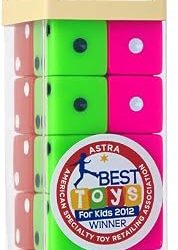
Shut the Box is a classic dice game, and this wooden version from Nicecho brings it to the family table. The listing describes it as a two to four player game for adults and kids, suitable for classroom, home, or party, and the title mentions eight dice. It is the most grown up looking game here, which gives it a different feel from the colorful kids titles. Mixed age groups can play together. It remains a favorite in classrooms because the idea is so quick to grasp.
In classic versions of the game, players roll dice and then flip down numbered tiles that add up to the total. The goal is to clear as many tiles as possible, so every turn is a small addition puzzle with a bit of luck. Our data does not specify the tile numbers or board dimensions, so follow the rules on the box. The simple concept is easy to teach in a minute. Its adult friendly look also makes it a pleasant gift for a grandparent to share.
This game suits children who are comfortable with addition to about twelve and who like friendly competition. It encourages mental addition, number combinations, and early strategy, such as deciding which tiles to keep. Teachers can use it in a math station, and families can use it as a screen free activity at a party. Adults enjoy it as much as kids, which makes it a rare shared choice. Strategy grows over time as players learn which tiles to leave open.
Dice are small and can roll off tables, so play on a mat or tray. Children under three should not use the dice because of choking risk. Count aloud when a player flips tiles, so beginners see the sums. Wooden parts can splinter if a board is mishandled, so check the surface occasionally and keep it dry. Keep the game on a flat, stable table so the dice roll predictably.
9. Educational Insights Kanoodle, Brain Teaser Puzz: Best Brain Teaser

Our score: 9.4/10 iOur editorial score (1 to 10), based on listing specs, features and how well each pick fits its use case. It is not an Amazon customer rating.
228 challenges Spatial reasoning Kids and adults Puzzle game
Kanoodle is the wildcard on this list, and it is worth being honest about why. It is a brain teaser puzzle rather than an arithmetic drill, so it will not practice sums or times tables directly. The listing says it contains 228 puzzle challenges, where players fill the board with the right arrangement of pieces. It earns a place because spatial reasoning is a real part of mathematical thinking. That honesty about scope helps you decide whether it fits your shopping list.
According to the listing, the puzzles exercise spatial reasoning and critical thinking, and the game suits kids and adults. Players study the shapes, plan where each one fits, and adjust when a layout fails. That process resembles problem solving in geometry, where mental rotation and logical elimination matter. The data does not list the number of pieces or the board size, so check the live page for these details. Persistence is part of the lesson, since many puzzles need several attempts.
Choose this for a child who gets bored by arithmetic but enjoys puzzles, or as a break between sums practice. It also works for adults who want to share a quiet challenge with a child. Because the challenges range in difficulty, a beginner can start with easy ones and progress. Parents looking for a complement to number games will find it a sensible addition. It also gives parents a calm activity to share without competing.
Because it is a solo puzzle, it is easy to carry and play without a partner, but it can also be a pass around activity. Keep the pieces in the case, as they are small and easy to lose, and keep them away from children under three. Do not expect it to replace fact practice, since it builds different skills. Try one puzzle at a time and celebrate every solved board. Try it during travel or downtime when devices are not an option.
How to Choose the Best Math Games
What Makes a Math Game Worth Buying
A good math game puts the skill inside the play, so a child cannot take a turn without using the math. If a game lets players ignore the numbers and just move pieces, it is entertainment with a math label. Look for turns that require adding, comparing, or planning, and for rules that are simple enough to learn in a few minutes. Ask yourself whether a child could win by guessing, because strong games reward understanding.
Replay value matters as much as the first impression. Games with several modes, adjustable levels, or built in luck keep surprising players, which means the same box stays useful for months. A strong choice should also survive a reluctant child, so check that a round is short and that a loss does not feel like failure. Good designs also make it easy to see the numbers, so errors are visible and fixable.
Matching Math Games to Age and Grade Level
Start with the operation your child is learning right now. Kindergarten and first grade benefit from addition and subtraction within twenty, while third to fifth graders usually need multiplication and division. The listings in this guide give age or grade ranges, such as five to seven, kindergarten through fifth grade, or eight to twelve, which is a good starting filter. Reading the listing carefully helps, since age ranges and grade labels differ between publishers.
Then consider confidence. A game slightly below your child’s level builds enthusiasm, and one slightly above stretches them, but a game far above it causes frustration. If you are unsure, pick a product with adjustable levels or several play options, and let the child decide how hard to go. Adults can quietly adjust difficulty without announcing it. Watch how your child reacts to the first game and adjust the next purchase accordingly.
Board Games Versus Handheld Math Devices
Board and dice games bring people together. They add conversation, turn taking, and friendly competition, and a parent can listen to how a child reasons. They are the better choice for family time and for classrooms where several children share one set. Their drawback is that they need a table, a few players, and often some setup. Instructions should be short enough to follow without a long reading session.
Handheld devices shine for independent practice and travel. A child can work through short rounds in a car or waiting room, and the device gives instant feedback. The downside is less discussion and less human feedback when a child makes the same mistake repeatedly. Many families do best with one of each type, so practice varies between social and solo. A mix of the two formats gives the best balance of social play and quiet practice.
Single Skill Games Versus Variety Games
Some games focus tightly on one skill, such as addition and subtraction facts, while others mix several operations or add logic puzzles. A focused game is ideal when a teacher has flagged one weak area, because every minute of play targets it. It also keeps the rules simple, which helps younger players. Think about how often the child plays alone, because that affects which format makes sense.
A variety game, like a device with nineteen activities, protects against boredom and suits curious children. It can also reveal strengths, since a child may breeze through pattern recognition yet struggle with number guessing. Use the variety format for exploration and the focused format for repair. Switching between the two keeps practice fresh without losing direction. The right mix depends on whether the goal is repair, enrichment, or simply enjoyment.
Fact Fluency and Mental Math Practice
Fact fluency means recalling sums, differences, and products quickly without counting on fingers. It frees up working memory so children can tackle word problems and multi step work. Games help because they supply many short repetitions in a low pressure setting, and repetition is the engine of memory. Aim for accuracy first, then speed, so the child does not build bad habits.
Mental math goes a step further by asking children to compute in their heads. Look for games that reward quick but accurate answers, and avoid ones that punish slow thinkers harshly. Short daily sessions of five to ten minutes usually beat one long weekly session. Keep the tone encouraging, and let children explain how they reached an answer. Tracking progress on a simple chart can motivate children who enjoy seeing improvement.
Building Logic and Spatial Skills Alongside Arithmetic
Math is more than calculation. Pattern recognition, memory, size comparison, and shape fitting all feed later work in algebra and geometry. Some products here, like the alilo device and Kanoodle, deliberately include these skills, which can appeal to children who dislike plain arithmetic drills. Visual patterns, memory games, and shape puzzles also build confidence for children who see themselves as not good at math.
If your child already has good arithmetic skills, a logic or puzzle game can be the better investment. It develops persistence and flexible thinking, which are hard to teach directly. Treat these games as a complement, not a replacement, for fact practice. A balanced shelf includes at least one number game and one thinking game. Variety also helps teachers spot hidden talents in students who struggle with computation.
Play Time, Players, and Setup Needs
Check the number of players before buying. A game that needs three or four people will sit idle in a household with one child, while a solo device might leave a large family waiting. Shut the Box, for example, is listed for two to four players, whereas the handhelds are built for one. Games with built in levels can adapt as children grow, which saves money over time.
Setup and play time also decide whether a game gets used. A quick game that opens in seconds will appear on a weeknight, but a long one may wait for weekends. Look for clear rules, short rounds, and compact storage. If the box is easy to pack, you can also use it on trips and at grandparents’ homes. If the child tires quickly, choose a title with short rounds and an easy reset.
Safety, Small Parts, and Age Warnings
Many math games include dice, tokens, cards, or puzzle pieces that are choking hazards for children under three. Check the age label on the listing and keep games out of reach of toddlers and pets. When siblings share a room, store the box high or in a closed container so small pieces do not wander. Read the listing for age grading and any warnings, because details vary between products.
Electronic devices may use batteries, which should be kept away from young children and replaced by an adult. Wooden games should be dry and smooth, with no loose splinters. Product details such as certifications are not given in our data, so read the listing, and look for labels like ASTM or EN71 when a toy is for younger players. Sorting small pieces into a tin after play also reduces the chance of losing them.
Making Budget Friendly Choices Without Quoting Prices
Budget logic is about cost per use. A game that three siblings play for years provides more value than a novelty that is abandoned in a week. Look for flexible rules, multiple levels, and durable materials, since these stretch the life of the purchase. Classic formats like Shut the Box also last across ages, since adults enjoy them too. Gifting a game to a class or club is another way to share the value across many children.
Because prices change, always check the live listing before deciding. Compare what is included, such as the number of games or challenges, and whether batteries are needed. A single device with many modes can replace several single purpose items. Also consider whether a school, library, or friend group might share sets. Think about whether the game could still be used by a younger sibling in a few years.
Care, Storage, and Longevity
Keep cards, dice, and tokens in the original box or a small zip bag, and count the pieces after each session. Missing pieces are the most common reason a game stops working. A simple label on the box listing what should be inside helps children tidy up on their own. Teach children to count pieces at cleanup, which is a quiet extra math lesson.
Wipe wooden surfaces with a dry or barely damp cloth and avoid soaking them. For handheld devices, remove batteries when the game will be stored for a long time, and keep the device away from heat and sticky hands. A padded pouch protects screens and buttons in a school bag. A zipped pouch with a printed rule card keeps everything together for travel.
Gift Tips for Parents, Grandparents, and Teachers
For a birthday or holiday gift, match the game to the child’s grade, not just age, and include a note explaining how to play. Pair a board game with a small treat or a deck of cards for a complete present. Order early and check the delivery window on the live listing so the gift arrives on time, and keep a gift receipt in case a swap is needed. Include extras such as spare batteries, a notebook for scores, or a pack of pencils if relevant.
Teachers can use inexpensive sets as classroom rewards or station materials. Parents of several children should consider flexible games with multiple play options, so nobody is left out. Remember that batteries are often not included with electronic items, so add a set if the listing says so. A game that suits several ages can also be passed down. A hand written note about why you chose the game makes the gift feel personal.
Frequently Asked Questions
What are the best math games for a first grader?
Number Hunter and Math Island both focus on addition and subtraction in a play format, which matches first grade skills. Math Slam also covers those operations in a handheld. Choose a board game for shared time and a handheld for solo practice.
Which math game is best for multiplication and division?
Adsumudi and Math Whiz both list multiplication and division among the operations they practice. Adsumudi is a travel game aimed at ages eight to twelve, while Math Whiz is a handheld with multiple skill levels.
Are math games better than worksheets?
They serve different purposes. Games add motivation, conversation, and repeated practice without the feeling of homework, while worksheets give focused, written work. Many families use games for daily practice and worksheets when a teacher asks for specific skills.
How long should a child play a math game each day?
Five to fifteen minutes is a reasonable range for most elementary students. Short, frequent sessions help memory more than one long session. Stop while the child is still enjoying it so the next session starts positively.
Are electronic math games good for kids?
They can be useful for independent fact practice and travel, since they give instant feedback. They do not replace talking through mistakes with an adult, so pair them with board games and check in regularly.
Is Kanoodle really a math game?
It is a spatial reasoning puzzle rather than an arithmetic game. It builds visual planning and logic, which support later math, but it will not practice sums or times tables. Use it alongside a number game.
Can adults and kids play Shut the Box together?
Yes. The listing describes the Nicecho set as a family game for two to four players, for adults and kids. The rules are simple, and the luck of the dice gives younger players a fair chance.
Do these games have small parts?
Several include dice, tokens, cards, or puzzle pieces that can be choking hazards for children under three. Check the age label on each listing, supervise play, and store pieces out of reach of toddlers.
How do I choose between a board game and a handheld device?
Pick a board game if you want family time and discussion, and a handheld if you need quiet, portable practice. If your budget allows, owning one of each gives variety and covers different situations.
Do I need to buy batteries for electronic math games?
Check each live listing, since power details are not given in the data we reviewed. Many handheld games use batteries that may be sold separately, so keep spares ready and store them away from young children.
The Bottom Line
The best math games are the ones your child will pick up without being asked, and for most families with kids in the early grades, Learning Resources Math Island is our top pick. Its adventure format makes addition and subtraction practice feel like play, and it works well as a shared activity.
If your needs differ, use the rest of the list as a map: Number Hunter for family game night, Mathswatters for siblings, Math Whiz for fact fluency, Adsumudi for older kids, and Kanoodle or Shut the Box for variety. Check each live listing for current contents and age guidance before ordering.
Updated for the 2027 buying season. Amazon listings and availability change often, so check the product page for current details.




Write Your Review
No reviews yet. Be the first to share your experience!