

As an Amazon Associate we earn from qualifying purchases. If you buy through links on this page we may receive a commission at no extra cost to you. Product details come from Amazon listings and can change.
If you are hunting for the best strategy games for a child or a whole family table, this guide gathers nine options that reward planning ahead. Some are true head to head board games where players claim space or gather resources. Others are single player logic challenges that train the same habits: looking several moves ahead, spotting patterns and learning from a failed attempt.
The guide is written for parents, grandparents, gift buyers and older kids who want something better than luck of the dice. We explain what each game asks of players, how many people it suits, what age the listing points to, and where a pick may frustrate a younger child. Strategy means different things at different ages, so we mix quick puzzles with longer family games.
Prices change often, so we link to live listings instead of quoting numbers. Check the current page for size, age range and what is in the box before you buy.
Key Takeaways
Best Strategy Games at a Glance
| Product | Our score | |
|---|---|---|
| Mattel Games Blokus Board Game for Best Overall |
9.6 / 10 | Check Price |
| CATAN Junior Board Game – Swashbuckling Best Resource Strategy |
9.6 / 10 | Check Price |
| Spin Master Games Tetris: The Board Best for Fast Rounds |
9.4 / 10 | Check Price |
| ThinkFun Rush Hour Traffic Jam Logic Best Solo Planning Puzzle |
9.4 / 10 | Check Price |
| Educational Insights Kanoodle, Brain Teaser Puzz Best for Spatial Thinkers |
9.4 / 10 | Check Price |
| ThinkFun Gravity Maze – Falling Marble Best STEM Flavored Pick |
9.2 / 10 | Check Price |
| Magnetic Chess Game with Full-Size Stones Best Tabletop Dexterity Game |
9.2 / 10 | Check Price |
| Rope Untangling Puzzle Game, Logic Brain Best Two Player Challenge |
8.8 / 10 | Check Price |
| Tower Stack, Exciting Tower Building Game Best Stacking Duel |
9.2 / 10 | Check Price |
How We Chose the Best Strategy Games
This is a research based guide, not a lab comparison. We read the product listings closely, noting the stated player counts, age ranges, challenge counts and rules, then balanced the list so that it includes true competitive strategy games, cooperative style logic play and quiet solo puzzles. Nothing here is a claim about how the games perform at your own table.
Each pick also has an editorial score out of 10, built from features, specs and how well the game fits its stated use. We weighed rule clarity, replay value, how well a game scales between ages, and how easily it packs away. Where a listing is short on detail, we speak in general terms and say so rather than guessing at contents.
In-Depth Reviews
1. Mattel Games Blokus Board Game for: Best Overall

Our score: 9.6/10 iOur editorial score (1 to 10), based on listing specs, features and how well each pick fits its use case. It is not an Amazon customer rating.
Ages 7+ 2 to 4 players 21 pieces per color One rule to learn
Blokus earns the top spot because it hides real strategic depth behind an almost trivial rulebook. The listing says families can learn it in less than a minute, and that claim fits the design: place your pieces so each new one touches another of your own color, but only at the corners. That single rule is all a newcomer needs, which makes it one of the friendliest ways to introduce planning to a seven year old. Because every player starts with the same set of shapes, nobody can blame the box for a loss, and that fairness keeps younger players engaged.
Each player controls 21 pieces in one color, and the board fills up as everyone competes for space. The skill is in blocking rivals while keeping your own routes open. Early turns feel relaxed, but the middle of the game turns tense as lanes close. Because the pieces are flat shapes of different sizes, children also practice spatial reasoning without noticing it, much as they would with a tangram. Parents often find that the second game goes better than the first, since children quickly learn which corners to protect and which gaps to fill.
This game suits mixed age groups well because the rules are the same for everyone, and an adult has no hidden advantage beyond experience. It teaches patience, since playing the biggest pieces first is usually wise, and it teaches children to read an opponent’s plan. Games run at a steady pace, so it works as a weeknight activity rather than a long weekend project. It also makes a decent first lesson in sportsmanship, because the board visibly fills up and every player can see why they ran out of moves.
As a practical note, the listing gives two to four players, so a solo child will need a partner. Pieces are small enough that families with toddlers should keep the box out of reach, and a tidy storage bag helps prevent lost shapes. If a younger sibling wants to join, let them help place pieces on a team with an adult. A small tray or lidded box next to the board helps the pieces stay sorted by color, which speeds up setup and cleanup for impatient hands.
2. CATAN Junior Board Game – Swashbuckling: Best Resource Strategy

Our score: 9.6/10 iOur editorial score (1 to 10), based on listing specs, features and how well each pick fits its use case. It is not an Amazon customer rating.
Ages 6+ 2 to 4 players Pirate theme Short play time
CATAN Junior makes the list as the gentlest way into resource trading and building. Based on the full CATAN idea, it swaps settlements for pirate lairs and sets the action on a ring of tropical isles, including Spooky Island, where a Ghost Captain lurks. The title points to ages 6 and up, two to four players and a play time near half an hour, which is short enough for a school night. The tone is light and adventurous, which helps children who feel nervous about games that look like homework.
According to the listing, each island produces a specific resource: wood, goats, molasses or cutlasses, and gold also appears on the board. Players gather what they need and spend it to build, so every turn asks a small question: what should I collect, and what should I build with it? That loop is the heart of many modern board games, and here it is introduced with bright artwork and a friendly story. Players can talk through their plans aloud, and that conversation is where much of the learning happens for a beginner.
The game suits children who are ready to go beyond roll and move titles. It teaches counting, planning for what you will need next turn and making choices when luck gives you something unexpected. Families who later move on to the full CATAN game will recognize the rhythm of collecting and building, which makes this a sensible stepping stone. Siblings of different ages can share a game because the goals are easy to follow, even when the plans behind them differ.
One caution is that dice still play a role, so a child who dislikes luck may need reassurance after a poor roll. Set aside a little time for the first game to explain the board, and let the youngest player pick the island they like best. The pieces are small, so keep them away from toddlers. Allow extra setup time on the first night, and keep a small bowl nearby to sort the pieces so the table stays tidy.
3. Spin Master Games Tetris: The Board: Best for Fast Rounds

Our score: 9.4/10 iOur editorial score (1 to 10), based on listing specs, features and how well each pick fits its use case. It is not an Amazon customer rating.
Tabletop strategy Multiplayer Drop and rotate Line making
Spin Master Games Tetris The Board Game brings a famous video game to the table. The listing describes a multiplayer strategy game of rotating, dropping and line making, with a competitive twist on the classic. Anyone who has played the digital version will understand the goal quickly, which makes this a very easy sell to kids who already love falling blocks. A family with older children and a console at home may find this a welcome reason to gather around the table instead.
The core action is dropping a tetrimino onto a board and trying to make lines while limiting what your opponents can do. Unlike the solo screen version, other people are now part of the puzzle, so you have to think about their next move as well as your own. That change turns a familiar pastime into a real head to head contest. The shape language is familiar, so children can start planning placements almost at once instead of memorizing symbols.
This game suits gamers and older children who like fast decisions and enjoy shape fitting. It teaches spatial awareness, forward planning and the habit of keeping options open. It also works well as a bridge for kids who love screens, since it offers the same pieces and pattern thinking without a controller in hand. Adults who grew up with the original will likely enjoy teaching the tabletop version and may be surprised at how competitive it gets.
The listing does not give a full age range in the data we reviewed, so check the live page for the recommended age before gifting it to a younger child. Expect a table with enough room for the board, and remember that a competitive game can bring out strong feelings. Agree on a friendly rule for rematches before the first round. Choose a stable table, keep drinks well away from the board and agree on turn timing so that fast thinkers do not rush slower ones.
4. ThinkFun Rush Hour Traffic Jam Logic: Best Solo Planning Puzzle

Our score: 9.4/10 iOur editorial score (1 to 10), based on listing specs, features and how well each pick fits its use case. It is not an Amazon customer rating.
Ages 8+ 40 challenges Beginner to expert Slide the vehicles
ThinkFun Rush Hour is the strongest pick here for a child who enjoys planning alone. It is a logic puzzle more than a competitive game, but it trains exactly the skill strategy fans need: looking at a crowded board and working out which piece must move first. The title says it is aimed at kids age 8 and up and describes it as a STEM toy that builds reasoning and planning. Parents can use the challenge cards as a progress record, moving up one level whenever a child solves a card without help.
The listing says the game includes 40 challenges that range from beginner to expert. You slide cars and trucks around a grid to clear a path for the red car, so every card is a small traffic jam to untangle. Because challenges climb in difficulty, a player can start with easy wins and then work toward the cards that take real patience. The puzzle also gives children a safe place to practice being stuck, which is a skill that carries into homework and sports.
This puzzle suits a solo player, a quiet car trip or a classroom quiet corner. It teaches working backward from a goal, trying out ideas and accepting that the first plan may fail. Adults can join by turning it into a race, with each person solving the same card at the same time. Because there is only one right path on each card, adults can check an answer quickly without needing to understand every move.
Be honest about the format: there is no opponent, so it will not replace a table game for a child who craves competition. Vehicles and cards are small, so older kids and adults should handle storage. If frustration appears, step down a level and celebrate the finish; this puzzle rewards stubbornness more than speed. Keep a spare envelope for loose cards, and encourage the child to reset the board before putting the game away.
5. Educational Insights Kanoodle, Brain Teaser Puzz: Best for Spatial Thinkers

Our score: 9.4/10 iOur editorial score (1 to 10), based on listing specs, features and how well each pick fits its use case. It is not an Amazon customer rating.
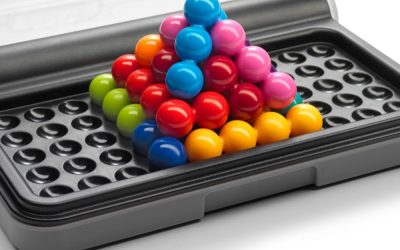
228 challenges Kids and adults Fill the board Brain teaser
Educational Insights Kanoodle gives you a compact brain teaser with a lot of play inside it. The listing promises 228 puzzle challenges and describes it for both kids and adults, so one box can serve a whole household. Its goal is to fill the board with the right arrangement of pieces, which sounds simple and quickly becomes absorbing. Parents can ask a child to explain why a piece will not fit, which turns quiet puzzling into a short lesson in reasoning.
The puzzle works through colorful pieces of different shapes that must fit together without gaps. Each challenge starts with a few pieces already placed, and you work out how the rest fit. The listing frames it around spatial reasoning and critical thinking, and that matches the type of play: you rotate, flip and try out positions in your head before you commit. Older relatives often enjoy it as well, so it suits a multi generation visit where everyone wants a calm activity. The pieces come in several colors, which also helps younger players keep track of what they have used.
Kanoodle suits children who like to work quietly and adults who want a screen free break. It teaches pattern recognition, persistence and the habit of eliminating wrong answers. Because the challenges build in difficulty, siblings of different ages can share the same box without needing separate games. Because the challenges climb in difficulty, a stuck puzzle can be set aside and revisited the next day with fresh eyes. A child who finishes the easier cards can be challenged to explain the solution aloud to a sibling.
Treat it as a solo puzzle rather than a head to head game. The pieces are small, so toddlers should not have access, and a pouch or the original case will protect the set in a bag. This is a great waiting room or flight game, and it makes a sensible gift for a child who already loves jigsaw puzzles. Keep the pieces in the original case when not in use, and play over a tray or table so that nothing rolls onto the floor. Gift it alongside a small travel bag for an extra useful present.
6. ThinkFun Gravity Maze – Falling Marble: Best STEM Flavored Pick

Our score: 9.2/10 iOur editorial score (1 to 10), based on listing specs, features and how well each pick fits its use case. It is not an Amazon customer rating.
Ages 8 to 12 Falling marble Logic game STEM toy
ThinkFun Gravity Maze mixes logic with a little engineering, which is why it makes this list. The title names it a falling marble logic game and a STEM toy for kids 8 to 12. The challenge is to build a path so a marble drops from the start and reaches the target, using a set of towers that must be placed in just the right spots. Parents who enjoy hobby kits may like it as a shared project, with an adult reading the card while the child builds.
According to the listing, the game sparks creativity and builds critical thinking through engineering style challenges. In practice, the child studies a challenge card, picks the right pieces and plans where the marble will travel. Because gravity does the moving, mistakes show up instantly, which makes the feedback fast and clear for a young thinker. It also fits a classroom or homeschool shelf where STEM themed play is welcome and quiet focus is valued.
This is a good fit for a child who likes building toys and science kits more than board games. It teaches cause and effect, sequencing and careful observation. It also gives parents an easy way to talk about physics ideas such as height and falling objects without turning the afternoon into a lesson. Children often grow more confident when they can see a path succeed, and the marble gives a clear signal of a right answer.
Keep in mind that it is a puzzle for one rather than a competitive title, so it will not satisfy a child who wants to beat a sibling. The marble and small pieces need adult supervision for younger children, and a tray helps stop the marble rolling away. It is best for the older end of the stated age range. Play on a firm table with edges or a shallow tray, and count the pieces at the end of each session.
7. Magnetic Chess Game with Full-Size Stones: Best Tabletop Dexterity Game

Our score: 9.2/10 iOur editorial score (1 to 10), based on listing specs, features and how well each pick fits its use case. It is not an Amazon customer rating.
Magnetic stones Full size stones Rope boundary Head to head
The Magnetic Chess Game with Full-Size Stones is a different sort of strategy game, and the name can mislead. According to the listing, it is a magnet game with a string, not a traditional chess set. Players take turns placing stones upright inside a rope, and the stones should not attract each other. If they do, you collect them, which turns every placement into a careful judgment. Because the object of play is clear, even a child who has never played a board game can join after a single demonstration.
The listing explains that all the stones are shared out among the players, who take turns until someone runs out. The first player to use up all their stones wins. The strategy lies in reading where magnetic pull is likely, leaving yourself safe spots and making your opponent’s next placement harder than yours. It rewards a steady hand as much as a clever mind. Players quickly learn that crowding stones together is risky, so the game gently teaches thinking about space and consequences.
This game suits kids who prefer a physical challenge to a spreadsheet style board. It teaches fine motor control, patience and a sense of risk. It is quick to explain, so guests and cousins can join in at a family gathering without a long rules talk. It can be played at a kitchen table, on a picnic blanket or on the floor, since the rope marks the playing area. Adults will find it works well as a quick ice breaker between rounds of heavier games.
Strong magnets need adult care. Small magnets are a serious hazard if swallowed, so keep this away from young children and check the stones after every session. Store the stones in a way that stops them snapping together roughly. Players who want deep tactics should look at the other titles on the list. Older children can help younger ones by explaining the pull of the magnets, which gives a friendly peek at how magnetism works. Always read the box notes about magnet strength before handing it to an excited group of kids.
8. Rope Untangling Puzzle Game, Logic Brain: Best Two Player Challenge

Our score: 8.8/10 iOur editorial score (1 to 10), based on listing specs, features and how well each pick fits its use case. It is not an Amazon customer rating.
Kids and adults Design and solve Rope puzzle Family bonding
The Rope Untangling Puzzle Game earns a place as the most social of the logic picks. The listing describes a family bonding game in which one player designs a colorful, tangled challenge while the other races to solve it. That split of roles gives both people a job, and it turns a solitary brain teaser into a conversation between two minds. Parents might use it as a calm activity before bed or after dinner, when a full board game feels like too much effort.
The designer must think like a puzzle maker, planning a tangle that is tricky but fair. The solver must read the knots, find the right order of moves and work quickly. Switching roles after each round means everyone practices planning from two sides, which is a useful strategic habit. The listing also notes a U.S. appearance patent, which points to a distinctive design. The role swap also gives the more reserved child a chance to lead, which can build confidence in a gentle way.
This is a good choice for a parent and child, or two siblings who enjoy hands busy challenges. It teaches sequencing, patience and fair play. A child who likes to invent their own tangles gets a creative outlet as well as a logic workout, and the puzzle works well at a coffee table without a big setup. Because the design is meant for both children and adults, it avoids feeling like a toy that grown ups will quickly tire of.
Because it is really a logic puzzle, it will not provide the board control of a classic strategy game. Check the live listing for contents before ordering, as our data gives only a short description. Cords can tangle around small hands, so younger children should play with an adult and put the set away after use. Keep the cords coiled in a bag or box, and check them for fraying before each session.
9. Tower Stack, Exciting Tower Building Game: Best Stacking Duel

Our score: 9.2/10 iOur editorial score (1 to 10), based on listing specs, features and how well each pick fits its use case. It is not an Amazon customer rating.
Tower building Two player friendly Family strategy Quick setup
Tower Stack from Relatable rounds out the list as a simple stacking contest. The listing is brief, calling it an exciting tower building game and pointing buyers to the brand’s two player games and strategy games for families. Because details are thin, we treat this as a light pick that suits casual play rather than a deep tactical challenge. Even a very short round can be satisfying, which makes it good for the minutes before dinner or between activities.
A tower building game generally asks players to add pieces in turn without letting the structure fall, so each move balances risk and reward. The strategy is in choosing where to place a piece, how much weight to add and which spot to leave awkward for your opponent. Always check the live page for the exact pieces and any rules the brand includes. Children who dislike long rule explanations tend to enjoy this sort of game, because the first turn can begin right away.
This type of game suits younger players, party guests and families who want a break from long rulebooks. It teaches steady hands, taking turns and sensible risk taking. It can work well as a warm up before a heavier game like CATAN Junior, since everyone can join in right away. Adults can raise the challenge by adding house rules, such as a time limit per turn or a bonus for a daring placement.
Because the listing offers few specifics, we advise reading the product page for age guidance and piece sizes. Falling towers can scatter parts, so play on a firm table with a mat beneath. Small parts are a concern for children under three, and an adult should supervise any play with younger siblings nearby. Store all pieces in the box after each round, and check the floor around the table so none are left behind.
How to Choose the Best Strategy Games
What counts as a strategy game for kids
A strategy game asks players to make choices that shape the result, with luck playing a smaller part than planning. For children, that can mean claiming board space, managing resources or solving a puzzle that needs careful sequencing. The games on this list cover all three, so a family can pick the style that fits a particular child. Strategy also overlaps with maths, reading and social skills, since players count, follow rules and negotiate.
It helps to separate competitive strategy from solo logic. Blokus and CATAN Junior put players against each other, while Rush Hour and Kanoodle ask one person to outthink a puzzle. Both build the same habits, but they feel different at the table, so think about whether your child wants a rival or a quiet challenge. Parents who ask a child to describe a plan are often surprised by how clearly the child can explain it.
Matching strategy games to age and skill
Listings give a useful starting point. CATAN Junior points to ages 6 and up, Blokus to ages 7 and up, and Rush Hour to age 8 and up. A child at the lower edge of a range can still play with help, while one at the upper edge may find the game too easy within a few weeks. Younger children may also need a larger table or a shorter session than the box suggests.
Look at reading level, patience and fine motor control as well as age. A confident eight year old might enjoy a challenge meant for ten, while an anxious child may prefer a game with a gentle first level. When in doubt, choose the title with a built in difficulty ladder. An adult can step in as a teammate to even the odds while a child grows into the rules.
Choosing by player count and who plays
Count the people who will actually play. Blokus and CATAN Junior suit two to four players, which fits most households. A tower or rope game works best as a pair, and solo puzzles suit children who often play alone or travel a lot. A game that needs four players can sit on the shelf if only two family members are free.
Think about the adult as well. If a parent will play, pick a game with enough depth to stay interesting after the fifth round. If siblings will play without help, choose short rules and a quick finish so arguments do not outlast the game. If you often have visiting friends, a game that takes four players can be a better buy than one that works only for pairs.
Play time and setting up a game night
Short games are easier to schedule. A half hour title such as CATAN Junior fits between homework and bedtime, while quick puzzles can fill ten spare minutes. Longer sessions work best on weekends, with snacks kept away from the board. Dim lights and loud televisions make planning harder, so turn them off for the main game. Plan breaks for drinks and stretching if the session runs longer than expected.
To host a family game night, choose two or three games in different styles and let each person pick one. Start with a quick round to warm up, then move to the main event. Keep a timer or an end point so younger players know when the evening is done. Snacks that leave sticky fingers can ruin cards and boards, so serve them in a separate spot. Ending on a high note leaves everyone eager to play again next week.
Rules complexity and teaching a new game
A short rulebook is a gift to a busy parent. Blokus is described as learnable in under a minute, which is rare. Resource games need a little more time, so read the rules once yourself before you invite the kids to the table. Posting a one page summary of the key rules near the game saves repeated questions during play.
Teach by playing a practice round with open hands, explaining each move aloud. Children learn faster when they see consequences than when they hear a long explanation. If a rule causes arguments, write the house version on a card and keep it in the box. A first game with a deliberately easy goal lets children learn the mechanics before the real contest begins.
Luck, skill and handling losing
Games with dice, such as CATAN Junior, add a little luck that can balance an age gap. Games with no luck, such as Blokus or pure puzzles, reward practice and can feel harsh to a beginner. Choose according to your child’s temperament. Some children enjoy a game more when they cannot control the outcome fully, since the loss feels less personal.
Talk about losing before the game begins. Praise a clever move even when it does not win, and let children replay a hard puzzle rather than abandoning it. A family rule such as one rematch each keeps competition friendly and teaches resilience. Others prefer pure skill and will keep playing until they master it, so watch how your child reacts.
Solo puzzles versus head to head games
Solo logic puzzles are ideal for travel, quiet time and children who dislike pressure. They let a child go at their own pace and build confidence through steady progress. Rush Hour, Kanoodle and Gravity Maze all fit this role. Mixing the two styles across a week gives variety and helps parents learn what their child enjoys most. Parents can also use puzzles as a calm reset after a busy day or a noisy gathering.
Head to head games teach different lessons, such as reading an opponent, negotiating and coping with a defeat. A balanced shelf includes both. If you can only buy one, pick the style that matches how your child already plays. A solo puzzle on a car trip and a board game at home is a nice rhythm. Children who are shy about competing often grow bolder after finishing a few puzzles alone.
Small parts, magnets and safety notes
Many strategy games have small pieces. Keep them away from children under three and supervise younger siblings. Count pieces after each session, since a lost tile can make a puzzle impossible to finish. Check the age guidance on each listing and follow it, even if an older sibling seems capable. Teach older children to put pieces back in the box straight after play, which protects younger siblings.
Magnetic games need special care, because strong magnets can cause harm if swallowed. Inspect the stones regularly and store them in a closed container. Cords and strings should also be watched during play with young children. Never leave small magnets, marbles or loose tiles within reach of a baby or toddler. Throw away damaged packaging bags promptly, since thin plastic is not a toy.
Storage, size and travel
Compact boxes travel well. Kanoodle and Rush Hour are small enough for a backpack or car seat pocket, while a board game with a full board needs more room. Check the live listing for dimensions if shelf space is tight. A shoebox or plastic bin makes a simple home for several smaller games stacked together. Measure the space on a bookshelf or under a bed before buying a large box.
Use zip bags for loose pieces and keep any cards or challenge books in the original box. A labelled bin for family games helps everyone find what they need and reduces lost parts. Label each bag so that pieces do not mix, especially when two games have similar colors. Teach children to sort and pack up together, so putting things away becomes part of the game.
Budget friendly value for strategy games
Value is not only about the sticker. A game with many challenges, such as one offering hundreds of puzzles, offers long life from a single box. A game that works for two to four players gets used by more of the family. Games that have been well made and cared for can be passed to younger cousins when the child outgrows them. Libraries and school swaps are another friendly way to try a style before buying.
Share costs with siblings or cousins, and consider swapping games with friends. Look for titles that grow with the child, so the same box stays useful for several years. Always compare the live listing, since prices change. Think of cost per hour of play, and a game used every weekend for a year quickly justifies itself. A well chosen puzzle can cost less than a day out yet entertain a child for months.
Care, longevity and replay value
Keep boxes dry, wipe pieces with a soft cloth and store them flat. Plastic pieces last longer when kept out of hot cars and direct sun. Cards bend easily, so a rubber band or small pouch can help. Rotating a handful of games every few weeks keeps the shelf feeling fresh without new purchases. Avoid damp basements and sunny windowsills, since both can warp boxes and fade colors.
Replay value comes from variety. Games with changing boards, difficulty ladders or role swaps stay fresh. When interest fades, put the game away for a month and bring it back, as it often feels new again. Inspect pieces for chips or cracks from time to time and replace any that could be a hazard. Children who help clean and pack the game tend to treat it with more respect.
Gift tips for strategy games
When giving a strategy game, think about who will play it with the child. A gift that arrives with a promise to play together feels more special than one left on a shelf. Add a note with a suggestion for a first round. Pair a game with a small snack or a certificate for a first match to make the present feel complete. Handwritten notes that say why you chose a game make the present feel personal.
Order early during busy seasons and check delivery windows on the listing. Include a gift receipt if you are unsure about the age fit. Wrapping a small puzzle with a snack makes a thoughtful stocking gift. Keep the receipt and age information handy so the recipient can swap the game if needed. If the recipient has siblings, consider a game that all of them can enjoy together.
Frequently Asked Questions
What are the best strategy games for kids?
Blokus, CATAN Junior and Rush Hour are strong starting points. Blokus suits ages 7 and up, CATAN Junior suits ages 6 and up, and Rush Hour is a solo logic puzzle for age 8 and up.
What age is a strategy game suitable for?
Many family strategy games start around age 6 or 7, according to their listings. Younger children can join with an adult as a partner, but check the age range on the live page before buying.
Are puzzles like Rush Hour really strategy games?
They are logic puzzles, but they train planning, sequencing and thinking ahead, which are core strategy skills. They are a good solo option, though they lack the competition of games with opponents.
How many players do these games need?
Blokus and CATAN Junior are listed for two to four players. Rope and tower games work well as pairs, and Kanoodle, Rush Hour and Gravity Maze can be played alone.
Is CATAN Junior a good first resource game?
It is a gentle introduction. The listing describes islands that produce wood, goats, molasses and cutlasses, plus gold, so children practice collecting and building. Dice still add some luck.
Are magnetic games safe for children?
Strong magnets can be dangerous if swallowed, so keep them from young children and supervise play. Check the pieces after each session and store them in a closed container.
How do I teach a child a new board game?
Read the rules first, then play a practice round with open hands and explain each move. Short rounds and friendly rematch rules help children learn without feeling pressured.
What if my child hates losing?
Set expectations before the game, praise smart moves and try solo puzzles or cooperative play first. A rematch rule helps, and shorter games make a loss feel less heavy.
Which game is best for travel?
Kanoodle and Rush Hour are compact, and both work solo. A magnetic or tower game may need a flat surface, so choose based on seating space in the car or plane.
Do these games have price information?
We do not quote prices because they change often. Use the links to see current listings, compare sizes and confirm what is included before you order.
The Bottom Line
For most families, Mattel Games Blokus is the best place to start, because the rules are short and the choices stay interesting for years. Pair it with CATAN Junior when children are ready for trading and building, and keep Rush Hour or Kanoodle nearby for quiet, solo thinking.
Whichever you pick, play together at first and keep sessions short. Strategy grows through repetition, and a shared game night is often the best reward.
Updated for the 2027 buying season. Amazon listings and availability change often, so check the product page for current details.

Write Your Review
No reviews yet. Be the first to share your experience!