

As an Amazon Associate we earn from qualifying purchases. If you buy through links on this page we may receive a commission at no extra cost to you. Product details come from Amazon listings and can change.
Choosing the best microscope kits is less about the biggest magnification number and more about matching the box to the child. A five year old and a twelve year old want very different things from the same hobby, and a kit that frustrates a beginner usually ends up in a closet within a month. This guide looks at nine options that range from a talking preschool toy to a metal bodied scope with a carrying box.
The list covers tabletop scopes with prepared and blank slides, digital models with a built in screen, and handheld pocket viewers for outdoor use. It is written for parents, grandparents and gift buyers, and also for tweens who want to understand what they are asking for. Each pick explains what the listing says, who it suits, and where it falls short.
Prices change often, so this guide does not quote any. Every product links to its live listing, where you can check the current price, the age marking, what is included in the box and how the device is powered. Treat any microscope as a tool that needs an adult nearby for setup, small parts and glass or sharp items.
Key Takeaways
Best Microscope Kits at a Glance
| Product | Our score | |
|---|---|---|
| Dual LED Illumination, 10 Prepared Slides Best Overall |
9.2 / 10 | Check Price |
| 120X-1200X Magnification, 52-Piece Kit, Metal Bo Best Metal Body Starter |
8.8 / 10 | Check Price |
| Prepared and Blank Slides, Rock and Best for Rocks and Minerals |
9.2 / 10 | Check Price |
| Uarzt Kids Beginner Microscope Science Kit Best Adjustable Light Kit |
8.8 / 10 | Check Price |
| Uarzt 58-Piece Kids Microscope Kit with Best Accessory Set |
8.8 / 10 | Check Price |
| 32GB Card for Photos & Video Best Digital Screen Kit |
9.0 / 10 | Check Price |
| Kids Microscope [4K 1000x Zoom with Best for Outdoor Exploring |
9.6 / 10 | Check Price |
| 1000X Handheld Digital Microscope for Kids Best Pocket Size Pick |
9.0 / 10 | Check Price |
| Kids Microscope Toy, Interactive STEM Toys Best for Preschoolers |
9.2 / 10 | Check Price |
How We Chose the Best Microscope Kits
This is a research based guide, not a lab comparison. We read each product listing closely, noting the magnification range, the lighting, the slide types, the accessories, the storage and the age label printed in the title. We also weighed general safety expectations for science toys, such as small parts, glass, batteries and charging, and we looked for a balance of tabletop, digital and pocket styles so that every budget friendly need and age band has an option.
Magnification numbers on listings are not the whole story, so we gave them less weight than slide variety, lighting, ease of use and how well a kit grows with a child. Each pick also has an editorial score out of 10 that reflects its features, specs and use case fit. Where a listing leaves out a detail, such as power source or exact contents, we say so and ask buyers to confirm it on the product page.
In-Depth Reviews
1. Dual LED Illumination, 10 Prepared Slides: Best Overall

Our score: 9.2/10 iOur editorial score (1 to 10), based on listing specs, features and how well each pick fits its use case. It is not an Amazon customer rating.
Ages 8 to 12 Dual LED lighting 10 prepared slides 50+ pieces
The National Geographic Dual LED Microscope Science Kit takes the top spot in this guide because it matches what most families picture when they say microscope kit: a real tabletop scope, a stack of slides, and a box of tools for getting started. The listing marks it for ages 8 to 12 and calls out biology experiments, which gives parents a clear sense of who it is aimed at. It also covers the most common gift moment, since the listing mentions a birthday gift angle alongside the STEM learning pitch.
According to the listing, the set offers dual LED illumination, ten prepared slides, ten blank slides and more than fifty pieces in total. Two light sources usually mean a child can look at thin, see through samples from below and thicker items from above, though buyers should confirm how the lights work on the product page. The prepared slides give an instant first look, while the blank slides leave room for a child to make their own mounts from things found around the house.
This kit suits the curious eight to twelve year old who likes to ask what something is made of. The mix of ready made and blank slides builds a simple habit of observing, comparing and writing down what you see. It works well for a school project, a rainy weekend, or a gift for a child who already enjoys nature books. Older tweens may outgrow the basics, but the blank slides keep it useful for longer than a set with only fixed samples.
A few practical points are worth noting. Adult help is sensible for setting up, for handling glass or sharp tools if any are included, and for choosing safe samples. Check the listing for what powers the lights and whether batteries are included, because that is not stated in the title. Store the slides in their tray after each session, wipe fingerprints from the lens gently, and keep small accessories away from younger siblings. Label finished slides so favorites are easy to find again.
2. 120X-1200X Magnification, 52-Piece Kit, Metal Bo: Best Metal Body Starter

Our score: 8.8/10 iOur editorial score (1 to 10), based on listing specs, features and how well each pick fits its use case. It is not an Amazon customer rating.
120X to 1200X 52 piece kit Metal body LED light
The AmScope M30-ABS-KT2-W earns its place as a classic beginner microscope kit with a metal body and a carrying box. Its title describes a 52 piece set, which tells buyers right away that this is more than a bare scope. It is presented as a beginner STEM kit, so it fits families who want one box that covers the scope, the slides and the small tools, without hunting for add ons later. That makes it a tidy gift choice.
The listing gives a magnification range of 120X to 1200X, an LED light and plastic slides, all packed into a carrying box. A metal body often feels steadier on a desk than an all plastic frame, although the listing does not promise anything about image sharpness. Treat the high end of the magnification range as a headline number: a young beginner will get more joy from the lower settings, where a sample is easier to find and keep in view.
This kit is a good match for a child who is ready to move past a toy style viewer and wants a proper focus knob and a stage. It can also serve a homeschool group or a classroom corner, because the carrying box keeps everything together between sessions. The kit teaches the basic microscope routine: place the slide, start low, focus slowly, then step up. Because the listing does not name an age range, parents should judge by the child’s patience and care with small parts.
Plastic slides are friendlier to drop than glass, which is a small plus for younger users. Still, ask an adult to supervise the setup, and keep tiny accessories out of reach of toddlers. Check the listing for what powers the LED and what is in the box. Lens cleaning should be gentle, with a soft cloth only, and the scope should go back into its box after each use to keep dust off the optics.
3. Prepared and Blank Slides, Rock and: Best for Rocks and Minerals

Our score: 9.2/10 iOur editorial score (1 to 10), based on listing specs, features and how well each pick fits its use case. It is not an Amazon customer rating.
Up to 400x Ages 6+ Rock specimens Prepared and blank slides
The National Geographic Microscope for Kids stands out from the rest of this list for its rock and mineral specimens. Most beginner kits lean on plant and insect samples, so a set that adds geology gives a child a different kind of hunt. The listing marks it for ages 6 and up and describes it as an easy to use science kit, which makes it one of the gentler options for younger school age children.
The title lists up to 400x magnification, prepared and blank slides, and rock and mineral specimens. Four hundred times is a modest range compared with some kits here, and that can be a good thing for a first scope, since lower power is easier to focus and gives a wider field of view. The prepared slides save time, while the blank slides let a child mount sand, salt, or a pinch of garden soil.
This set suits a six to nine year old who collects stones, loves a museum shop, or wants a project for a science fair. It also pairs naturally with a family walk: pick up a few small pebbles, then compare them with the included specimens at home. Children learn to describe color, texture and grain, which is useful practice in observation even before any science vocabulary arrives. It makes a pleasant gift for a young collector.
Because rock samples can be hard and sharp edged, an adult should help with choosing and handling specimens. Small parts and slides call for supervision with younger children, and the listing should be checked for exact contents and power needs. Keep the specimens in a labeled tray, wipe the stage after each session, and let the child draw what they see in a notebook so the learning sticks. Always wash hands after handling any outdoor samples.
4. Uarzt Kids Beginner Microscope Science Kit: Best Adjustable Light Kit

Our score: 8.8/10 iOur editorial score (1 to 10), based on listing specs, features and how well each pick fits its use case. It is not an Amazon customer rating.
100X to 1200X 13 prepared slides 18MM HD lens Adjustable LED
This Uarzt beginner microscope science kit is the pick for families who want a flexible light source and a decent slide collection in one box. Its title mentions an adjustable LED, an 18MM HD lens and a metal part, along with an ABS box for storage. It is written for two age bands at once, with the title naming kids 5 to 7 and 8 to 12, so it aims to grow with a child over a few years.
Per the listing, the set offers magnification from 100X to 1200X, thirteen prepared slides and blank slides for do it yourself samples. An adjustable light matters because thin samples and thicker samples need different brightness, and a dimmer setting can reduce glare when looking at pale or glossy items. The ABS box keeps slides and the scope together, which helps when a project moves between a bedroom, a kitchen table and a classroom. That kind of flexibility suits a growing child.
The kit suits a child who has outgrown a toy viewer and is ready to compare slides side by side. The thirteen prepared slides give an easy start, and the blank slides move the child toward making their own: a hair, a feather barb, a drop of pond water collected with an adult. Younger children in the five to seven range will need a grown up nearby for focusing and for handling slides.
Remember that a bigger magnification number does not guarantee a clearer picture, so start at the lowest setting and work up. Check the listing for power, for what the box includes, and for exact slide types. Keep small accessories away from toddlers, avoid pointing the light at anyone’s eyes, and rinse and dry any blank slides before putting them back in the case. It also helps to keep a spare tray for finished slides.
5. Uarzt 58-Piece Kids Microscope Kit with: Best Accessory Set

Our score: 8.8/10 iOur editorial score (1 to 10), based on listing specs, features and how well each pick fits its use case. It is not an Amazon customer rating.
58 piece kit Carrying case Metal parts Ages 5 to 12
The Uarzt 58 Piece Kids Microscope Kit earns the accessory set award because its piece count is right there in the title. A larger kit means more tools and add ons for a child to explore, and the listing pairs that with a carrying case and metal parts. It is framed as a beginner science set with prepared slides and accessories, aimed at ages 5 to 12. Parents can treat it as a full starter box for a first science shelf.
What the title confirms is simple: fifty eight pieces, prepared slides, accessories, a carrying case and some metal parts. The exact list of tools is not spelled out there, so buyers should open the product page to see what tweezers, droppers, vials or other helpers are included. The case is a real asset for a tidy storage plan, since a messy loose pile of small items is the usual reason a kit stops getting used.
This kit is a good fit for a child who loves sets with lots of little parts to sort and use. It suits a younger beginner of five or six working alongside a parent, and it still has room for a ten or eleven year old who wants to prepare their own samples. The accessories encourage a full routine: collect, mount, look, draw and label. That routine is more valuable than any single feature of the scope.
A wide age range means a wide gap in skill, so adult supervision matters here. Tweezers, droppers and small tools can be fiddly, and small parts are a hazard for any toddler in the house. Check the listing for power and for what is in the box. Keep the case closed when not in use, count the small items after each session, and wash and dry any tools before storing them.
6. 32GB Card for Photos & Video: Best Digital Screen Kit

Our score: 9.0/10 iOur editorial score (1 to 10), based on listing specs, features and how well each pick fits its use case. It is not an Amazon customer rating.
1000X digital 4K screen 32GB card Ages 4 to 12
The Kids Digital Microscope STEM kit is the choice for children who would rather look at a screen than squint into an eyepiece. The listing describes a digital microscope with a 4K screen, 1000X magnification, real slides and a custom EVA case, marked for ages 4 to 12. It sits in a different corner of the market from the tabletop scopes, which makes it a useful contrast for families unsure which style suits their child.
According to the title, the kit includes a 32GB card for photos and video, an upgraded slide slot and a rechargeable design. Saving pictures is the headline feature: a child can capture a leaf edge or a grain of salt, then show it to the family or paste it into a school notebook. A screen also lets two people look at the same sample at once, which helps when a parent is guiding a younger child through the session.
This kit suits the child who loves tablets, cameras and gadgets and may find a classic eyepiece frustrating. It can encourage a collecting habit, since saved photos build a small gallery over weeks. It also works for a shared activity, with an older sibling taking photos and a younger one choosing samples. The listing says real slides are included, so buyers should look at the product page for how many and which types.
Digital gear brings its own checklist. A rechargeable device should be charged with an adult nearby and kept away from water. Check the listing for how the screen and card work, what size SD or other media is accepted, and whether a computer is needed to view files. Keep the card out of reach of toddlers, and remind children that screen time still deserves a break, even for science. Short sessions keep younger users comfortable.
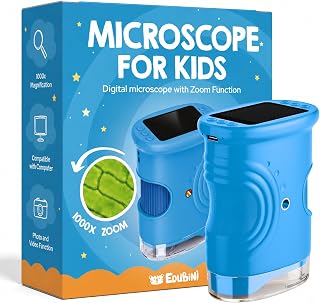
7. Kids Microscope [4K 1000x Zoom with: Best for Outdoor Exploring
Our score: 9.6/10 iOur editorial score (1 to 10), based on listing specs, features and how well each pick fits its use case. It is not an Amazon customer rating.
4K 1000x zoom 2.0 IPS screen Handheld pocket Ages 5 to 10
This handheld pocket digital microscope earns the outdoor exploring award because its title speaks directly to taking science outside. It promises a 4K image, 1000x zoom and a 2.0 inch IPS screen in a handheld form, and it names outdoor exploration and experiments as the use. The age band in the title runs from five to ten, which puts it squarely in the primary school years. It is a fresh angle for families who already own a tabletop scope.
A pocket device works differently from a tabletop scope. Instead of bringing a sample to a stage, a child brings the scope to the sample, so bark, moss, a leaf vein or the grain of a stone can be viewed on the spot. The listing describes it as a handheld pocket digital microscope, so there is no slide stage to learn. That makes it a simple first step for children who are not ready for focus knobs and glass slides.
This pick suits a backyard explorer, a scout group, or a family on a nature walk. It rewards a child who likes to move around and wants quick results. Learning here is about close looking: compare the underside of a leaf with the top, or two kinds of sand, and talk about the differences. Parents who want slide making and lab routines will find a classic kit more suitable, so this one is best seen as a field tool.
Handheld devices travel in pockets and bags, so a protective case or lanyard is worth considering if the listing offers one. Ask an adult to help with charging or batteries, and check the product page for what powers it and what is in the box. Keep it away from water and sand, wipe the lens with a soft cloth, and remind children to stay on safe ground while exploring. Keep the screen out of strong sun for easier viewing.
8. 1000X Handheld Digital Microscope for Kids: Best Pocket Size Pick

Our score: 9.0/10 iOur editorial score (1 to 10), based on listing specs, features and how well each pick fits its use case. It is not an Amazon customer rating.
1000X handheld 2.0 IPS screen Pocket digital Ages 3 to 12
The 1000X Handheld Digital Microscope for Kids earns the pocket size award for being a compact, screen based option with a very broad age label. Its title lists a 2.0 inch IPS screen and describes a pocket microscope, with ages given as 3 to 6 and 6 to 12. That wide spread means one device could be shared across siblings, though parents should judge how each child will handle it. It is worth a close look at the listing for details.
The listing describes a portable educational science kit in handheld digital form. As with other pocket scopes, the child points the device at a sample and looks at the screen, so there are no slides to prepare unless the listing says they are included. That simplicity is useful for a younger child who wants an instant look at a coin, a feather or a leaf, and for a parent who wants a low fuss setup.
This model suits a family looking for a portable science toy, such as a gift to tuck into a travel bag or a classroom center. It supports a simple learning path: look, compare, draw and describe. The age range in the title is generous, but a child of three or four will need constant adult help, and older children may want more control than a pocket device gives. It works best for short, playful sessions.
Check the product page for batteries, charging, any included accessories and exact age grading. Small parts, cords or lenses can be a hazard for under threes, so supervise closely. Keep the device out of water, store it in a drawer or case when not in use, and wipe the screen and lens with a soft cloth. If a child wants to see real slides and a stage, a tabletop kit is the better next step.
9. Kids Microscope Toy, Interactive STEM Toys: Best for Preschoolers

Our score: 9.2/10 iOur editorial score (1 to 10), based on listing specs, features and how well each pick fits its use case. It is not an Amazon customer rating.
Ages 3 to 5 Talking microscope Image slides Preschool science
The Educational Insights GeoSafari Talking Microscope is the only pick here that targets the preschool years directly. The listing describes it as a kids microscope toy and interactive STEM toy for ages 3 to 5, featuring Bindi Irwin, and it includes image slides. That makes it the right answer for parents who want to start a science habit before a child can handle a real glass slide or a metal tabletop scope.
Based on the title, this is a talking toy with image slides rather than a lab instrument. A child can slot in an image and hear information about it, which keeps the focus on listening and looking in a playful way. Buyers should not expect real world samples or high magnification, and the listing does not promise them. It is a bridge into science, closer to a learning toy than to the serious kits elsewhere in this list.
It suits a three, four or five year old who loves animals, picture books and pressing buttons. It teaches early vocabulary, pattern spotting and the idea that small things can be looked at closely. Older children will likely find it too simple, so this is not the choice for an eight year old. For siblings, it can be a good first scope before graduating to a National Geographic or AmScope style kit.
For safety, adult supervision is sensible with any toy that has small parts, slides or batteries, so check the listing for what powers it and how the slides are stored. Teach the child to put slides back in their slot after each turn. Keep the volume comfortable for small ears, wipe the toy gently with a dry cloth, and expect short play sessions rather than long study time. Parents can sit with the child for the first few sessions.
How to Choose the Best Microscope Kits
What makes a microscope kit worth buying
A microscope kit is more than a scope in a box. The best sets pair a stable body with slides, a light source and a few simple tools, so a child can start exploring on the first afternoon. Look for a kit that lists what is included, because vague titles can hide a short parts list. A sturdy base and a smooth focus control often matter more to a young user than any extra feature. Parents should also compare the age label with the pieces listed, so a child is not handed a kit that is too advanced or too simple.
A good kit also leaves room to grow. Prepared slides give an instant result, while blank slides let a child collect and mount their own samples. That mix keeps interest alive after the novelty fades, which is the real measure of any science gift. Take a moment to picture where the kit will be used, because a good fit with the home routine matters as much as the specs.
Matching a microscope kit to age and skill
Under five, a talking viewer with image slides is usually the safer match, since real slides and focus knobs need patience and fine motor control. Between six and nine, a gentle tabletop scope with modest power and a few prepared slides works well, with an adult close by. A mixed age household may want to rank the kits by supervision needed, then choose the one that suits the youngest user who will touch it.
From about ten onward, children can handle blank slides, stain free sample prep and a wider magnification range. Tweens who love photography or tech may prefer a digital model with a screen. Always check the age marking on the listing, and remember that every child’s skill is different. Children who enjoy drawing, collecting or taking things apart usually settle into a microscope hobby more easily than those who prefer fast action.
Tabletop, digital or pocket: which style fits
Tabletop scopes with an eyepiece teach the classic routine of placing a slide, focusing and observing. They tend to suit children who like routines and who will sit at a desk for a while. They also feel closest to a real lab tool. If you are unsure, think about where the child loves to play: at a desk, on a sofa with a screen, or out in the yard.
Digital and pocket models trade the eyepiece for a screen. They are easier for beginners to share, and some save photos, but they offer less of the traditional slide experience. Pocket scopes shine outdoors, while a screen based desktop kit suits shared viewing and photo keeping. Some families end up owning one of each style, with the tabletop scope for lessons and the pocket viewer for trips.
Understanding magnification numbers on listings
Big numbers like 1000X or 1200X look impressive, but a child will rarely use the top setting well. Higher power narrows the field of view, makes focusing harder and needs better light. A beginner usually learns more at the lowest setting, where a sample is easy to find. Ask what the child will actually look at, because most beginner samples are best seen at modest power with a bright, even light.
Treat the magnification range as one detail among many. Lens quality, lighting, a steady stand and good slides matter just as much, and listings seldom explain them in depth. If a kit lists only a number, look at the other features before deciding. A short sentence in the listing about the lens or the focus system can tell you more than a long list of numbers.
Slides, samples and what to look at first
Prepared slides are made for you, so they are the easiest place to start. Blank slides let children make their own samples from a hair, a feather, a pinch of salt, a thin leaf slice or a drop of pond water collected with an adult. Let the child choose the samples, since curiosity about a personal find is a strong motivator for careful looking.
Start with flat, thin items that let light pass through. Keep samples dry unless an adult is helping, and avoid anything that could crumble into a mess on the stage. A small notebook for drawings turns each viewing into a mini lab record. Label every slide with a pencil note or sticker so that discoveries can be revisited, compared and shared later.
Lighting and why it matters
A built in LED light makes a kit usable on a cloudy day or in the evening, and an adjustable or dual light gives more control. Thin samples often look best with light from below, while thicker items need light from above. Position the scope near a window or lamp only if the listing says it supports that, and otherwise rely on the built in light. Many families find a lamp free setup easier, since a built in light avoids cords and keeps the stage free of clutter for little hands.
Never point a bright light at a person’s eyes, and never use a microscope to look at the sun. Check the listing for how the light is powered, since battery needs are often not stated in the title. Encourage children to adjust the brightness slowly and notice how details appear or fade as the light changes. A gentle dimmer or a second light source gives children a chance to see how brightness changes the look of the same sample.
Safety, small parts and adult supervision
Microscope kits often include glass slides, cover slips, tweezers and tiny accessories. These are fine for older children with a grown up nearby, but small parts are a choking hazard for toddlers and glass edges can cut. Choose plastic slides for younger users where the listing offers them. Set a simple house rule that slides and tools go back in the box before anything else is picked up, which prevents lost parts.
Charging and batteries call for care too. Keep chargers and button cells out of reach of little ones, and let an adult handle any power setup. Wash hands after handling pond water, soil or other samples. Talk through the rules before the first session, so the child knows what to ask an adult about and which samples are off limits.
Storage, size and where the kit will live
A tabletop scope needs a steady surface and a spot where the box can be closed afterward. A carrying case or storage box keeps slides, tools and the scope together, which makes cleanup quick and protects the lens from dust. Choose a shelf that is out of reach of toddlers if the kit contains small tools, glass or button cells. Measure the shelf or desk space before buying, and leave room for a notebook and a small cup for pencils beside the kit.
Pocket and handheld models take almost no room and travel well, but small items are easier to lose. A drawer with a labeled tray works for both styles, and children enjoy having their own place to keep the kit. A shallow tray inside the box helps slides stay flat, which prevents scratches and lost samples. Teach the child to pack away in the same order each time, so that every tool has a home and nothing rolls under the sofa.
Value logic for budget minded families
Because prices move, think about value rather than price tags. A larger kit with many accessories may be useful for a child who loves sorting tools, while a smaller set suits a child who just wants to look at a few things. Match what is in the box to how the child will play. Think about what the child will actually use over a year, not just on the first weekend, and favor the set that fits real habits.
Sharing across siblings also stretches value. A broad age label may let two children use one kit in turn, though the younger child will need more help. Check the listing before you buy to avoid paying for extras that will not be used. Check what each listing includes so that you can compare like with like, rather than judging only by the piece count.
Care, cleaning and longevity
Lenses need gentle handling. Use a soft, dry cloth, avoid pressing on the glass, and keep the dust cover or box closed when the kit is not in use. Wipe slides after each session and let them dry before they go back into their tray. Store the kit away from damp rooms and direct sun, because moisture and heat can harm lenses and slide coatings.
Teach children to lower the stage or raise the head before changing slides, which protects both the slide and the lens. With sensible care, a tabletop scope can last through several years of projects and be passed on to a younger sibling. Cleaning is also a good moment to count slides and tools, so that nothing small goes missing between projects.
A simple learning path from first look to project
Begin with prepared slides at low power, then move to a household sample such as salt or a feather. Ask the child to draw what they see and describe it in a sentence. This simple routine trains close observation more than any lecture. Keep a project notebook where each entry has a date, a sketch and one sentence about what surprised the child. Keep sessions short at first, around fifteen minutes, and stop while the child is still curious rather than tired.
Next, try a small question: does table salt look different from sugar, or does a leaf look different top and bottom? A short project like this gives a goal and a natural way to share findings with the family. As skills grow, the child can move from copying prepared slides to designing a small comparison of their own. Celebrate each finding by pinning a drawing to the fridge, which shows the child that careful looking is valued at home.
Gift tips and common mistakes to avoid
Common mistakes include buying for the highest magnification, skipping the age label, and forgetting batteries or charging. Others include choosing a tiny pocket scope for a child who wants slides, or a complex kit for a preschooler. Reading the listing closely avoids most of these. Writing the child’s name in the front of the box and agreeing on a storage spot can make the gift feel personal.
When giving a microscope as a gift, add a notebook, a few simple samples and a promise to explore together on the first day. A gift receipt is also wise, and ordering early leaves time to check delivery windows on the listing. If the recipient is older, include a magnifying glass or a notebook so that the kit feels part of a bigger science set.
Frequently Asked Questions
What are the best microscope kits for beginners?
The best microscope kits for beginners include prepared slides, blank slides, an easy light source and a clear age label. Tabletop sets like the National Geographic and AmScope kits are good starts, while a screen model suits gadget loving children.
What age is right for a microscope kit?
Listings range from ages 3 to 5 for talking toys to ages 8 to 12 for tabletop kits. Pick by the child’s patience and fine motor skill, check the age label on the listing, and plan to supervise younger users.
Is a digital microscope better than a regular one?
Neither is better for everyone. A digital model has a screen and can save photos, which many children enjoy, while a tabletop scope with an eyepiece teaches the classic slide routine. Choose by how your child likes to explore.
Does higher magnification mean a better microscope?
Not necessarily. A high number can be hard for beginners to use because focusing becomes tricky and light needs rise. Lens quality, lighting and a steady stand matter too, so look at the whole kit rather than one number.
What can kids look at under a microscope?
Good first samples are thin and flat: a hair, a feather, salt, sugar, a leaf slice or sand. Prepared slides add classic subjects. An adult should help with pond water, soil or any unfamiliar sample.
Are microscope kits safe for young children?
They can be with supervision. Glass slides, tweezers and tiny accessories need an adult nearby, and small parts are a hazard for toddlers. Never look at the sun through any lens, and check the age marking on the listing.
Do these kits need batteries or charging?
It depends on the model. Some tabletop kits use batteries or a power source for the LED, and the digital models may be rechargeable. The title does not always say, so confirm the power details on the product page.
How do I clean a microscope lens?
Use a soft, dry cloth and wipe gently without pressing hard. Keep the dust cover or box closed after use, and avoid liquids unless the listing says otherwise. An adult should handle any cleaning beyond a simple wipe.
Can two siblings share one microscope kit?
Yes, if their ages are close enough. A kit with a broad age label can work for both, but the younger child will need more help. Set simple rules for taking turns and putting slides back in the tray.
Is a microscope a good gift for a child?
It can be a thoughtful gift for a child who is curious about nature or science. Pair it with a notebook and a few samples, check the age label, and ensure an adult can help with the first session.
The Bottom Line
The best microscope kits are the ones a child will actually use again and again. For most families the National Geographic Dual LED Microscope Science Kit is a strong all round choice, with a clear age range and a good mix of prepared and blank slides.
If your child is younger, wants a screen, or likes to explore outdoors, the digital and pocket picks above offer a different path into the hobby. Check each live listing for the latest details before you buy, and plan a first session together.
Updated for the 2027 buying season. Amazon listings and availability change often, so check the product page for current details.

Write Your Review
No reviews yet. Be the first to share your experience!