

As an Amazon Associate we earn from qualifying purchases. If you buy through links on this page we may receive a commission at no extra cost to you. Product details come from Amazon listings and can change.
Finding the best gear sets means sorting through a crowded aisle of colorful wheels, axles, and baseplates that all look similar at first glance. This guide narrows the field to nine interlocking gear building toys, mostly from the Learning Resources line plus one tote kit, and explains what separates a set that gets played with for years from one that gets built once and forgotten.
It is written for parents, grandparents, teachers, and gift buyers shopping for children roughly 3 to 8 years old, with a few picks that suit a curious older child too. Each entry covers what the title says is in the box, how the set is meant to be played, what a child can practice, and where a buyer should be careful. Several sets include small parts, so adult supervision matters, especially with a younger sibling nearby.
Prices change often, so this guide does not quote any. Every pick links to its live listing, where you can confirm the current price, piece count, age marking, and whether batteries are needed before you order.
Key Takeaways
Best Gear Sets at a Glance
| Product | Our score | |
|---|---|---|
| Learning Resources Gears! Gears! Gears! Super Best Overall |
9.6 / 10 | Check Price |
| Construction Toy, STEM Activities, Fine Motor Best for Beginners |
9.0 / 10 | Check Price |
| STEM Toys for 5 Year Old Best Motorized Pick |
9.0 / 10 | Check Price |
| Kids Construction Toys, STEM Toys for Best Robot Theme |
9.4 / 10 | Check Price |
| Interlocking Gears Toys for Kids Best for Classrooms |
9.2 / 10 | Check Price |
| STEM Building Toys for Kids Ages Best for Themed Builds |
9.4 / 10 | Check Price |
| Building Toys for Kids Ages 4-8 Best Starter Collection |
9.4 / 10 | Check Price |
| Learning Resources Gears! Gears! Gears! Machines Best for Younger Builders |
9.4 / 10 | Check Price |
| 100-Piece Set, Engineering Toys, Interlocking Ge Best Deluxe Build |
9.4 / 10 | Check Price |
How We Chose the Best Gear Sets
This is a research based guide, not a lab comparison. We read each product title and listing description, compared the piece counts, age markings, and features the listings state, and weighed how well each set fits a different type of young builder. Safety points such as small parts, battery compartments, and supervision come from general toy safety knowledge, and buyers should always confirm the age grade shown on the live listing.
To keep the list balanced, we included starter sets, large building sets, a motorized option, a robot themed kit, and a storage friendly classroom kit. Each pick has an editorial score out of 10 that comes from its features, specs, and how well its use case fits the audience. The score is our own, built from listing details and general knowledge of gear toys, and it is shown separately on the page.
In-Depth Reviews
1. Learning Resources Gears! Gears! Gears! Super: Best Overall

Our score: 9.6/10 iOur editorial score (1 to 10), based on listing specs, features and how well each pick fits its use case. It is not an Amazon customer rating.
150 pieces Ages 3+ Blue STEM construction
The Learning Resources Gears! Gears! Gears! Super Building Toy Set takes the top spot because it combines the biggest piece count on this list with a low age marking. The title lists 150 pieces and an age 3 and up recommendation, which means a child can start early and keep building as skills grow. Few sets in this style give so much room to experiment, and that room is the main reason it leads the guide. Its blue color scheme is named in the title, which is a small detail that helps buyers picture the finished set on a shelf.
According to the listing title, the set is a blue gear building toy sold under the STEM and construction categories. Interlocking gears are the heart of play: a child places wheels on a board, meshes their teeth, and turns one to see the others move. More pieces mean longer chains, bigger layouts, and more chances to discover how direction changes from one gear to the next. Long chains also show how friction and spacing affect motion, a quiet physics lesson that a child can discover without any reading.
This set suits children who like open ended building and parents who want one box to last through several stages of play. Young builders practice matching, sequencing, and cause and effect, while older ones can design long chain reactions. Sharing between siblings works well because the large pile of parts lets two children build side by side without fighting over a single wheel. A parent can set a simple challenge, such as making the last gear in a line spin the opposite way, to keep the play purposeful.
As with any set of this size, small parts need adult supervision and a tidy storage plan so pieces do not wander into a vacuum or a toddler hand. A shallow tray or bin keeps the build area organized. Check the listing for the exact age grade and contents, since the title is a summary rather than a full parts list. Because titles are only summaries, comparing the live listing photos with the stated count is a smart habit before any purchase.
2. Construction Toy, STEM Activities, Fine Motor: Best for Beginners
Our score: 9.0/10 iOur editorial score (1 to 10), based on listing specs, features and how well each pick fits its use case. It is not an Amazon customer rating.
83 pieces Ages 3+ Fine motor skills Gizmos set
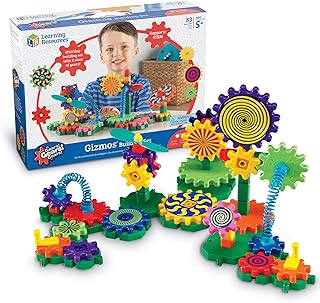
The Learning Resources Gears Gizmos Building Set earns its place as the friendliest entry point on the list. Its title states 83 pieces and an age 3 and up marking, so it is smaller than the Super set but still offers plenty of parts for a first gear project. A modest piece count can feel less overwhelming to a child who has never built anything with gears. That focus makes it a reasonable pick for a first birthday gift at age three or four.
The listing names construction play, STEM activities, and fine motor skills as its focus. In practice, a child fits pieces together, lines up gear teeth, and watches motion travel from one part to another. The Gizmos name suggests small contraptions rather than flat wheel layouts, though buyers should read the listing to see what the included pieces can form. Short sessions of ten or fifteen minutes usually fit a young child’s attention better than a long build marathon.
This set suits preschoolers and early elementary kids who are just learning to follow a simple idea from start to finish. Pressing parts together and twisting pieces into place give small hands a steady workout, which is why the listing highlights fine motor development. It also works as a patient first step before moving up to a larger collection. Praise the process, such as lining up the teeth, rather than the finished shape, so the child keeps experimenting.
Parents should supervise because gear toys have small pieces, and a child under 3 should not play with them. Keep the parts in one container so counting them after play is easy. If your family already owns a bigger gear kit, check the listing to see whether the pieces are meant to combine across sets. Families who later upgrade can keep this set as a travel kit for car rides, grandparent visits, or waiting rooms.
3. STEM Toys for 5 Year Old: Best Motorized Pick
Our score: 9.0/10 iOur editorial score (1 to 10), based on listing specs, features and how well each pick fits its use case. It is not an Amazon customer rating.
Motorized Lights Action play Ages 5 and up style
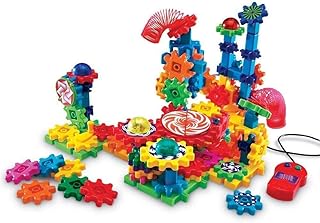
The Learning Resources Gears Lights and Action Motorized Building Set stands apart as the only powered option here. Its title calls it a motorized building kit and mentions electric operation, so the gears can spin without a child cranking each one by hand. That single feature makes it the best match for kids who want to see a finished build move on its own. The lights named in the title add a visual reward that many children find motivating.
Per the title, the set is a construction toy with engineering gears and lights. Because it uses a motor, buyers should check the listing for what type of batteries it needs, whether they come in the box, and how the battery compartment closes. Batteries and compartments are the main extra safety point here, and adults should handle battery changes. That makes the build a small lesson in energy transfer as well as gear meshing.
The title speaks to a 5 year old audience, which fits a child who has already tried manual gear play and is ready for the next idea. Kids learn that a power source drives a chain of gears, and that changing the layout changes the result. It is a nice bridge between simple mechanics and basic electric circuits without getting complicated. Parents curious about electronics can use it to talk about switches, power, and why a motor needs a clear path.
One practical tip is to build the layout first and add power last, so a stuck gear can be fixed without fighting a spinning motor. Keep fingers and hair clear of turning parts. Younger siblings should stay away because of the small pieces and battery parts, and the listing is the right place to confirm age grade. Pick a spot with a hard flat surface, because carpet fibers can catch on moving parts and slow the motor.
4. Kids Construction Toys, STEM Toys for: Best Robot Theme

Our score: 9.4/10 iOur editorial score (1 to 10), based on listing specs, features and how well each pick fits its use case. It is not an Amazon customer rating.
Robot building kit Gears Robots in Motion Aimed at 5 year olds Engineering set
Learning Resources Gears Robots in Motion brings a character angle to gear play, which makes it a strong pick for kids who care more about robots than wheels. The title calls it a robot building kit and an engineering building set, and it mentions a 5 year old audience. For a child who loves machines with faces and arms, that theme can turn a plain gear lesson into a story. Robot themes are a long running favorite, so this one often feels like a toy first and a lesson second.
The listing frames the product as a construction and STEM toy where gears help robot parts move. Exactly which robots can be made, how many pieces are included, and whether a motor is involved are details the buyer should check on the product page, because the title does not spell them out. Reading the contents first avoids any surprise at unboxing. A short wait before opening the pieces lets a parent preview the contents and plan the first build together.
This set suits imaginative builders who like to name their creations and invent small scenes around them. It encourages planning, since a child must picture a robot before assembling it, and it rewards trial and error when a limb does not turn as expected. It also fits a gift for a child who already owns a basic gear set and wants something different. Posing the finished robot for a photo is a nice way to celebrate effort and capture the design for later.
Adults should supervise small parts, and a child under 3 should not use it. Build one robot at a time and store each finished model separately if the child wants to keep it. Ask the child to explain how a turning gear moves a robot arm; talking through the mechanism makes the lesson stick. It also pairs nicely with a simple story prompt, such as what job the robot does around the house.
5. Interlocking Gears Toys for Kids: Best for Classrooms

Our score: 9.2/10 iOur editorial score (1 to 10), based on listing specs, features and how well each pick fits its use case. It is not an Amazon customer rating.
100 pieces Includes tote Sensory bin use Preschool manipulatives
The 100 piece interlocking gears kit with a tote is the most storage minded set on the list. Its title advertises a tote, colorful manipulatives, and use in preschool sensory bins, which makes it a natural choice for teachers, daycare providers, and home learning corners. Keeping everything in a carrying bin is a real advantage when thirty small hands are involved. Many adults overlook this feature until they try to clear a table in a hurry and appreciate a lid.
The title lists 100 pieces and describes the kit as STEM building toys for girls and boys. It also mentions occupational therapy tools, which tells us therapists may use it for fine motor practice. That is a description of how the product is marketed, not a medical claim, and families with therapy questions should ask their own provider about suitable materials. Parents who want a quiet activity for a rainy afternoon may like that the same pieces serve for sorting and for building.
This set suits group settings where gears are sorted by color, counted, and snapped together at a shared table. Preschoolers can sort and pattern, while older children can build longer chains. Because it is described as a sensory bin material, it also works for scooping and exploring, with an adult watching to make sure pieces stay out of mouths. Matching colors, counting by twos, and building a rainbow chain are easy games that need no printed instructions.
A tote helps, but a count at the end of each session still keeps parts from disappearing. Check the listing for the age marking and any small parts warning before giving it to a child under 3. Wipe the gears with a damp cloth if they get sticky, and let them dry before sealing the tote. If several children share the kit, give each a tray so the pieces stay divided and the game stays fair.
6. STEM Building Toys for Kids Ages: Best for Themed Builds

Our score: 9.4/10 iOur editorial score (1 to 10), based on listing specs, features and how well each pick fits its use case. It is not an Amazon customer rating.
Gears RoverGears Ages 4 to 8 Construction set Engineering focus
Learning Resources Gears RoverGears is the pick for children who think of gears as wheels and engines. The title places it in the building toys for ages 4 to 8 range and calls it an engineering building set with a rover style name. That suggests vehicle flavored projects, so a child who loves cars and trucks may stay interested longer than with a plain gear board. That makes it easy to see why the set is popular as a gift for children who already adore wheeled toys.
The listing describes a construction toy set that uses gears as the core part. Because the title does not spell out the number of pieces or whether a motor is included, buyers should look at the product page for the full contents. Doing that also reveals what kinds of vehicles can be built and whether the pieces connect with other gear sets. Rover style names usually signal a ground vehicle, but the exact model depends on what the box includes.
This set fits elementary age kids who enjoy building something they can push, turn, and show off. It encourages basic engineering thinking: how does turning one part make another part move, and what changes when a gear is bigger or smaller. A child who finishes the first model can try modifying it, which is a gentle introduction to design iteration. Ask the child to design a bigger rover than the instructions show, then count how many extra gears it needs.
Supervise small parts and keep the set away from children under 3. Build on a flat surface so wheels do not roll off a table. When the child is done, take the model apart into groups of similar parts so the next session starts with a clear pile. Check the listing for age grade and contents. A small ramp made from a book can turn the finished model into a little experiment about slopes and speed.
7. Building Toys for Kids Ages 4-8: Best Starter Collection

Our score: 9.4/10 iOur editorial score (1 to 10), based on listing specs, features and how well each pick fits its use case. It is not an Amazon customer rating.
Starter building set Ages 4 to 8 Kids gears toy Engineering STEM
The Learning Resources Gears Starter Building Set is aptly named, and it earns the starter label for families who want an entry set without going all in. The title pairs it with building toys for ages 4 to 8 and calls it an engineering STEM set. It is a simple, focused way to introduce gear play before deciding whether to invest in a bigger collection. It can also serve as a trial run before a household commits to a larger and more varied kit.
The title lists construction gear toys and a starter set format, though it does not give a piece count. A buyer should open the listing to see how many gears, axles, and bases come in the box. Starter sets generally offer enough parts for a few small builds, which is often all a child needs to find out whether gears are exciting. Children who like puzzles often enjoy that satisfying click as one gear drops into place.
This set suits early elementary kids and curious younger ones with a helpful adult nearby. It builds spatial reasoning, since each gear must line up with its neighbor, and it teaches patience when a chain jams. As a gift, it works well for a birthday or a holiday when you want a thoughtful STEM present that does not take over a playroom. Pair the set with a notebook so the child can sketch each design and note which layout moved best.
Because it is a starter product, plan on possible upgrades later and check whether pieces are compatible across the line. Keep small parts away from a child under 3 and from pets. A zip bag or small box is enough storage for a set this size, and labeling it makes cleanup quicker. If gifting, tuck a small note inside that explains the set and suggests a first project for new builders.
8. Learning Resources Gears! Gears! Gears! Machines: Best for Younger Builders

Our score: 9.4/10 iOur editorial score (1 to 10), based on listing specs, features and how well each pick fits its use case. It is not an Amazon customer rating.
Machines in Motion Toddler STEM wording Critical thinking Fine motor skills
Learning Resources Gears! Gears! Gears! Machines in Motion is the set to look at for the youngest builders in the guide. The title uses toddler STEM wording, along with critical thinking and fine motor skills. That wording hints at a gentler learning curve, though parents should still confirm the age marking on the listing, because toddler language in a title does not replace the age grade. Wording like this often appears on listings aimed at the youngest end of the building toy market.
The title calls it a construction and engineering set that builds machines in motion. Machine themed play means a child can imagine pulleys, wheels, and moving parts rather than only flat gear layouts. The exact piece count and the types of machines are not stated in the title, so read the product page to see what the box actually holds. Pulleys and cranks are common in machine toys, though the listing should be read to see what this box includes.
This set suits children who are just learning that parts can fit together to make something move. Fine motor skill work comes from pressing, twisting, and aligning, and critical thinking comes from solving why a gear is stuck. A parent can sit beside the child and ask what will happen if one gear turns the other way. Short, repeated attempts matter more than a perfect result, so let the child redo a build without correction.
Toddlers and mouthing habits do not mix well with small pieces, so close adult supervision is a must and a child under 3 should only play if the listing says the age grade allows it. Build at a table instead of the floor, count pieces at cleanup, and keep a closed bin nearby for storage. Moving the child to a larger set only after a few weeks of steady play avoids frustration.
9. 100-Piece Set, Engineering Toys, Interlocking Ge: Best Deluxe Build

Our score: 9.4/10 iOur editorial score (1 to 10), based on listing specs, features and how well each pick fits its use case. It is not an Amazon customer rating.
100 pieces Ages 4+ Deluxe building set Interlocking gears
The 100 piece Learning Resources Gears Deluxe Building Set rounds out the list as a mid sized, well rounded option. Its title lists 100 pieces, interlocking gears, and an age 4 and up marking. The title also uses the word Official, which we treat only as listing wording, not as an endorsement claim. It sits between the Gizmos set and the Super set in size. It offers a good middle path for parents who find the smallest sets too limited and the largest sets too bulky.
According to the listing, this is an engineering toy and construction activity set that supports fine motor skills and STEM learning. Interlocking gears let a child create linked motion, and the deluxe label suggests extra pieces beyond a basic kit. Buyers should check the listing for a full parts list and any included activity ideas or idea cards. A deluxe label can mean extra gears, bases, or accessories, so skim the description for the full list.
This set suits children aged 4 and up who have outgrown a small starter and want longer gear trains. It lets them practice planning a layout, then adjusting it when the motion stops. It also pairs well with a classroom or home table setup, where a child can build alongside a friend and compare how different arrangements behave. Teachers can use it for a station activity where pairs of children build one chain and then swap partners.
Keep a count of pieces after play because a 100 piece set has plenty of tiny parts to lose. Adult supervision is advised for young children, and a child under 3 should not use it. A shallow storage box with a lid makes cleanup quick. Confirm age grade and contents on the product page before buying. Printing the box contents or saving a screenshot of the listing helps later if a part goes missing.
How to Choose the Best Gear Sets
What Makes a Gear Set Worth Buying
A good gear set does more than pile up colorful wheels. It lets a child connect teeth, see one turn become another, and change a layout to get a new result. Look for sets where parts mesh smoothly, bases hold gears at the right distance, and the pieces invite experiments instead of locking a child into one model. Sets with sturdy bases and clear spacing help children succeed on the first try, which builds confidence.
Titles that mention fine motor skills, engineering, or critical thinking describe the play value, but they do not guarantee it. The most reliable clues are the piece count, the age marking, and a clear parts list on the listing. When a title is thin on details, trust the product page and compare a few options before buying. Remember that a long title packed with keywords is not a substitute for a clear contents list.
Age and Skill Fit for Gear Toys
Age markings in these titles range from 3 and up to 5 and up, and the right one depends on the child, not just a number. A three year old may enjoy pressing gears onto a base with help, while a six year old may want long chains and motors. Match the set to the child’s current skill, not the one you hope for. Watching how a child handles a small puzzle or a stacking toy gives a hint about readiness for gears.
Fine motor strength matters, because small gears need a pinching grip. If a child gets frustrated quickly, start with a smaller set and an adult who builds beside them. Moving up later is easy, and a calm first experience tends to keep a child interested far longer than a box that is too big. Offering help only when asked keeps the activity in the child’s hands and the learning more lasting.
Piece Count and Build Space
Piece count shapes what a child can build. Sets around 83 to 100 pieces suit first projects and tabletop play, while the 150 piece set gives room for longer chains and bolder layouts. More parts are not always better for a beginner, because a huge pile can feel messy, so think about the size of the table and the attention span. A big floor mat or a rimmed tray defines the workspace and reduces stray pieces.
Titles that do not list piece counts, such as some starter and themed sets, require a quick check of the listing. Look at the parts diagram or description to see how many gears, axles, and bases are included. That detail also tells you how many models a child can build before running out of ideas. Remember that a larger count also means more cleanup time, so plan for a few extra minutes at the end.
Motorized Versus Hand Cranked Gear Sets
A hand cranked set teaches the direct link between pushing a part and seeing motion, which is the core idea of gears. A motorized set adds a power source and lets finished builds run on their own. Both have value, but a child who has never played with gears may learn more by cranking first. Some families own both types, using the hand cranked set for learning and the motorized one for show and tell.
If you choose a motorized set, read the listing for battery type, whether batteries are included, and how the compartment is secured. Adults should install and replace batteries, and spent batteries should be kept away from small children. A motor can also jam if a layout is too tight, so teach the child to stop and adjust. Ask the child to predict what the motor will do before switching it on, which turns a toy into a mini experiment.
Materials, Safety Labels, and Small Parts
Gear toys are made from small plastic parts, and the main risk is choking in young children. Check the age marking on the listing, follow it, and keep sets away from any child under 3. Toy safety labels such as ASTM F963 in the United States or EN71 in Europe may appear on product pages, and buyers should look for them rather than assume them. Parents of mixed age households should store gear sets high on a shelf or in a closed cabinet, not on the floor.
Because titles here do not state material or certification details, read the listing for any compliance statement. Supervise play with small pieces, discard cracked gears, and keep the set away from pets. Wash dirty parts with mild soap and water, and dry them well before they return to storage. A quick look over each gear before play also helps catch rough edges or loose fits early.
Storage and Organization Ideas
A gear set lives or dies by its storage. A tote, like the one in the 100 piece kit, makes cleanup simple, but any lidded box will do. Sorting pieces into a muffin tin or egg carton during play keeps the table tidy and makes it obvious when something is missing. Even small children can learn to sort by color or size as part of cleanup, which turns tidying into practice.
Label the container with the set name so pieces from different kits do not get mixed. If a child builds a model they love, take a photo before dismantling it and keep the photo in the lid. That way the child can rebuild it later, and the stored parts stay in order. A flat under bed bin works well for sets with a base plate that does not fit in a standard tote.
Value Logic When Comparing Sets
Value is about how long a set stays interesting, not just what is in the box. A larger collection can cost more at first but may last across several years and children, while a starter set is a low risk way to learn whether a child likes gears. Think about siblings, classroom use, and gift plans. Resale and hand me down value also counts, since sturdy plastic gears can pass to a younger sibling or cousin.
Prices change often, so compare live listings and look at piece count, age marking, and included extras like a tote or lights. A motorized set may offer a different kind of play but also adds battery needs. A well chosen mid sized set can be the sweet spot for many families. Classrooms and daycare rooms often find the most value in kits that include a carrying tote and bright sorting colors.
Care and Longevity
Plastic gear parts are fairly durable when handled gently. Teach children to press and twist rather than force pieces, and to stop when something resists. Check gears now and then for cracks, bent axles, or worn teeth, and remove any broken parts so they do not become a hazard or jam a build. Storing sets in a dry place prevents dust from collecting in the teeth and making gears feel gritty.
Clean parts with a damp cloth or a quick wash in mild soapy water, then dry them completely. Do not soak or submerge any piece that is connected to a motor or battery holder. Keep sets out of direct sun and away from heat so the plastic keeps its shape and color. Small spare parts should be kept in a labeled bag so they can replace a missing piece in the future.
A Learning Path from First Gears to Bigger Builds
A sensible path starts with a small set and simple chains. The child learns that turning one gear turns the next one in the opposite direction. Then they move to bigger layouts, compare gear sizes, and try changing the arrangement to make a part move faster or slower. Along the way, simple prompts such as which way will this gear turn keep the child thinking and talking.
After that, a theme set such as a robot or rover kit invites storytelling and design. A motorized set adds power and a new challenge. By this stage the child can explain how their model works, which is a good sign that the concepts have taken hold and that bigger projects are within reach. Over weeks, you can watch a child move from copying pictures to inventing designs of their own.
Common Mistakes to Avoid
The most common mistake is buying for the age printed on the box without thinking about the child’s patience and grip. Another is choosing a huge set for a child who just wants a small project. Skipping the listing contents is a third, because titles are summaries and may omit key details. Another trap is doing the building for the child, which removes the problem solving that makes gear play useful.
Parents also forget to plan storage, which leads to lost pieces and frustrated builders. Leaving small parts where younger siblings can reach them is a safety problem. Finally, rushing to motorized sets before a child understands manual gears can skip a valuable step in learning how motion transfers. Skipping a battery check on motorized sets can lead to a disappointing first day, so look at the listing ahead of time.
Gift Tips for Gear Sets
Gear sets make good gifts because they suit a wide range of ages and interests. Pick a set that matches the child’s current skills, and include a gift receipt in case the age fit is off. If batteries are needed, check the listing and add them to the wrapped package so play can start at once. A handwritten note suggesting a first challenge adds a personal touch and gets play started right away.
For a group of siblings, a larger kit lets everyone build together. For a classroom or a birthday party favor, a smaller set may be more practical. Order early to allow for delivery windows, and always confirm the age marking so the present suits the child who will open it. Wrapping the set with a small tray or a lidded box makes it feel like a complete present rather than a bare kit.
Supervision and Play Space Setup
Set up a flat, clear table or a play mat where gears will not roll away. Sit with younger children for the first sessions and show them how to snap parts together. Keep a small bowl nearby for loose pieces so they are not left on the floor where a baby or a pet could find them. Good lighting also matters, since small teeth are hard to line up in a dim room.
Teach children that gears are for building, not for mouths, and that a jammed motor should be turned off before fingers go near it. A short routine of building, playing, and counting parts at cleanup keeps the experience positive and helps the set last. Adults should take a moment at the end of every session to scan the floor and table for strays and check that nothing small is left behind.
Frequently Asked Questions
What are the best gear sets for a 3 year old?
The Gears! Gears! Gears! Super set and the Gears Gizmos set both carry an age 3 and up marking in their titles. Always supervise small parts, confirm the age grade on the listing, and start with a simpler layout.
Are gear sets good for learning STEM?
Gear sets introduce basic mechanics such as motion transfer and direction changes. They also support fine motor practice. They are a fun starting point, but no toy guarantees specific learning outcomes, so pair play with conversation about how the pieces work.
Do any of these sets need batteries?
The Gears Lights and Action set is described as motorized, so it likely needs batteries. Check the listing for the battery type, whether they are included, and who should install them. The other sets in this guide are described as building sets without a motor in their titles.
How many pieces should a beginner gear set have?
A smaller set around 80 to 100 pieces is usually plenty for a first project and feels less overwhelming. A set of 150 pieces gives more room but may suit a child who already enjoys building and has patience.
Is the tote kit suitable for classrooms?
Its title mentions a tote and preschool sensory bin use, so it fits group settings well. Teachers should count pieces at cleanup and supervise young children, because small parts can be a hazard.
Can older kids enjoy gear sets?
Yes. Kids around 6 to 8 can build long chains, robots, and vehicle style models, and a motorized set adds a new challenge. Very advanced builders may prefer a hobby robotics kit, but gears remain a good foundation.
How do I keep gear pieces from getting lost?
Use a lidded tote or box, sort parts into a muffin tin during play, and count at cleanup. Label the container and keep it out of reach of younger siblings to prevent missing pieces.
What safety labels should I look for?
Look on the listing for compliance wording such as ASTM F963 or EN71 and follow the age marking. The titles here do not state certifications, so do not assume them and confirm on the product page.
Are these sets right for a child with sensory needs?
One kit is marketed for sensory bins and occupational therapy tools, but that is a product description, not a medical claim. Families with specific needs should ask their own therapist or doctor which materials suit the child.
How should I clean gear toys?
Wash plastic gears in mild soapy water or wipe them with a damp cloth, then dry thoroughly. Do not soak anything attached to a motor or battery holder, and discard parts that crack.
The Bottom Line
The best gear sets give a child room to experiment, patience to fail, and a reason to try again. For most families, the Learning Resources Gears! Gears! Gears! Super Building Set is the best all round choice, with its 150 pieces and age 3 and up marking.
If your child wants motion, choose the Lights and Action motorized set. If you need a calm first step, the Gears Gizmos set is a gentle beginning. Check each live listing for current price, contents, and age grade before you order.
Updated for the 2027 buying season. Amazon listings and availability change often, so check the product page for current details.
Write Your Review
No reviews yet. Be the first to share your experience!