

As an Amazon Associate we earn from qualifying purchases. If you buy through links on this page we may receive a commission at no extra cost to you. Product details come from Amazon listings and can change.
Three is the age when stacking turns into building. A child who spent last year knocking towers over now wants a garage for the cars, a bridge for the dinosaurs, or a rocket that looks like the one in a picture book. This guide to the best building toys for 3 year olds helps parents, grandparents and gift buyers pick a set that fits small hands and short attention spans without frustration.
We compare eight options from the listings: classic wooden blocks, pattern blocks, magnetic tiles in two styles, a gear set, a log tin, a broad age STEM kit and a rocket assembly toy. For each one you will find what the listing says, who it suits, and where it asks for more skill or supervision than a typical three year old has. A few picks are honest stretches, and we say so.
Prices change often, so we do not quote them here. Each product links to its live listing where you can check the current cost, size, age label and what is in the box before you buy. Please read the age warnings on any set before handing it over, because small parts and magnets need an adult nearby.
Key Takeaways
Best Building Toys For 3 Year Olds at a Glance
| Product | Our score | |
|---|---|---|
| Melissa and Doug 100 Wooden Building Best Overall |
9.6 / 10 | Check Price |
| Magnetic Building Blocks for Toddlers STEM Best Magnetic Starter |
8.8 / 10 | Check Price |
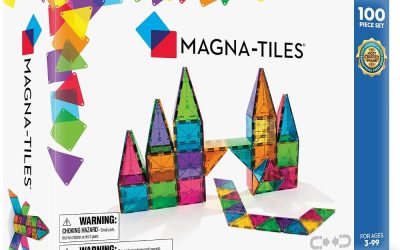
| Magnetic Tiles Road Set, Magnetic Building Best for Pretend Play |
9.2 / 10 | Check Price |
| Melissa and Doug Pattern Blocks and Best for Early Patterns |
9.4 / 10 | Check Price |
| Lincoln Logs 100th Anniversary Tin Best Classic Style |
9.4 / 10 | Check Price |
| Kids STEM Building Toys for 3 Best for Growing Room |
9.2 / 10 | Check Price |
| Learning Resources Gears Deluxe Building Set Best Gear Set for Older Threes |
9.4 / 10 | Check Price |
| iPlay, iLearn Rocket Space Toy 3 Best Themed Assembly Project |
9.6 / 10 | Check Price |
How We Chose the Best Building Toys For 3 Year Olds
This is a research based guide, not a lab comparison. We read each listing carefully, looked at the title, the stated materials, piece counts where given, the format of play and the age wording, and compared those details against what a three year old can usually do: grip, stack, push, press and pretend. We also kept in mind general safety labels that toy makers commonly use, such as ASTM F963 in the United States and EN71 in Europe, without claiming that any listed product carries them unless the listing says so.
We balanced the list so that parents have real choices: open ended wooden play, snap together magnets, a themed set, a pattern set and a few picks that stretch toward older skills. Each pick has an editorial score out of 10 shown on the page, based on features, specs and how well it fits the use case of a three year old. Where a set looked like a better match for four or five year olds, we say that plainly.
In-Depth Reviews
1. Melissa and Doug 100 Wooden Building: Best Overall

Our score: 9.6/10 iOur editorial score (1 to 10), based on listing specs, features and how well each pick fits its use case. It is not an Amazon customer rating.
100 wooden blocks Storage box included Open ended play Stack, build, imagine
The Melissa and Doug 100 Wooden Building Blocks set earns the top spot because it matches how three year olds really play. At this age, building is mostly stacking, knocking down and stacking again, and a large set of plain wooden shapes supports that loop without any instructions. The listing describes the set as a way to build, stack and imagine, and it includes a storage box, which matters more than it sounds when a toddler can empty a hundred pieces onto the floor in seconds.
The title tells us the set holds 100 wooden blocks. Sets of this kind usually mix cubes, rectangles, triangles and cylinders, though the listing does not spell out the exact shapes, so check the product page for the full list. Because the pieces are solid and have no moving parts, there is nothing to snap, twist or learn. A child places one block on another, sees the result at once, and adjusts. That quick feedback is the engine of early building play.
This set suits a first building toy and also a child who has already moved past towers of four or five. It supports balance, size comparison, counting and early planning, and it grows with the child into bridges, garages and zoo fences. Parents who want one open ended toy rather than a themed kit will find it stays useful for years. Siblings can share it too, since many hands can work on one big structure. Counting aloud as you add each block makes a lovely number game.
A few practical notes. A hundred blocks need floor space, so build on a rug to soften the crash when towers fall. Wooden blocks are heavier than foam ones, so teach a young builder to knock towers over gently and away from faces and pets. The data here does not state the finish or wood type, so check the listing for age labeling and care notes. Use the box for cleanup games, which turns tidying into a sorting task. Small details like these make a big difference to how often the set comes out.
2. Magnetic Building Blocks for Toddlers STEM: Best Magnetic Starter

Our score: 8.8/10 iOur editorial score (1 to 10), based on listing specs, features and how well each pick fits its use case. It is not an Amazon customer rating.
ABS material Magnetic blocks Made for toddlers STEM focus
Magnetic Building Blocks for Toddlers is the easiest snap together option on the list. The listing names ABS material and magnetic blocks aimed at toddlers, which points to hard plastic pieces that click together by magnet instead of by pressing studs. For a three year old with limited finger strength, that is a big advantage: the pieces pull toward each other and the build holds without any force from the child. It is a calm, low frustration way to begin construction play.
Magnetic sets work by letting each shape attach on its edges, so flat pieces can become cubes, houses and towers. The listing does not give a piece count or shape list, so look at the product page before you buy to see how many pieces you get and whether there are squares, triangles or both. A bigger count makes shared play easier, while a small count is enough for one child sitting on a rug with a few simple builds.
The set suits a child who gets frustrated when wooden towers fall or when interlocking bricks will not come apart. It introduces a simple science idea, that magnets attract and repel, while also teaching shapes, edges and early spatial thinking. Children who love the click of a good connection often return to this kind of toy for building flat designs on a floor or table, then lifting them up into three dimensional forms.
Safety deserves a clear mention. Magnetic toys should only be used by children old enough for them and always with an adult nearby, and any piece that comes loose or cracks should be removed at once. Check the listing for the age label and warnings about magnet strength before buying. Teach children never to put pieces in the mouth, and keep the set away from younger siblings. Store the set in a lidded box so stray pieces do not wander off under a sofa.
3. Magnetic Tiles Road Set, Magnetic Building: Best for Pretend Play

Our score: 9.2/10 iOur editorial score (1 to 10), based on listing specs, features and how well each pick fits its use case. It is not an Amazon customer rating.
38 piece set City traffic theme Magnetic tiles Preschool friendly
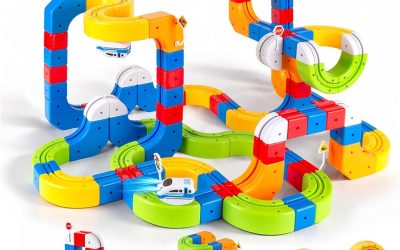
The Magnetic Tiles Road Set brings a story into the building. The listing describes a 38 piece city traffic themed magnetic tile design aimed at preschool play, so it is less about abstract towers and more about roads, vehicles and little streets. For a three year old who already loves toy cars and trucks, that theme gives the building a purpose: build a place for the cars to go, then drive them around.
With 38 pieces, the set is a modest size, which can actually help a young child. There is less to sort and less to spill, and every piece has a clear role in the city scene. The tiles join by magnet, like other sets in this style, so a child can click pieces together into flat roads or stand them up as walls. The listing does not detail the exact vehicle or sign pieces, so check the page for the contents.
This set suits storytellers. Three year olds begin acting out routines such as going to the shop, the school bus ride or the fire truck rescue, and a traffic themed set fits that stage. It also teaches early spatial skills: which pieces connect, how a road turns, how a building needs a base. Because the theme is clear, it can be an easier gift than a plain pile of tiles for children who like direction. It also invites turn taking when two children build one town.
Some cautions apply. As with any magnetic toy, adult supervision is wise, and pieces should be kept away from mouths and from younger children in the house. A themed set offers fewer free form options than a larger plain set, so some families may want to pair it later with a basic tile pack. Confirm the age label and any warnings on the listing before checking out. A shoebox lid or tray makes a handy road base for travel and car rides.
4. Melissa and Doug Pattern Blocks and: Best for Early Patterns

Our score: 9.4/10 iOur editorial score (1 to 10), based on listing specs, features and how well each pick fits its use case. It is not an Amazon customer rating.
120 wooden blocks Pattern boards Multi colored shapes Skill building play
Melissa and Doug Pattern Blocks and Boards is built for a different kind of construction: filling a picture instead of stacking up. The title says it comes with 120 multi colored wooden blocks and boards, and the listing calls it skill building pattern play with wooden shapes. That makes it a good bridge between pure block play and early puzzle thinking for a child who likes to sort and match. Parents get a quiet activity for a rainy afternoon.
In a typical pattern block set, flat shapes sit on a board and children copy a design or make their own. The listing does not give the full shape list or the number of boards, so look at the product page for details. The appeal is the quiet, focused play: no towers to collapse, just shapes that fit and colors to choose. It is a calmer option for a child who needs a break from active building.
At three, many children will not yet follow a printed pattern from start to finish. That is fine. They can start by simply placing shapes on the board, naming colors, and noticing which pieces fit together. A parent can guide with questions such as which shape is missing or what color comes next. Over a year or two, the same set can grow into real pattern copying, symmetry and early geometry.
Keep supervision close, because 120 pieces mean many small shapes that can be a mouthing risk for any child who still tends to chew toys. Lay the set out on a tray or table so the pieces stay together. Stop play if a child starts putting pieces in their mouth, and put the set away until the child is ready. Check the listing for the age label and finish details. A shallow tray with sides keeps the shapes from rolling off the table.
5. Lincoln Logs 100th Anniversary Tin: Best Classic Style

Our score: 9.4/10 iOur editorial score (1 to 10), based on listing specs, features and how well each pick fits its use case. It is not an Amazon customer rating.
Lincoln Logs 100th Anniversary tin Classic notched logs Tin storage
Lincoln Logs 100th Anniversary Tin is the old fashioned entry. The listing calls it a Lincoln Logs classic, just the way you remember it, and the title tells us it comes in a tin for the 100th anniversary of the brand. If you grew up building cabins with notched wooden logs, this is the set that brings that style back for a new child, and it makes a nostalgic gift from a parent or grandparent. The tin also makes the set easy to wrap as a present.
The building idea is simple: logs with notches interlock at the corners so walls rise like a small cabin. The listing does not give a piece count or a list of included roof and door parts, so check the product page before ordering. The tin is part of the name, which suggests easy storage, though a shelf or low table spot still helps a young child reach it without help.
Here we have to be honest about the age fit. Notched logs need more finger control and patience than plain blocks, so many three year olds will want an adult or older sibling to help line up the corners. A three year old can still enjoy it by passing logs, placing them on top of one another, and deciding what the cabin is for. The set shines more at four and five, when fine motor skills catch up.
Treat the first sessions as shared play. Sit with the child, build a small square together, and let them add the roof. Expect some frustration, and keep a plain stack of blocks nearby as a backup. The wooden pieces can have splinters over time, so check them now and then and set aside any that look rough. Always confirm the age label on the listing. Keep a small plastic figure or two on hand so the finished cabin has someone to live in it.
6. Kids STEM Building Toys for 3: Best for Growing Room

Our score: 9.2/10 iOur editorial score (1 to 10), based on listing specs, features and how well each pick fits its use case. It is not an Amazon customer rating.
STEM building toy Ages 3 to 8 plus Birthday gift idea Wide age range
Kids STEM Building Toys for 3 4 5 6 7 8+ is the broadest set on the list. The title lists an age span from three up to eight and beyond, and the listing calls it STEM building toys for kids. That kind of wide range can be good for families who want one set to last several years, but it also means a three year old will not use every feature the same way an older sibling can.
The listing gives few details, so we cannot say which pieces are included, how many there are, or whether the parts snap, screw or interlock. That is worth saying plainly: before you buy, open the product page and look for piece counts, connector style and size of the largest and smallest parts. If the set uses small connectors or tools, it is likely better with an adult helping. Photos on the listing can show scale against a hand.
A set like this suits a family with more than one child. A three year old can start with the largest pieces and the simplest builds, while a six or eight year old makes more complex models alongside. It can also serve as a birthday gift that does not need to be replaced when the child grows. The aim is the same as any building toy: practice with shapes, connection, cause and effect and following a plan.
Because the age span is wide, small parts are the main caution. Young children can swallow or choke on small pieces, so keep the set where only a supervised child can use it. Sort pieces by size and give the three year old only the biggest ones at first. Check the listing for the age grade and warnings, and read any included instructions before you start building together. A shared family rule about where the set is used keeps small pieces from traveling.
7. Learning Resources Gears Deluxe Building Set: Best Gear Set for Older Threes

Our score: 9.4/10 iOur editorial score (1 to 10), based on listing specs, features and how well each pick fits its use case. It is not an Amazon customer rating.
Colorful gears Deluxe building set STEM and engineering Learning Resources
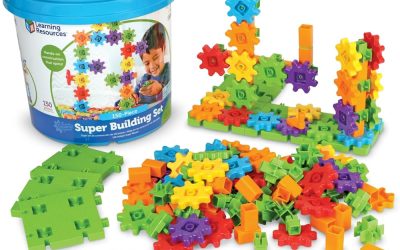
Learning Resources Gears Deluxe Building Set is the pick that asks the most of the child. The listing says it builds STEM and engineering skills with colorful gears, which is a strong learning idea: turn one gear and watch the next gear turn, in the opposite direction. For a curious child who likes to see how things move, it is a satisfying toy, though many three year olds will enjoy it best with a parent beside them. It is a tidy way to introduce simple machines.
Gear sets usually include gears of different sizes, axles and a base or frame to mount them on. The data we have does not list the piece count, so check the listing before buying. What matters for a preschooler is that cause and effect is clear: turn the handle and everything moves. That makes it a good bridge between pure stacking and more mechanical play, and it keeps hands busy in a different way.
We rate this as better for older threes and for fours. Gear teeth have to mesh, and the pieces are smaller and more fiddly than blocks, so a younger three year old may need help placing them. The best way to start is for the adult to set up a simple chain and let the child turn it. Later the child can try placing a gear on their own, and talk about big and small gears.
As a caution, this kind of set has more small parts than a wooden block set, so supervised play is important. Put the pieces back in a tray or bag after each session so none disappear under furniture. If a child is still putting toys in the mouth, wait before offering it. Check the age label on the listing, and treat the set as a shared activity first. Praise the turning more than the placing, and the child will keep trying.
8. iPlay, iLearn Rocket Space Toy 3: Best Themed Assembly Project

Our score: 9.6/10 iOur editorial score (1 to 10), based on listing specs, features and how well each pick fits its use case. It is not an Amazon customer rating.
Rocket space toy About 14.5 inches Assembly toy Ages 3 4 5 in title
iPlay, iLearn Rocket Space Toy is the most project like pick. The title aims it at ages 3, 4 and 5, and the listing describes an interstellar assembly rocket toy of about 14.5 inches. That makes it a bit different from a pile of blocks: the goal is a finished rocket, which suits a child who loves space or likes to see a clear result at the end of a build.
The listing calls it an assembly toy, but it does not tell us how the parts connect or how many there are. Check the product page for photos and any mention of tools, screws or snap together parts. If the set uses a tool or small fasteners, a three year old should not handle those alone, and an adult should do the fiddly steps while the child hands over parts and decorates the finished rocket.
This set suits a child who likes themed play, space stories and hearing a grown up narrate the next step. Building the rocket together can teach following steps, matching parts and patience, and the finished toy then becomes a prop for pretend play. At about 14.5 inches, it is large enough to display and play with, but still manageable on a shelf in a child’s room. Let the child choose which part to attach next, so the project feels shared.
Be realistic about the age. A three year old will usually need direct help from an adult in the assembly stage, and there may be small pieces that are unsuitable for a child who mouths objects. Treat it as a joint project for a weekend afternoon and set aside the small parts afterwards. Read the age warnings on the listing before buying and ask whether a simpler set might fit better. Keep the box handy to show the finished picture during the build.
How to Choose the Best Building Toys For 3 Year Olds
What building really means for a three year old
At three, building is rarely about copying a picture. It is about finding out what happens when one thing goes on top of another, and the best building toys for 3 year olds accept that. A tower of five blocks is a real achievement, and a wall that falls is part of the lesson. Parents can relax about neat results and let the child decide what a pile of shapes is meant to be.
Expect play to be short and loud. A three year old may build for ten minutes, wreck it, and move on to another game. That is normal. A toy that is easy to start, easy to fix and easy to put down will see more use than a complicated kit that needs a long attention span and a lot of setup.
Budget logic: where a value building set earns its place
A budget friendly building toy is not simply the lowest cost one. Think about how many ways a child can use it, how long it will last, and whether a younger sibling will inherit it. A plain set of wooden blocks can serve for years, while a very themed kit may be put away once the story loses its charm. We do not quote prices, so compare live listings yourself.
Look at what is included for the money: piece count, storage, and any extras such as boards or accessories. A bigger count often lets two children build at once, which stretches the value. Be wary of sets that look generous but are mostly tiny parts that are unsuitable for a three year old. A smaller set of larger, simpler pieces can be the better buy. Value is about use over years, not the day of purchase.
Wooden blocks, magnetic tiles or interlocking logs: choosing a style
Wooden blocks reward balance and patience, and they never need batteries or setup. Magnetic tiles click together, which helps a child whose fingers are not ready for studs or notches, and they turn flat shapes into houses. Interlocking logs and gears ask for more control and are usually better after three and a half or four. Each style trains a different skill.
Many families end up with two styles: one open ended set such as blocks, and one snap together set such as magnets. If you can only buy one, choose the style that matches what the child already does. If they stack naturally, buy blocks. If they get cross when towers fall, magnets may be the calmer choice. Check age labels on each listing. Ask which one your child reaches for first.
Piece size and the small parts rule
Children under three are the group most at risk from choking on small parts, and many three year olds still put things in their mouths now and then. Toy makers in the United States and elsewhere print age warnings for this reason. Read the label, and if a set carries a warning for children under three, keep it out of reach of any younger sibling in the house.
A simple home check is to compare a loose piece with a toilet paper tube. If a piece fits inside the tube, it is small enough to be a choking hazard for the youngest children. Large wooden blocks and big tiles usually pass. Tiny connectors, screws, gear pegs and decorative parts may not. When in doubt, supervise, or choose a bigger piece. Always check the actual listing.
Materials and safety labels worth checking
Look for plain statements on the listing about materials, such as wood, ABS plastic or other named plastics, and for safety labeling that the maker claims. In the United States, toys for children are expected to meet ASTM F963 and CPSIA rules, and in Europe the EN71 standard applies. Only trust a claim if the listing makes it, and never assume a toy meets a standard without that statement.
Magnetic toys deserve extra attention. Strong magnets that come loose can cause serious harm if swallowed, so pick sets from makers that state clear age labels, inspect pieces regularly, and put away any cracked part. Wooden toys should be checked for splinters, and painted pieces should be wiped clean rather than soaked. Ask the seller if the listing lacks details. A quick look at the care notes takes a minute.
How many pieces does a three year old need
More is not always better at this age. A set of thirty to forty well chosen pieces can be enough for a child who builds alone, while sets of a hundred or more suit shared play or ambitious towers. The key is to avoid overwhelming the child. A huge pile can look exciting but may lead to dumping and little focused building.
If you buy a large set, consider handing out a portion at a time. Keep the rest in the box and swap pieces every week or two so the toy stays fresh. This rotation trick also makes tidying easier, since there are fewer pieces to put away. When a child shows interest in bigger builds, bring out the full set. Fewer pieces can mean deeper play.
Storage and cleanup a toddler can manage
A building toy that is hard to clean up becomes a household chore. Choose sets that come with a box, tin or bag, or buy a low bin the child can reach. A big open container lets a three year old toss pieces in without sorting, which is the right level of difficulty for the age. Label the container with a photo if the child is not yet reading.
Where you build matters too. A rug or a play mat reduces noise and stops rolling pieces from escaping. Magnetic tiles can stick to a baking tray, which gives a handy portable base for the car or a restaurant. Wooden blocks are easy to wipe with a damp cloth, while sets with paint or stickers need gentler cleaning, so read the care notes. Small habits like this save time.
Building together: how to play with a three year old
The best building sessions for this age are shared. Sit on the floor, build next to the child instead of for them, and use simple words: tall, short, wide, on top, next to. Ask what the building is for and give it a story. Asking questions beats giving instructions, because it invites the child to think rather than copy. Try giving the child the first move and then following their lead.
Praise effort, not the result. Say that you noticed how carefully they placed the block, or how they tried a new way after the tower fell. Avoid fixing their builds unless they ask. If the child wants to knock something down, build a second one together. A short, happy session each day usually helps more than a long one. Keep sessions cheerful, and stop before the child gets tired.
Durability and sharing with siblings
Building toys take a beating. They get thrown, stepped on, dragged and chewed. Solid wood, thick hard plastic and sturdy tin containers can survive that, while thin parts, paper instructions and decorated pieces tend to wear first. Look for simple shapes with few fragile details, and expect the favorite set to be played with every week. Wipe wood and plastic with a damp cloth to keep it fresh.
If an older sibling is in the house, set clear rules. The three year old should have a space where their large pieces are safe, and the older child should keep small parts out of reach. Mixed age sets can work, but only with supervision. Hand down sets that survive well, and replace any broken or lost pieces before they cause harm. Review the shelf together every few months.
A simple learning path from stacking to simple plans
Start with stacking and knocking down, then move to lining blocks in rows and building simple walls. Next come enclosures for toy animals, bridges for cars and a first house with a roof. Magnetic tiles can follow the same path, from flat shapes to cubes. Each step trains balance, planning and patience, so there is no need to hurry the child. Skipping labels is another common slip.
Around three and a half or four, many children are ready for a gear set, pattern boards or notched logs, and later for simple assembly projects with an adult. Keep the earlier toys available, because children love to go back to simple play. Introduce new styles by building a small thing together and then leaving the toy out to explore. Check the labels first.
Common mistakes when buying building toys for 3 year olds
The biggest mistake is buying for age eight when the child is three. Wide age ranges on a box can hide the fact that some parts are too small or too complex. Another mistake is choosing the biggest piece count without checking piece sizes, or buying a themed set that leaves little room for imagination. Always read the actual age label and the product details.
A third mistake is skipping supervision with magnets or small connectors. Even good toys need adult attention at this age. Finally, do not forget storage. A beautiful set in a flimsy bag soon turns into a lost set. Plan a home for the toy before it arrives, and the child is more likely to play with it. Rotate old and new toys so favorites stay interesting.
Gift tips for a third birthday
Building sets make good third birthday gifts because they fit many kinds of play and last long after the party. Pair a set of blocks with a small book about construction or a toy truck for extra fun. If you are not sure which style a child already owns, ask the parents, since a duplicate set is a missed chance for something new.
Order early and check delivery windows on the listing, as stock and shipping can vary. Include a gift receipt if the listing allows it. Remind the parents to check the age label and, for magnets, to read the warnings. Wrap the set in a simple way that a three year old can open, and consider adding a small bin for storage. Ask the parents if you are unsure.
Frequently Asked Questions
What is the best building toy for a 3 year old?
For most children, a large set of plain wooden blocks is the easiest start because it needs no setup and suits stacking. Magnetic tiles are a strong second choice for children who find stacking frustrating, provided an adult supervises.
Are magnetic tiles safe for 3 year olds?
Magnetic tiles can be suitable for children of this age if the listing gives an age label that fits and an adult is nearby. Check the pieces often, remove any that crack, and keep them away from younger children and mouths.
How many blocks does a 3 year old need?
A few dozen can be enough for solo play, while sets near a hundred suit shared play or bigger builds. Choose bigger pieces over a larger count of tiny ones, and rotate part of the set if the pile feels overwhelming.
Are wooden blocks better than plastic ones?
Neither is always better. Wooden blocks are solid, quiet in the hand and good for balance play, while plastic or magnetic pieces click together and are lighter. Many homes keep one of each so the child can choose how to play.
Can a 3 year old play with Lincoln Logs?
They can enjoy them with help, but notched logs need finer finger control than plain blocks. Plan to build the corners together, and expect the set to be more independent play once the child is four or five.
Are gear sets too advanced for toddlers?
Some gear sets suit older threes if an adult sets up the chain and the child turns the handle. Pieces are smaller than blocks, so supervision is needed. Waiting until closer to four is perfectly reasonable.
What does STEM mean in a building toy for toddlers?
STEM stands for science, technology, engineering and math. For a three year old, it simply means play that builds early ideas such as balance, shapes, cause and effect and counting. It does not require special skills or screens.
How do I keep small parts away from a younger sibling?
Use a high shelf or a lidded bin for any set with small pieces, and play in a defined area such as a table or tray. Check the floor after each session. Choose larger pieces for a home with a baby.
How can I make building play last longer?
Add stories, toy cars or animals, and build together for a few minutes each day. Rotating part of the set every week keeps it fresh. Praise effort and avoid fixing the builds, so the child feels in control.
How do I find the current price and age label?
Prices change often, so open the live listing for each product. The page shows the current price, the maker’s age label, the size and what comes in the box. Read the warnings before you buy and again before play.
The Bottom Line
The Melissa and Doug 100 Wooden Building Blocks is our top pick for a three year old: simple, durable and open ended, with a box that makes cleanup easy. If your child likes snapping pieces together, add the Magnetic Building Blocks for Toddlers, and consider the Magnetic Tiles Road Set for a city theme.
Treat the Lincoln Logs, the gear set, the broad age STEM kit and the rocket as stretch picks that work best with an adult nearby. Check the live listing for each, read the age label, and choose the size and style that match your child today.
Updated for the 2027 buying season. Amazon listings and availability change often, so check the product page for current details.

Write Your Review
No reviews yet. Be the first to share your experience!