

As an Amazon Associate we earn from qualifying purchases. If you buy through links on this page we may receive a commission at no extra cost to you. Product details come from Amazon listings and can change.
Parents who search for the best dr seuss books usually want one of three things: a first board book for a baby or toddler, a stack of beginner readers for a child learning to sound out words, or a keepsake edition to give as a gift. This guide sorts nine listings from the data we collected into those groups so you can match the format to the child instead of guessing from a cover.
Every pick here is a Dr. Seuss title, boxed set or collection, and we describe each one only by what its listing title says, such as the series name, the number of books and the format. We do not retell stories or quote any lines. For exact page counts, trim size, age range and edition details, open the live listing before you buy.
Prices and stock change often, so this page links to current listings and does not quote costs. Use the quick answer and the takeaways below for a fast decision, then read the product sections and the buying guide if you want to compare reading levels, sets versus single books and gift ideas for the next birthday or graduation party.
Key Takeaways
Best Dr Seuss Books at a Glance
| Product | Our score | |
|---|---|---|
| Dr. Seuss’s Ultimate Beginning Reader Boxed Best Overall |
9.7 / 10 | Check Price |
| Dr. Seuss’s Beginner Book Boxed Set Best Classic Starter |
9.7 / 10 | Check Price |
| The Wonderful World of Dr. Seuss Best Introduction to the Author |
8.8 / 10 | Check Price |
| A Classic Case of Dr. Seuss Best Big Collection |
9.6 / 10 | Check Price |
| The Little Green Boxed Set of Best First Board Books |
9.6 / 10 | Check Price |
| Dr. Seuss’s Second Beginner Book Boxed Best Second Step Set |
9.7 / 10 | Check Price |
| The Little Blue Boxed Set of Best for Toddlers |
9.6 / 10 | Check Price |
| Oh, the Places You’ll Go! Best Gift Book |
9.7 / 10 | Check Price |
| A Classic Case of Dr Seuss Best Compact Classic |
9.6 / 10 | Check Price |
How We Chose the Best Dr Seuss Books
This is a research based buying guide, not a lab comparison and not a reading level study. We compared nine Dr. Seuss listings by reading their titles and product details, looking at format (board book, beginner book, boxed set, single gift title), the number of books in the box, and how well each option fits a particular stage, from babies and toddlers up to children reading on their own.
We also thought about balance. A good shortlist should include a starter set, a bigger collection, a toddler friendly option and a gift choice, so parents with different needs all find something. Each pick carries an editorial score out of 10 on this site, based on features, specs and how well the use case fits the audience. Details we could not confirm from the listing are marked as things to check on the product page.
In-Depth Reviews
1. Dr. Seuss’s Ultimate Beginning Reader Boxed: Best Overall

Our score: 9.7/10 iOur editorial score (1 to 10), based on listing specs, features and how well each pick fits its use case. It is not an Amazon customer rating.
16 beginner books Boxed set Ultimate collection Early readers
Dr. Seuss’s Ultimate Beginning Reader Boxed Set Collection earns the top spot because it packs the most beginner reading material into a single, easy to store box. The listing title says the set includes 16 beginner books, and it also refers to Bright and Early titles, a line that is known for gentle starter books. For a family building a first Seuss shelf, one purchase covers a lot of ground. That breadth is the main reason the set sits first, because a varied pile keeps a child curious across weeks instead of days, and it gives parents room to choose by mood.
A boxed set like this works as a ready made library. Instead of choosing book by book, you get a variety of titles that can be rotated through bedtime, car rides and quiet time. The box itself helps with organization: a child can pull one book out, read it, and return it to the same slot, which quietly teaches tidiness along with reading habits. Many families also like having a visible box on the shelf, since a child can see the whole collection and feel proud of how many books they have finished.
This collection suits children who are starting to recognize letters and short words, as well as older toddlers who enjoy being read to. Beginner readers in this style lean on rhythm, rhyme and repetition, which many teachers use to build confidence. Parents can read the first few aloud, then invite the child to fill in familiar words and eventually take over whole pages. Reading together with a finger tracking each word, and slowing down on the rhymes, helps new readers link the sounds they hear with the letters on the page.
As a caution, the exact list of titles is cut short in the listing title, so check the product page to see which stories are inside before ordering, especially if you already own some. Also confirm the box size and whether the books are hardcover or paperback, since format affects durability for rough handling by young children. Parents who already own a few classics can still benefit, since the extras can go to a sibling, a cousin or a classroom shelf.
2. Dr. Seuss’s Beginner Book Boxed Set: Best Classic Starter
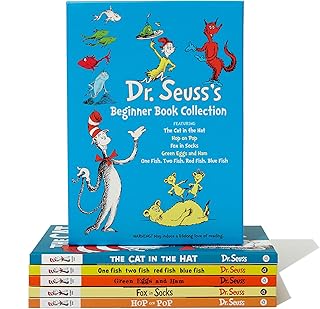
Our score: 9.7/10 iOur editorial score (1 to 10), based on listing specs, features and how well each pick fits its use case. It is not an Amazon customer rating.
Beginner Book set Starts with The Cat in the Hat Includes One Fish Two Fish Boxed collection
Dr. Seuss’s Beginner Book Boxed Set Collection is the pick for parents who want the well known starting point. The listing title names The Cat in the Hat and One Fish Two Fish Red Fish Blue Fish among its contents, two titles that many families think of first when they picture early Seuss reading. That recognizable pairing makes this a comfortable, low risk choice. Because both titles are widely recognized, grandparents and teachers often feel at ease picking this set, and they can talk about the stories with the child.
The set belongs to the Beginner Book family, a format designed for children who are just beginning to read alone. Beginner books tend to use a limited vocabulary, strong rhyme and bold illustrations that help a child guess the next word. Because the words repeat, a young reader often feels quick progress, and that feeling of success keeps the habit going. Illustrations carry a lot of the meaning in these books, so a child who is unsure of a word can often use the picture to make a sensible guess.
It works well for kindergarten and early elementary children, and for older preschoolers who like to listen and point at pictures. Parents can use the books for a simple routine: read one page aloud, then let the child read the next. Over several weeks, the child takes over more pages, and the set provides enough variety to prevent boredom. A weekly goal, such as finishing one book and retelling it in their own words, adds structure without adding pressure to a young reader.
Keep in mind that the listing title is truncated, so the complete contents are not visible in the data we collected. Look at the product page for the full title list and the number of books. If you want a larger library or a second step up later, pair it with the Second Beginner Book set covered below. Hardcover or paperback status matters for rough handling, so read the format line near the top of the listing before you decide.
3. The Wonderful World of Dr. Seuss: Best Introduction to the Author

Our score: 8.8/10 iOur editorial score (1 to 10), based on listing specs, features and how well each pick fits its use case. It is not an Amazon customer rating.
The Wonderful World Single title Dr. Seuss Gift friendly
The Wonderful World of Dr. Seuss is the most open ended listing in this guide, and that is exactly why it earns a place. The title points to a broad look at the author’s creative universe rather than a single story, which makes it an interesting choice for families who want a general introduction instead of a narrow reading level set. For gift shoppers who do not know a child’s exact reading level, a broad title can feel safer than a narrow, stage specific box.
The data gives us only the title, so we cannot say how many pages it has, whether it is a compilation, an activity style book or a hardcover keepsake. That uncertainty is worth taking seriously. Treat this pick as a promising option to look into, and read the product description carefully for format, size and age guidance before adding it to your cart. It is wise to look at the cover, the table of contents preview if offered and the publisher line to see what kind of book you are really getting.
If the listing shows a general overview or companion style book, it could suit curious children who already love one or two stories and want to learn more about the world around them. It might also appeal to grandparents and adult fans shopping for a child who is not yet reading independently, since the title speaks to the whole body of work. Families who like talking about books together may enjoy using it as a springboard to look up other titles by the same author at the library.
Because it is a single title, it is less of a library builder than a boxed set. Use it as an add on, a gift extra or a curiosity driven read rather than as your only Seuss purchase. Check the listing photos for the cover style and for any note about the publisher or edition. A quick check of the age range, language and edition in the listing details will prevent surprises when the parcel arrives.
4. A Classic Case of Dr. Seuss: Best Big Collection

Our score: 9.6/10 iOur editorial score (1 to 10), based on listing specs, features and how well each pick fits its use case. It is not an Amazon customer rating.
20 books Box set collection Classic Case series Home library
A Classic Case of Dr. Seuss Series 20 Books Box Set Collection is the largest set in the guide, and its title says so plainly: twenty books in one collection. For a home with several children, a classroom reading corner or a family that gets through bedtime stories quickly, a count like that stretches the value of a single purchase across many months of reading. In effect, it turns a single order into a small library, which is helpful for busy households that rarely get to the bookshop.
Large collections solve a common problem. Children ask for the same book again and again, and parents run out of patience before the child runs out of interest. With twenty titles, you can rotate the stack weekly, bring back old favorites after a break and let each child choose a book for the night, which turns bedtime into a small ritual of choice. Children often enjoy picking the next book from a big stack themselves, and that sense of choice builds ownership of the reading habit.
The set suits a wide span of ages in theory, from read aloud sessions with younger children to independent reading for early school age kids. The exact reading level of each book varies, so use the listing to check which titles are included and which formats they come in. Siblings of different ages can share the box without anyone feeling left out. Parents of children with different reading levels can assign easier titles to one child and harder ones to another, while all of them share the same box.
Practical points: a twenty book collection takes up real shelf space and can be heavy, so plan where it will live. Look at the listing for edition details, cover style and whether the books are paperback, since this affects how well they survive backpacks and car seats. Also check the delivery details on the listing, since shipping options can differ by seller. If space is tight, think about keeping only a few books out at a time and storing the rest, which also keeps the collection feeling new.
5. The Little Green Boxed Set of: Best First Board Books

Our score: 9.6/10 iOur editorial score (1 to 10), based on listing specs, features and how well each pick fits its use case. It is not an Amazon customer rating.
Board books Bright and Early Fox in Socks Mr. Brown Can Moo
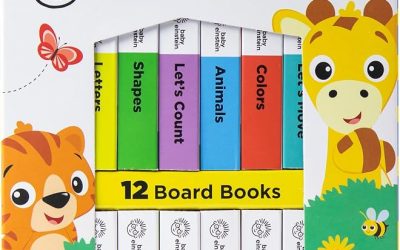
The Little Green Boxed Set of Bright and Early Board Books is aimed at the smallest readers. The title says board books, a thick cardboard format that is easier for little hands to grip, flip and chew on than thin paper pages. It names Fox in Socks and Mr. Brown Can Moo! Can You, so you know at least two of the titles inside before you click through. Short, bouncy language makes these books especially good for a child who is just starting to copy sounds and repeat words after an adult.
Board books shrink the classic experience into something a baby or toddler can hold alone. They survive drops, sticky fingers and the occasional chewing session far better than standard paperbacks. A small boxed set also makes a tidy gift, because it arrives as a matched group and does not need extra wrapping tricks to look special. A set of this kind also helps caregivers, since a few quick books can fit into small gaps such as before a nap or while waiting at an appointment.
These books fit best for ages when a child enjoys sounds, rhythm and pointing at pictures, usually the baby to early preschool window. Parents can lean into the playful sound of the words, making silly voices and clapping along. Short books are ideal for a restless child who will not sit through a long story but loves a quick, lively one. Pointing at pictures and asking simple questions, like what the child can see, turns a short book into a longer conversation.
A few notes before buying: the listing title is cut off, so check how many books are in the box and the trim size. Board books are tougher than paper, but they are not indestructible, and very small children should always be supervised with any book, especially if corners are chewed. Compare it with the blue set to pick the titles you prefer. If the child is older, say a confident reader, they may still enjoy these as quick, silly reads, but they will not offer much of a reading challenge.
6. Dr. Seuss’s Second Beginner Book Boxed: Best Second Step Set

Our score: 9.7/10 iOur editorial score (1 to 10), based on listing specs, features and how well each pick fits its use case. It is not an Amazon customer rating.
Second Beginner Book set The Cat in the Hat Comes Back Alphabet title listed Boxed collection
Dr. Seuss’s Second Beginner Book Boxed Set Collection is the natural follow up for a child who has already worked through a first box. The listing title names The Cat in the Hat Comes Back and an alphabet themed title that begins with Dr. Seuss’s AB, so you can see that it mixes a sequel style story with a letter learning book. The mix of formats keeps the set from feeling like more of the same, which is a real advantage when a child is deciding whether reading is fun.
Having a second set matters because reading stamina grows in stages. After a child finishes the first group of beginner books, they often want fresh stories at a similar level, not a sudden jump to long chapter books. A second boxed set supplies that bridge, keeping the habit going while the child’s confidence and speed improve. Pairing the alphabet title with magnetic letters, chalk or finger tracing can make the lesson more physical and memorable for younger children.
The alphabet themed entry also gives parents a useful teaching tool. Letter and sound practice fits well with preschool and kindergarten routines, and a rhyming alphabet book can turn that practice into a game of finding objects and naming letters. Children who enjoy the sequel style story can compare it with the first book they read. Readers who liked the first story will often enjoy seeing how a follow up compares, which encourages comparison and simple discussion about what stayed the same.
As with other sets in this guide, the complete contents are truncated in the title, so open the listing to confirm all the included books and the format. If you are buying both Beginner Book boxes, compare the two lists to avoid doubles, and consider giving them to different children in a family so each has a personal set. Keep both boxes side by side on a shelf, and your child can see their progress from the first set to the second.
7. The Little Blue Boxed Set of: Best for Toddlers

Our score: 9.6/10 iOur editorial score (1 to 10), based on listing specs, features and how well each pick fits its use case. It is not an Amazon customer rating.
Set of 4 board books Bright and Early Hop on Pop Oh, the Thinks You Can Think
The Little Blue Boxed Set of 4 Bright and Early Board Books is our pick for toddlers because it combines a clear count, four books, with a durable format. The listing names Hop on Pop and a title that begins Oh, the Thinks You Can Think, so parents can see the mix of simple rhyming fun and imaginative wordplay before opening the page. Four titles is a manageable number for a young child, who can feel a sense of completion after reading each one in turn.
With only four books, the set is small enough to fit in a diaper bag, a car seat pocket or a basket by the bed. Board book pages are thick, which helps toddlers who are still learning to turn pages one at a time. Because the books are short, a parent can finish one in a couple of minutes, which suits wiggly listeners. Parents can carry a couple of the books in a coat pocket or bag, which makes waiting rooms and restaurant tables much easier to handle.
The books suit children who are just discovering that words rhyme and that stories can be silly. Reading aloud with exaggerated voices, tapping the beat and pausing so the child can supply the last word builds early language skills without any pressure. As the child grows, the same books can become their first attempts at sounding out short words. Rhyming books like these tend to be remembered quickly, so do not be surprised if your toddler starts reciting parts from memory.
A caution: the title is shortened in the data, so confirm the other two titles and the box dimensions on the product page. Board books are tough, but small children should still be supervised, and worn books with loose edges should be retired. This blue set pairs well with the green set if you want eight titles in total. Baby shower hosts and new parent gift buyers may find the compact box a thoughtful, practical choice.
8. Oh, the Places You’ll Go!: Best Gift Book

Our score: 9.7/10 iOur editorial score (1 to 10), based on listing specs, features and how well each pick fits its use case. It is not an Amazon customer rating.
Single title Oh, the Places You’ll Go! Dr. Seuss Gift idea
Oh, the Places You’ll Go! is the one single title that tops our gift category, and it earns the spot because it works at so many milestones. People often reach for it at birthdays, graduations and the start of a new school year, since the title itself sounds like a send off. A single book is also simple to wrap and easy to personalize with a handwritten note. Its simple, one title format means the giver does not have to worry about matching a set or counting how many pieces are inside the box.
Unlike the beginner box sets, this pick is not built around early reading drills. The listing gives only the title, so we avoid saying anything about length or format. What we can say is that a standalone picture book is a quieter, more reflective purchase, a book that adults enjoy giving as much as children enjoy hearing. Because the book works across generations, it can become a shared moment, with an adult reading aloud and a child describing what they hope to do someday.
It suits a wide range, from a preschooler who listens at bedtime to a teen or young adult who receives it as a keepsake. Parents can read it aloud and talk about the child’s own plans, hobbies and goals afterward. Teachers sometimes use books of this type to start a conversation at the end of a school year. A short written message about what you admire in the child will make the book feel personal for years to come.
Before buying, check the listing for the edition, whether it is hardcover, and the size, because gift buyers often want a book that looks sturdy on a shelf. Also consider pairing it with a small card or bookmark. If the recipient is a young reader, add a boxed set so they have an easy reading option too. Consider keeping a spare copy on your own shelf if you often give gifts, since it is a title many people like to hand out.
9. A Classic Case of Dr Seuss: Best Compact Classic

Our score: 9.6/10 iOur editorial score (1 to 10), based on listing specs, features and how well each pick fits its use case. It is not an Amazon customer rating.
A Classic Case Dr Seuss Collection title Single listing
A Classic Case of Dr Seuss is a short title with a broad suggestion, and it rounds out the guide as a compact classic option. The name matches the bigger twenty book box set listed earlier, so shoppers should read carefully to see how the two differ in format, contents and size before assuming they are the same product. That similarity of names is exactly why this listing deserves a careful read rather than a quick click.
The data shows only the title, so we cannot confirm how many books it includes, whether it is a single volume or a small set. That honesty matters for a purchase like this. Check the product page for the number of stories, the page count and the binding, then decide whether it fills a gap in your current shelf. A smaller product can also be a smart choice for a family trying books before committing to a full collection.
If the listing shows a smaller group of titles, it could suit a family that does not want a big box but still wants a taste of the classics. It might also work as a travel option or a classroom starter. Parents comparing it with the large set can decide whether quantity or portability is the bigger priority. If the page lists a handful of well known stories, it may suit an early reader who wants a manageable pile to work through.
As a practical tip, compare the cover images and descriptions side by side with the twenty book collection. Look for differences in size, edition and seller details, and avoid ordering both unless you want overlap. A short list of titles is easy to check against what your child already owns on the bookshelf. Seller notes, cover images and the edition line are the quickest ways to tell which version you are looking at.
How to Choose the Best Dr Seuss Books
How to choose the best Dr Seuss books by reading stage
The first question is not which title but which stage your child is at. Babies and toddlers enjoy sound and rhythm, so board books are the safest bet. Preschoolers and kindergartners who are learning letters benefit from alphabet style books and short, repetitive stories. Early elementary readers can move to beginner books they read alone, and older children may enjoy a gift edition. Think of the stages as overlapping rather than rigid, so a child can enjoy a board book and a beginner reader in the same week.
Match the format to that stage and you avoid most disappointments. A boxed set of beginner readers will frustrate a one year old who just wants to chew a book, while a board book may feel too babyish for a seven year old. Use the listing titles in this guide as clues: board book, beginner book and single title each signal a different use. Your own read aloud skills matter too, because a lively adult can lift a simple book far beyond its page count.
Board books versus beginner books: what the format tells you
Board books have thick cardboard pages, small trim sizes and short texts. They are built for early childhood, when children still treat books as objects to hold, drop and sometimes mouth. Two of the sets here, the green and the blue box, use this format, and both say Bright and Early in the title. Check the thickness of the pages in the listing photos, since this is a quick visual clue to the format.
Beginner books are aimed at children who are starting to read by themselves. They use bold pictures, a limited word list and a lot of rhyme. The Beginner Book boxed sets in this guide belong here. If you are unsure which your child needs, read a page aloud and see whether they want to hold the book or follow the words. Both formats can sit side by side in a family library, as they serve different moments in the same childhood.
Is a boxed set worth it compared with single books
A boxed set gives you variety, a matched look and a built in storage solution. For a family that plans to read daily, a set can be more convenient than choosing individual books one at a time. It also makes gift giving easier, because the box looks complete and the books arrive together. Think about how often your child rereads, because a favorite that is read fifty times deserves a stronger edition.
Single books make sense when you want a particular title, when shelf space is tight, or when you already own much of a series. The honest trade off is overlap: a big set may include books you already have. Compare the listing titles with your shelf before ordering, and consider splitting duplicates between siblings or donating them to a classroom. Parents who borrow from a library first can learn which titles their child loves before committing.
Age fit and what the listing can and cannot tell you
Many listings mention an age range somewhere on the page, but the title alone rarely gives it. Read the product description, the format words and the series name to estimate a fit, then confirm the recommended age on the page. Remember that age labels are guides, not rules, because children develop at different speeds. Photos of the back cover often include the age marking, so scroll through every image in the listing.
For children under three, stick with board books and supervise reading, since small pieces such as loose covers or torn corners can become hazards. Preschoolers can handle paper pages with care. Independent readers in the early grades can manage most of the beginner books, though a parent nearby for tricky words still helps. When in doubt, choose the easier format, because a child who finds a book simple will reread it happily.
Building early reading skills with rhyme and repetition
Rhymes help children notice the sounds inside words, a skill that teachers call phonological awareness. When a child hears that two words end the same way, they begin to predict what comes next. That prediction is a small step toward decoding written text, and it feels like a game rather than a lesson. Even a few minutes of rhyme play in the car, such as thinking of words that sound alike, will reinforce the skill.
Repetition has its own value. Seeing the same words over and over lets young readers recognize them on sight, which frees attention for meaning. Look for books in this guide that describe themselves as beginner readers, and let the child reread favorites without pressure. Rereading is not a waste of time; it is how fluency grows. Short, frequent sessions generally work better than a single long sitting.
How to read aloud so a child wants to join in
Read with energy. Exaggerate the rhythm, change your voice for different parts and pause before the rhyming word so your child can fill it in. Point to words as you go, but do not turn every page into a quiz. The goal is for the child to associate books with fun and closeness. Let the child hold the book and turn pages, because physical control makes them feel like a real reader.
As confidence builds, share the reading. You read one page, then the child reads the next, or they read only the words they know. Keep sessions short, ten to fifteen minutes is often enough, and stop while they still want more. A calm, regular time, such as before bed, makes the habit easier to keep. If attention drifts, switch to a shorter book and try again tomorrow rather than forcing a finish.
Storage, shelf space and keeping a boxed set together
Boxed sets often come in a slipcase or box that keeps the books aligned. That helps with tidiness but also adds bulk. Measure your shelf before buying a big collection like the twenty book set, and decide whether it will live in a child’s room or in a shared family space. A shelf at the child’s eye level will make books look inviting and make tidying up a game they can manage themselves.
Teach children a simple routine: take one book out, read it, return it to the same spot. Low shelves and baskets work well for board books, which are easier to grab. Keep books away from damp places and direct sunlight, which can fade covers and warp pages, so they last for younger siblings later. If you rotate the books every few weeks, the stored ones feel like new arrivals when they return.
Durability, care and what to do with worn books
Board books can handle more rough use than paper books, but they still wear out. Wipe them gently with a barely damp cloth if needed and let them dry fully before putting them back. Avoid soaking, because moisture can separate layers and damage the art. Never use harsh cleaners or sprays on covers, since the chemicals may damage the printed surface and are not meant for children’s mouths.
Paperback and hardcover beginner books last longer if children are shown how to open and close them gently. When a book has loose pages or sharp torn edges, retire it from toddler use. Worn but readable copies can often be donated to a classroom or community library, so a loved set gets a second life. A small repair with clear tape on a torn page can extend a book’s life, but keep tape away from toddlers who might peel it off.
Gift ideas: wrapping, inscriptions and pairing with other items
Books are easy to personalize. Write a short note on the inside cover with the date and a wish for the reader. For a new baby, a board book set with a handwritten message becomes a keepsake. For a graduate, a single gift title with a card can feel more meaningful than a large box. Think about whether the recipient already has the book, since duplicates are easy to make with such widely known titles.
Pair a boxed set with a bookmark, a small stuffed toy or a reading light that the parent can use at bedtime. Check delivery windows on the listing for birthdays and holidays, since shipping times change, and ask for a gift receipt if you worry about duplicates. Never promise a date to the child until the parcel arrives. A hand drawn card or a few chosen words about why you picked the book adds warmth no packaging can match.
Budget logic without quoting prices
Value is about how long a purchase gets used, not just how many books come in the box. A large collection can stretch across several children and many years, while a small board book set may only be needed during a short window. Consider the age span and how many kids will share the books. Weigh the cost of replacing worn board books against the pleasure they gave, and you will usually find that a durable set pays back.
Compare formats on the live listing, because paperback and hardcover editions may differ in cost and durability. Watch for duplicates with books you already own, and check whether the library offers the titles you want to preview. Buying one set first and adding another later is a flexible way to spread spending. Sharing between siblings and cousins stretches every purchase even further.
Common mistakes when buying Dr Seuss collections
The most frequent mistake is buying for the wrong stage, such as a beginner reader set for an infant or a board book box for a confident reader. Another is assuming that similar titles are identical products, when two listings may differ in count, format and edition. Always read the product page rather than relying on a short name. Another trap is judging a book only by a famous name, without checking edition, size or format.
People also forget to check for overlap, especially when mixing a large collection with smaller boxes. A final slip is pushing a child to read alone too early. If a book feels frustrating, return to reading aloud for a while. Enjoyment comes first, and skill follows naturally. Finally, remember to read the shipping and seller details, so that a parcel for a birthday does not arrive too late.
Where to go next after Dr Seuss
Once a child can read the beginner books smoothly, look for other picture books with strong rhyme and then early chapter books with short sections. Library story times and school reading lists can suggest authors that match your child’s interests, from animals to space to everyday adventures. Be sure to ask your child what they would like to read next, since their own curiosity is the best guide.
Keep a few favorite Seuss titles in rotation even as new books arrive. Familiar stories give a comforting reread, and children enjoy showing how much faster they can read them now. A simple reading log, with stickers or a drawing for each finished book, can add motivation without turning reading into homework. Librarians are usually happy to suggest a path, and the suggestions cost nothing.
Frequently Asked Questions
Which Dr. Seuss set is best for a first time reader?
A beginner reader boxed set is the usual choice, such as the Ultimate Beginning Reader collection or the Beginner Book box that includes The Cat in the Hat. These formats use rhyme and repetition, which help children recognize words and gain early confidence.
What is the best Dr. Seuss book for toddlers?
Board book sets are the best fit for toddlers because the thick pages are easier to hold and turn. The Little Blue set of four and the Little Green set are both described as Bright and Early board books in their listing titles.
Are the books in a boxed set also sold separately?
Often individual titles are available on their own, but this varies by listing. Check the product page for the contents, and compare a set with single books if you only want one or two stories, or already own some.
How many books come in the largest set here?
The largest set in this guide is A Classic Case of Dr. Seuss Series 20 Books Box Set Collection, and its title says twenty books. The Ultimate Beginning Reader set mentions sixteen. Confirm the full contents on each live listing before buying.
Is Oh, the Places You’ll Go! suitable for young children?
It can be read aloud to preschoolers, and it is also a popular keepsake for older kids and graduates. The listing shows only the title, so check the page for format, size and any age guidance.
Can my child read these books alone?
Beginner books are made for early independent reading, but readiness differs from child to child. Start by reading aloud, then share pages, and let the child take over when they feel comfortable. Board books are better for listening than for solo reading.
How do I avoid buying duplicates?
List the titles you own, then compare them with the contents shown on the product page. Because several titles in this guide are truncated, open each listing fully. If you receive doubles, share them with a sibling, a classroom or a friend.
Are board books safe for babies to chew on?
Board books are tough, but no book is made for eating, and listings may not state materials. Supervise babies, check the product page for any safety notes, and replace books with loose or torn edges. Wipe them gently if they get sticky.
What is the difference between the two Classic Case listings?
One title says Series 20 Books Box Set Collection, while the other says only A Classic Case of Dr Seuss. They may differ in size and contents, so compare the product pages carefully before choosing one or assuming they match.
When should I buy for a birthday or holiday?
Order early. Delivery windows can change, and popular times fill up. Check the delivery estimate on the live listing, keep a gift receipt where possible and have a backup book at home in case the parcel is delayed.
The Bottom Line
For most households, Dr. Seuss’s Ultimate Beginning Reader Boxed Set Collection is the best starting point, thanks to its sixteen beginner books and its focus on early readers. Toddler families should look first at the Little Blue and Little Green board book boxes, and gift givers may prefer Oh, the Places You’ll Go!
Whatever you choose, match the format to your child’s stage, confirm the contents on the live listing and keep reading time relaxed. A few shared pages every day will do more than any single purchase, and these books are made for exactly that kind of playful, repeated reading.
Updated for the 2027 buying season. Amazon listings and availability change often, so check the product page for current details.
Write Your Review
No reviews yet. Be the first to share your experience!